
Alligator Snapping Turtle Facts for Kids
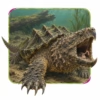
The alligator snapping turtle is a giant freshwater reptile from the southeastern United States. This page focuses on Macrochelys temminckii, the species found mainly in the Mississippi River drainage, rather than the separately recognised Suwannee alligator snapping turtle. It spends most of its life underwater, where a worm-shaped lure on its tongue helps attract curious prey toward its enormous mouth.
Quick Alligator Snapping Turtle Facts
- Animal Type: Reptile
- Group: Snapping turtle
- Known For: Spiked shell, huge head, powerful jaws, and worm-like tongue lure
- Habitat: Deep rivers, reservoirs, oxbow lakes, swamps, and slow-moving waterways
- Diet: Fish, crayfish, mollusks, amphibians, reptiles, carrion, and other available food
What You’ll Learn
Discover 10 incredible alligator snapping turtle facts for kids about huge jaws, worm-like tongue lures, shells, freshwater habitats, and hunting, with a quiz, glossary, and activity
These facts are explained simply for kids, parents, teachers, and curious little fact-finders.
10 Fun Alligator Snapping Turtle Facts for Kids
1. It Is America’s Largest Freshwater Turtle
Adult males can become much larger than females, with exceptional individuals exceeding 100 kilograms. Most wild turtles are smaller than the record holders.
Kid Decode: This river giant can outweigh a large adult human while carrying its own shell.
2. Its Shell Has Three Spiky Ridges
The upper shell carries three raised rows of knobby scutes that give young and adult turtles a rough, prehistoric appearance.
Kid Decode: Its back looks as though a tiny mountain range grew across the shell.
3. Its Tongue Looks Like a Worm
A fleshy pink projection on the tongue wriggles like a worm. The turtle can wait with its mouth open and lure fish close enough to grab.
Kid Decode: The fishing bait is attached directly to the fisher.
4. It Is Mostly an Ambush Hunter
Alligator snapping turtles often remain still on the bottom, relying on camouflage and sudden jaw movements instead of chasing prey over long distances.
Kid Decode: Its hunting strategy is part statue, part trapdoor.
5. Its Jaws Are Powerful
The broad head and strong jaw muscles produce a forceful bite for holding and processing prey. Wild turtles should never be handled or approached closely.
Kid Decode: The mouth is impressive enough without anyone volunteering a finger for the experiment.
6. It Spends Nearly All Its Time in Water
Males may remain aquatic for years, while adult females leave the water mainly to find nesting sites on land.
Kid Decode: For most of its life, dry ground is a brief appointment rather than home.
7. Females Lay Eggs on Land
A female digs a nest in soil away from the water and lays a clutch of round, leathery-shelled eggs. Hatchlings must travel toward the water after emerging.
Kid Decode: The babies begin life with one dangerous overland dash.
8. It Grows and Reproduces Slowly
Alligator snapping turtles may live for many decades and usually take more than a decade to reach breeding age.
Kid Decode: This turtle follows a life plan written in very slow handwriting.
9. Algae Helps It Disappear
Algae often grows across the dark shell, helping the turtle blend with submerged logs, mud, roots, and shadowy river bottoms.
Kid Decode: Sometimes its camouflage is an entire living green coat.
10. It Needs Healthy River Systems
Historic commercial harvest, illegal collection, fishing bycatch, nest predators, and altered waterways have reduced many populations.
Kid Decode: Protecting one ancient-looking turtle means protecting a whole network of rivers and wetlands.
The Weirdest Alligator Snapping Turtle Fact
It can sit underwater with its mouth open and wiggle a worm-like tongue lure, turning its own mouth into a living fish trap.
Try This Alligator Snapping Turtle Activity
River Giant Drawing Activity
Draw an alligator snapping turtle resting on a muddy river bottom. Add a giant head, hooked beak, three ridged rows on the shell, algae camouflage, an open mouth with a pink worm-like tongue lure, fish nearby, submerged roots, and a female nesting safely above the riverbank.
Quick Alligator Snapping Turtle Quiz
- Where does the alligator snapping turtle spend most of its life? Answer: Underwater in rivers and other freshwater habitats.
- What runs along the top of its shell? Answer: Three raised rows of spiky scutes.
- What does its tongue lure resemble? Answer: A small worm.
- Which adults usually leave the water to nest? Answer: Females.
- Why do its populations recover slowly? Answer: It grows slowly, matures late, and produces new generations gradually.
Mini Glossary
- Carapace: The upper part of a turtle’s shell.
- Scute: A hard plate covering part of a turtle shell.
- Ambush Predator: A hunter that waits before making a sudden attack.
- Bycatch: An animal accidentally caught during fishing for something else.
- Clutch: A group of eggs laid at one time.
 Olm Facts for Kids
 Little Blue Penguin Facts for Kids
 Grasshopper Facts for Kids
 Concavenator Facts for Kids
More Animal Facts for Kids
Visit the full animal facts library or explore a focused animal group.
More Extinct Animal Facts for Kids
Discover dinosaurs, Ice Age giants, prehistoric sea creatures, recently extinct species, and other animals from the past.
Fact check note: Fact checked with the U.S. Fish and Wildlife Service alligator snapping turtle species profile, USGS species and habitat research, current Macrochelys taxonomy, and peer-reviewed life-history and conservation studies.

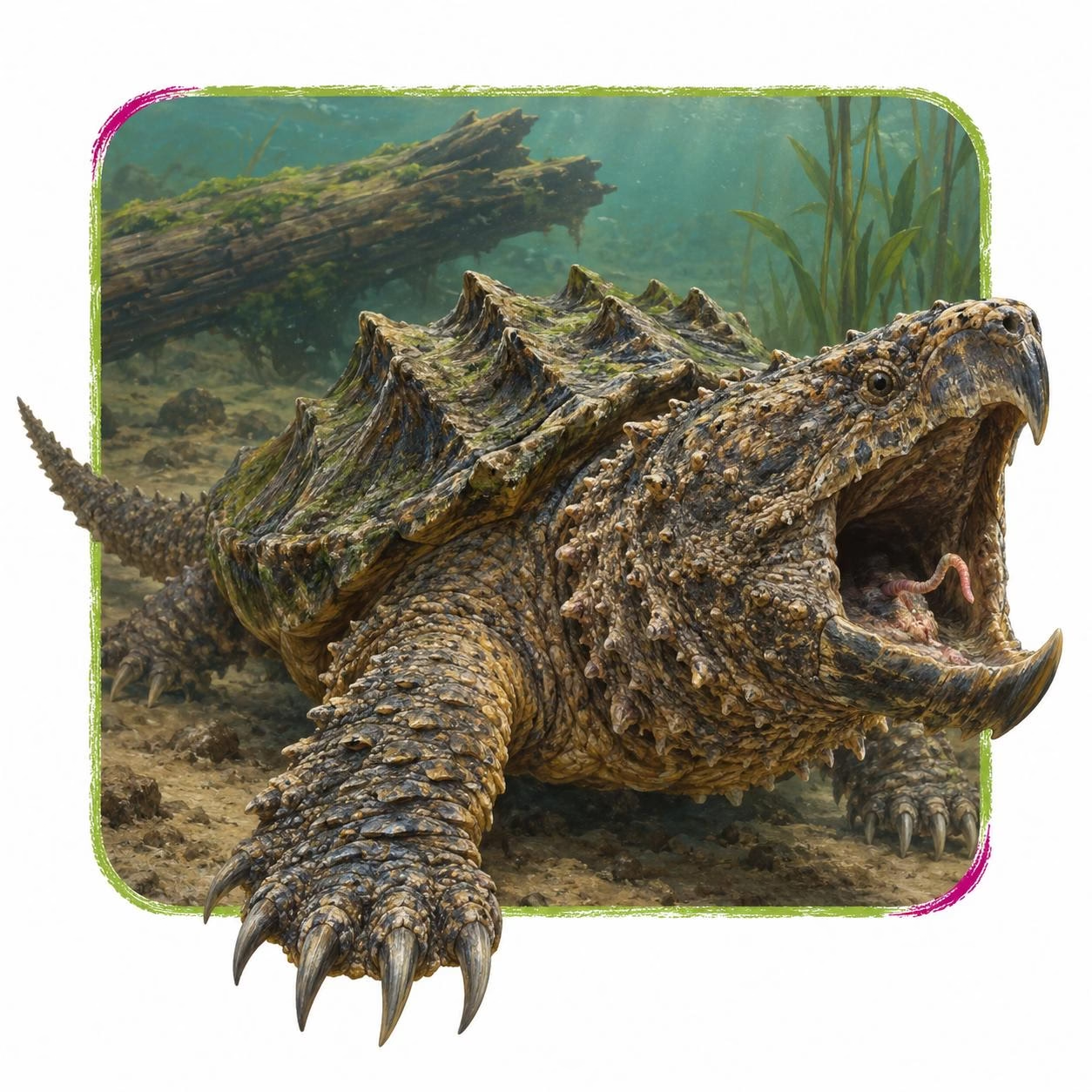
Alligator Snapping Turtle in its natural Deep rivers, reservoirs, oxbow lakes, swamps, bayous, canals, and slow-moving freshwater systems of the southeastern United States habitat