
Alpine Ibex Facts for Kids
The Alpine Ibex, Capra ibex, is a wild goat of the European Alps. It lives among steep rocky slopes, cliffs, alpine meadows, scree, and high mountain grasslands where powerful legs and specially adapted split hooves provide remarkable grip. Both sexes grow permanent backward-curving horns, but adult males are much larger and carry far longer, thicker horns with bold ridges. Alpine Ibex eat grasses, herbs, shoots, shrubs, lichens, and conifer needles depending on season. Females and young commonly form groups, while males often form separate bachelor groups outside the winter rut. The species nearly vanished from the Alps after centuries of hunting, surviving only around Gran Paradiso in Italy before protection and reintroductions rebuilt populations across much of its former range. It is currently listed as Least Concern.
Quick Alpine Ibex Facts
- Animal Type: Mammal and wild goat
- Scientific Name: Capra ibex
- Known For: Giant ridged horns, split gripping hooves, steep-cliff climbing, alpine herds, winter rut contests, seasonal coat changes, and a famous conservation comeback
- Habitat: Rocky alpine slopes, cliffs, scree, high meadows, subalpine grasslands, and nearby mountain woodland
- Diet: Grasses, herbs, shoots, shrubs, lichens, mosses, bark, and conifer needles depending on season
What You’ll Learn
Discover 10 fun Alpine Ibex facts for kids with accurate mountain-goat science, quick facts, a quiz, glossary, drawing activity, and European wildlife links.
Clear facts make them ideal for kids, parents, teachers, and young mountain-wildlife explorers.

10 Fun Alpine Ibex Facts for Kids
1. It Is a Wild Goat of the Alps
The Alpine Ibex belongs to the goat genus Capra and today lives in mountain populations across countries including Italy, Switzerland, France, Austria, Germany, and Liechtenstein. Many modern populations descend from animals protected in and around Gran Paradiso.
Kid Decode: The same goat lineage now scattered across the Alps once survived in one last mountain stronghold.
2. Male Horns Can Grow Nearly a Metre Long
Both sexes have permanent horns, but adult males grow much larger ones. In Gran Paradiso, mature male horns average around 92 centimetres at maximum length, while female horns are far shorter and slimmer.
Kid Decode: A big male carries two curved mountain rulers on his head all year long.
3. Horn Growth Records Age and Conditions
Ibex horns grow throughout life in annual increments separated by visible growth bands. Researchers can use these increments to estimate age and study how food, weather, population density, and other conditions affected horn growth.
Kid Decode: The horn becomes a hard spiral notebook recording year after year of mountain life.
4. Split Hooves Grip Tiny Rock Ledges
Each cloven hoof has hard outer edges for catching rough rock and softer rubbery inner surfaces for friction. The two halves can move somewhat independently, helping ibex grip small bumps and uneven ledges on extremely steep terrain.
Kid Decode: Each foot combines two hard climbing edges with a built-in grippy pad.
5. They Really Can Climb Near-Vertical Surfaces
Alpine Ibex have been studied climbing very steep artificial dam walls to reach mineral salts. Their route choice, strong legs, low center of mass, split hooves, dewclaws, and high hoof friction help them negotiate slopes that look almost impossible.
Kid Decode: A concrete wall can become a salt lick if an ibex can find enough tiny footholds.
6. The Menu Changes With the Mountain Seasons
Fresh grasses and herbs dominate summer feeding. In colder months, when snow covers much of the meadow vegetation, ibex add shrubs, shoots, lichens, mosses, bark, and conifer needles.
Kid Decode: Summer serves a salad bar; winter makes the goats search the tougher shelves.
7. Males and Females Often Form Separate Groups
Females commonly travel with kids and other females, while adult males often form bachelor groups or live more separately. These groups mix more during the winter breeding season.
Kid Decode: For much of the year, the mountain has a nursery club and a bachelor club.
8. Winter Brings the Rut
During the rut, males compete for access to females using displays, body size, and horn clashes. The battles can sound dramatic, but much competition is settled through assessment and dominance before a dangerous fight becomes necessary.
Kid Decode: The mountain echoes with horn knocks when the winter dating season begins.
9. Kids Are Born on Rocky Slopes
After a pregnancy of about five to six months, females usually give birth to one kid, with twins less common. Mothers often choose steep rocky places that provide some protection from predators, and young become surprisingly sure-footed quickly.
Kid Decode: An ibex baby’s first playground may be a cliff that would terrify most grown humans.
10. Protection Brought the Species Back
By the early 1800s fewer than about 100 Alpine Ibex survived in the Gran Paradiso area. Protection, captive breeding, translocation, and reintroduction rebuilt populations across the Alps, and the species is now globally Least Concern, although low genetic diversity remains a conservation concern in some reintroduced populations.
Kid Decode: One tiny surviving population became the seed for an Alpine comeback.
The Weirdest Alpine Ibex Fact
Alpine Ibex have been filmed climbing almost vertical dam walls tens of metres high to lick mineral salts from the stone, using split hooves whose grippy inner surfaces behave surprisingly like rubber.
Try This Alpine Ibex Activity
Alpine Ibex Cliff-Climber Activity
Draw a steep European Alpine landscape with an adult male Alpine Ibex carrying huge backward-curving ridged horns, a smaller female with shorter horns, and a kid on a rocky ledge. Add a close-up of split hooves with hard rims and soft gripping pads, alpine grasses and winter conifer needles, a bachelor group, a female-and-kid group, safe rutting horn clashes, and a conservation timeline from fewer than about 100 surviving animals to successful reintroductions across the Alps.
Quick Alpine Ibex Quiz
- What is the Alpine Ibex’s scientific name? Answer: Capra ibex.
- Which sex usually grows the much larger horns? Answer: Males.
- What helps the hooves grip steep rock? Answer: Hard outer edges and softer grippy inner surfaces.
- Where did the last surviving population persist before reintroductions? Answer: The Gran Paradiso area of Italy.
- What is its current IUCN category? Answer: Least Concern.
Mini Glossary
- Ibex: A wild goat adapted to mountainous habitats.
- Cloven Hoof: A hoof divided into two main toes.
- Rut: The breeding season when males compete for mates.
- Reintroduction: Returning a species to part of its former range after it disappeared there.
- Bachelor Group: A social group made mainly of males.
 Warbler Facts for Kids
 Howler Monkey Facts for Kids
 Lungfish Facts for Kids
 Rhomaleosaurus Facts for Kids
More Animal Facts for Kids
Visit the full animal facts library or explore a focused animal group.
More Extinct Animal Facts for Kids
Discover dinosaurs, Ice Age giants, prehistoric sea creatures, recently extinct species, and other animals from the past.
Fact check note: Fact checked with the American Society of Mammalogists Mammal Diversity Database current account for Capra ibex, which lists the Alpine Ibex as Least Concern and records its restored Alpine distribution; Gran Paradiso National Park’s Alpine Ibex account for male and female body size, permanent horns, seasonal diet, historic survival and reintroduction work; IUCN’s Gran Paradiso conservation history; Mammalian Species research on Alpine Ibex reproduction and anatomy; and locomotion studies of ibex climbing extremely steep dam walls and hoof friction.

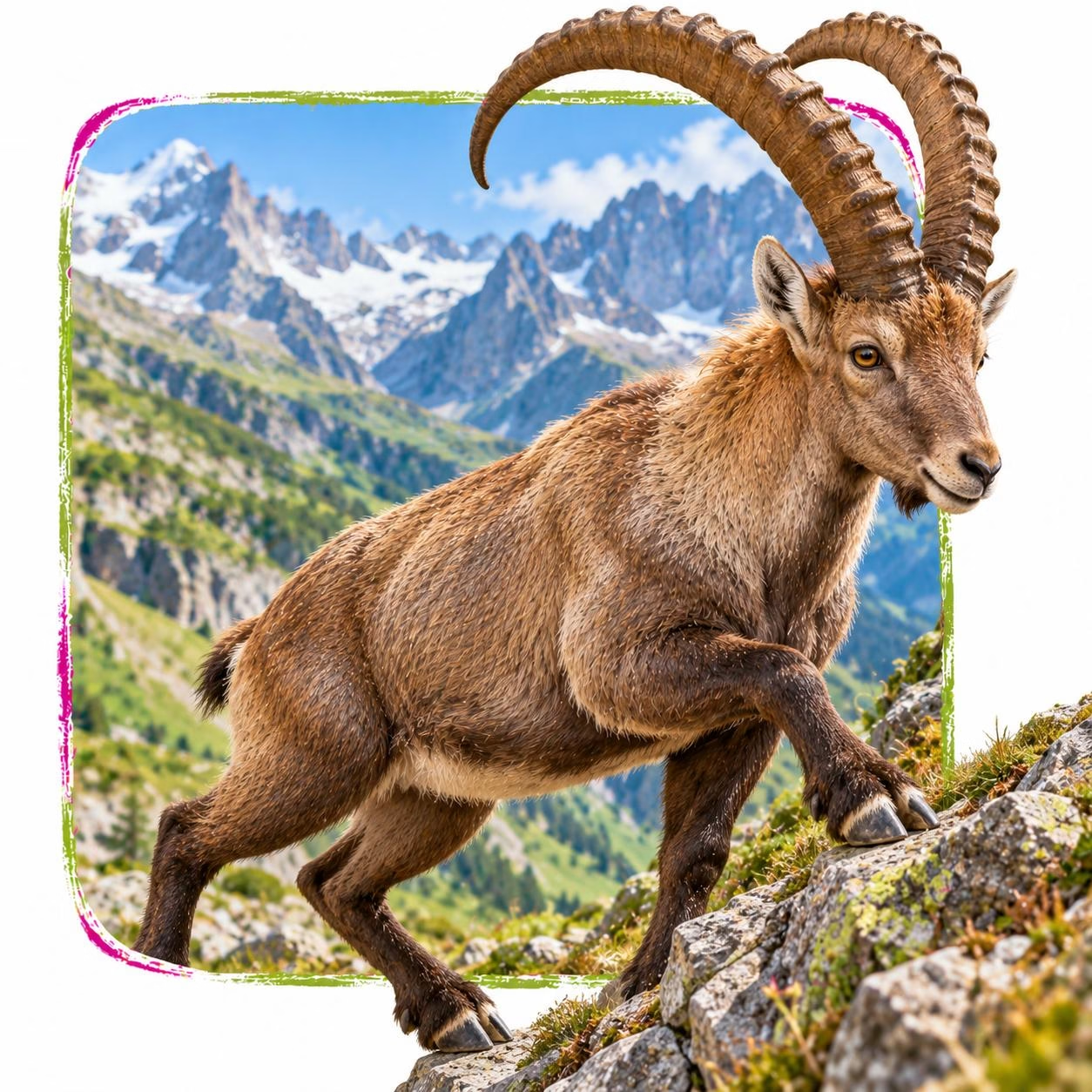
Alpine Ibex in its natural Rocky alpine slopes, cliffs, scree, high meadows, subalpine grasslands, mountain valleys, and nearby woodland across the European Alps habitat