
American Alligator Facts for Kids
The American alligator is a large armored reptile found in wetlands across the southeastern United States. Its broad rounded snout, dark colour, powerful tail, and mostly hidden lower teeth help distinguish it from the American crocodile. Alligators are major wetland predators, attentive mothers, noisy communicators, and ecosystem engineers that create watery refuges called gator holes.
Quick American Alligator Facts
- Animal Type: Reptile
- Group: Crocodilian
- Known For: Broad snout, armored skin, powerful tail, bellows, and gator holes
- Habitat: Swamps, marshes, lakes, ponds, rivers, bayous, and brackish wetlands
- Diet: Fish, turtles, snakes, birds, mammals, amphibians, and other available food
What You’ll Learn
Explore 10 fascinating american alligator facts for kids about powerful tails, strong jaws, wetlands, nests, and baby alligators, plus a quiz, glossary, and activity
Easy explanations make them fun for children, families, teachers, and young reptile explorers.
10 Fun American Alligator Facts for Kids
1. It Has a Broad Rounded Snout
An American alligator usually has a wide U-shaped snout. When its mouth is closed, the large fourth teeth of the lower jaw fit into sockets and are mostly hidden.
Kid Decode: Its face looks broad and tidy because the lower teeth tuck away.
2. It Is an Armored Reptile
Hard scales and bony plates called osteoderms protect the back, while softer skin between the plates allows the body to bend and swim.
Kid Decode: Its back carries natural body armor with flexible hinges.
3. Its Tail Is a Swimming Engine
A muscular tail pushes the alligator through water, helps it turn, and stores fat that can support it when food is scarce.
Kid Decode: The tail is paddle, rudder, and emergency lunchbox in one.
4. It Can High-Walk on Land
Alligators can crawl with the belly low or lift their bodies into a high walk with the legs more underneath them.
Kid Decode: The same reptile owns both a low crawl and a surprisingly tall walking mode.
5. It Digs Gator Holes
Alligators excavate depressions that retain water during dry periods. These gator holes can provide refuge for fish, turtles, frogs, insects, and birds.
Kid Decode: One giant reptile can dig a neighborhood swimming pool for the wetland.
6. Nest Temperature Influences Hatchling Sex
American alligators have temperature-dependent sex determination. Intermediate nest temperatures often produce more males, while cooler and very warm conditions produce more females.
Kid Decode: A few degrees inside the nest can change the future mix of sons and daughters.
7. Mothers Guard Their Nests
A female builds a mound nest from vegetation and soil, stays nearby during incubation, and may help hatchlings reach the water after hearing their calls.
Kid Decode: A mother alligator can carry tiny babies in jaws built to seize prey.
8. Baby Alligators Chirp
Hatchlings make high-pitched calls from inside the eggs and after hatching. These sounds help attract their mother and keep young animals together.
Kid Decode: The smallest gators come with built-in contact alarms.
9. Adults Bellow and Make Water Dance
Large alligators bellow during courtship and territorial displays. Low-frequency vibrations can make droplets bounce above the animal’s back in a display called the water dance.
Kid Decode: The swamp briefly becomes a drum, speaker, and dancing fountain.
10. It Is a Conservation Success Story
American alligators recovered after legal protection and habitat management, although wetland loss and unsafe interactions with people remain concerns.
Kid Decode: This predator returned from serious decline when people changed the rules around it.
The Weirdest American Alligator Fact
A bellowing alligator can vibrate the water so strongly that droplets leap above its back, creating a rumbling display known as the water dance.
Try This American Alligator Activity
American Alligator Wetland Drawing Activity
Draw an American alligator swimming through a southeastern wetland. Add a broad U-shaped snout, armored back, eyes and nostrils above water, a powerful tail, a vegetation mound nest, chirping hatchlings, and a gator hole crowded with fish, frogs, turtles, and wading birds.
Quick American Alligator Quiz
- What shape is an American alligator’s snout? Answer: Broad and rounded, often described as U-shaped.
- What powers it through water? Answer: Its muscular tail.
- What is a gator hole? Answer: A water-holding depression dug or maintained by an alligator.
- What helps determine whether hatchlings are male or female? Answer: Nest temperature.
- What do hatchlings do to contact their mother? Answer: They make high-pitched chirping calls.
Mini Glossary
- Crocodilian: A reptile from the group containing alligators, crocodiles, caimans, and gharials.
- Osteoderm: A bony plate formed within the skin.
- Ecosystem Engineer: An animal that physically changes habitat in ways that affect other species.
- Incubation: The period when eggs are kept under conditions that allow embryos to develop.
- Brackish: Slightly salty water where fresh water and seawater mix.
 Sea Anemone Facts for Kids
 Tamarin Facts for Kids
 Black Rhino Facts for Kids
 Gallimimus Facts for Kids
More Animal Facts for Kids
Visit the full animal facts library or explore a focused animal group.
More Extinct Animal Facts for Kids
Discover dinosaurs, Ice Age giants, prehistoric sea creatures, recently extinct species, and other animals from the past.
Fact check note: Fact checked with the U.S. Fish and Wildlife Service American alligator profile, USGS wetland ecology research, temperature-dependent sex determination studies, and peer-reviewed research on nesting, vocalisation, and ecosystem engineering.

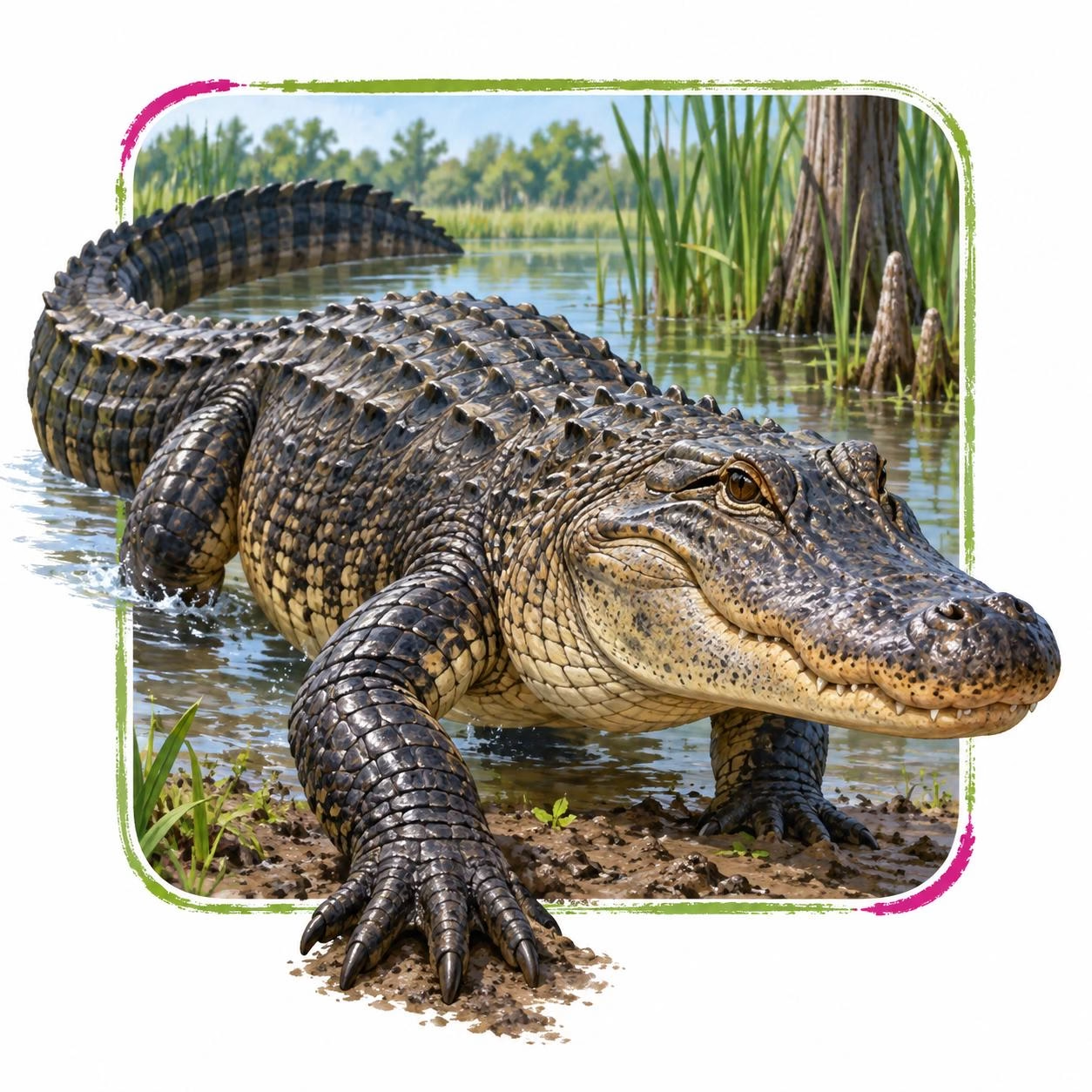
American Alligator in its natural Freshwater marshes, swamps, ponds, lakes, rivers, bayous, canals, and some brackish coastal wetlands of the southeastern United States habitat