
American Badger Facts for Kids
The American badger is a stout, powerful member of the weasel family that lives across open parts of North America. Its wedge-shaped head, bold white facial stripe, broad body, and enormous front claws are built for digging. Badgers pursue ground squirrels, pocket gophers, prairie dogs, and other prey underground, sometimes even hunting near coyotes that chase animals escaping above ground.
Quick American Badger Facts
- Animal Type: Mammal
- Group: Weasel family
- Known For: Powerful digging claws, striped face, flattened body, and underground hunting
- Habitat: Grasslands, prairies, deserts, shrublands, farms, and mountain meadows
- Diet: Ground squirrels, pocket gophers, prairie dogs, mice, insects, reptiles, birds, eggs, and carrion
What You’ll Learn
Learn 10 sturdy american badger facts for kids about digging, strong claws, burrows, hunting, and prairie habitats, with a quiz, glossary, and activity
These simple facts are written for kids, parents, teachers, and curious young minds.
10 Fun American Badger Facts for Kids
1. American Badgers Are Mustelids
They belong to Mustelidae, the mammal family containing weasels, otters, ferrets, martens, and wolverines.
Kid Decode: This stocky digger shares a family tree with sleek swimmers and twisty little hunters.
2. Their Front Claws Are Enormous
Long curved claws, powerful shoulders, and broad forefeet let a badger break soil and enlarge burrows with remarkable speed.
Kid Decode: Its paws look as though someone attached garden tools to a weasel.
3. Their Head Works Like a Wedge
A broad, low skull and strong neck help the badger push through loose earth while digging after prey.
Kid Decode: The face enters the tunnel like a furry doorstop with muscles.
4. They Hunt Animals Underground
American badgers dig into burrow systems to catch ground squirrels, pocket gophers, prairie dogs, and other animals that hide below the surface.
Kid Decode: For burrowing prey, home can suddenly acquire a badger-shaped back door.
5. They Sometimes Hunt Near Coyotes
A coyote may chase prey above ground while a badger pursues it below. The two predators do not form permanent teams, but their different skills can occasionally benefit both.
Kid Decode: One hunter covers the roof while the other works in the basement.
6. They Can Block Escape Tunnels
Badgers have been observed plugging extra burrow entrances or digging from another direction to reduce a prey animal’s escape routes.
Kid Decode: It does not merely dig harder; it sometimes redesigns the entire tunnel problem.
7. They Use Many Temporary Dens
A badger may dig or occupy numerous burrows for sleeping, shelter, food storage, and raising young rather than relying on one permanent home.
Kid Decode: Its neighborhood contains spare bedrooms scattered across the prairie.
8. They Are Mostly Solitary
Adults usually travel and hunt alone except during mating or when a mother is caring for pups.
Kid Decode: The social calendar is brief, but the digging schedule remains full.
9. Pregnancy Includes a Long Pause
After mating in summer or early autumn, embryo development pauses before implantation. Active development resumes in winter so pups are born during spring.
Kid Decode: The baby plan presses pause for months and restarts when the season is better.
10. They Do Not Truly Hibernate
American badgers may remain underground and inactive during severe winter weather, but they do not enter the deep, continuous hibernation of some mammals.
Kid Decode: Winter can close the burrow office for a while without shutting down the entire badger.
The Weirdest American Badger Fact
American badgers sometimes hunt alongside coyotes, combining an underground digger with an above-ground runner to make escape difficult for burrowing prey.
Try This American Badger Activity
American Badger Digging Activity
Draw an American badger digging across a North American prairie. Add a low broad body, wedge-shaped head, bold white stripe, black cheek patches, huge curved front claws, flying soil, a ground-squirrel tunnel cutaway, several temporary dens, and a coyote waiting above ground at a safe distance.
Quick American Badger Quiz
- Which mammal family contains the American badger? Answer: The weasel family, Mustelidae.
- What are its huge front claws mainly used for? Answer: Digging burrows and pursuing prey.
- Which predator sometimes hunts near a badger? Answer: A coyote.
- What is delayed implantation? Answer: A pause before an embryo attaches and resumes development.
- Do American badgers truly hibernate? Answer: No, although they may remain inactive underground during harsh weather.
Mini Glossary
- Mustelid: A member of the weasel family.
- Fossorial: Adapted for digging or living underground.
- Delayed Implantation: A reproductive pause before an embryo attaches to the uterus and continues developing.
- Den: A sheltered resting or breeding place.
- Solitary: Usually living or travelling alone.



 Condor Facts for Kids
 African Penguin Facts for Kids
 Mahi-Mahi Facts for Kids
 Cladoselache Facts for Kids
More Animal Facts for Kids
Visit the full animal facts library or explore a focused animal group.
More Extinct Animal Facts for Kids
Discover dinosaurs, Ice Age giants, prehistoric sea creatures, recently extinct species, and other animals from the past.
Fact check note: Fact checked with U.S. National Park Service American badger resources, the U.S. Forest Service Fire Effects Information System species review, Animal Diversity Web’s Taxidea taxus account, and field studies of coyote–badger hunting associations.

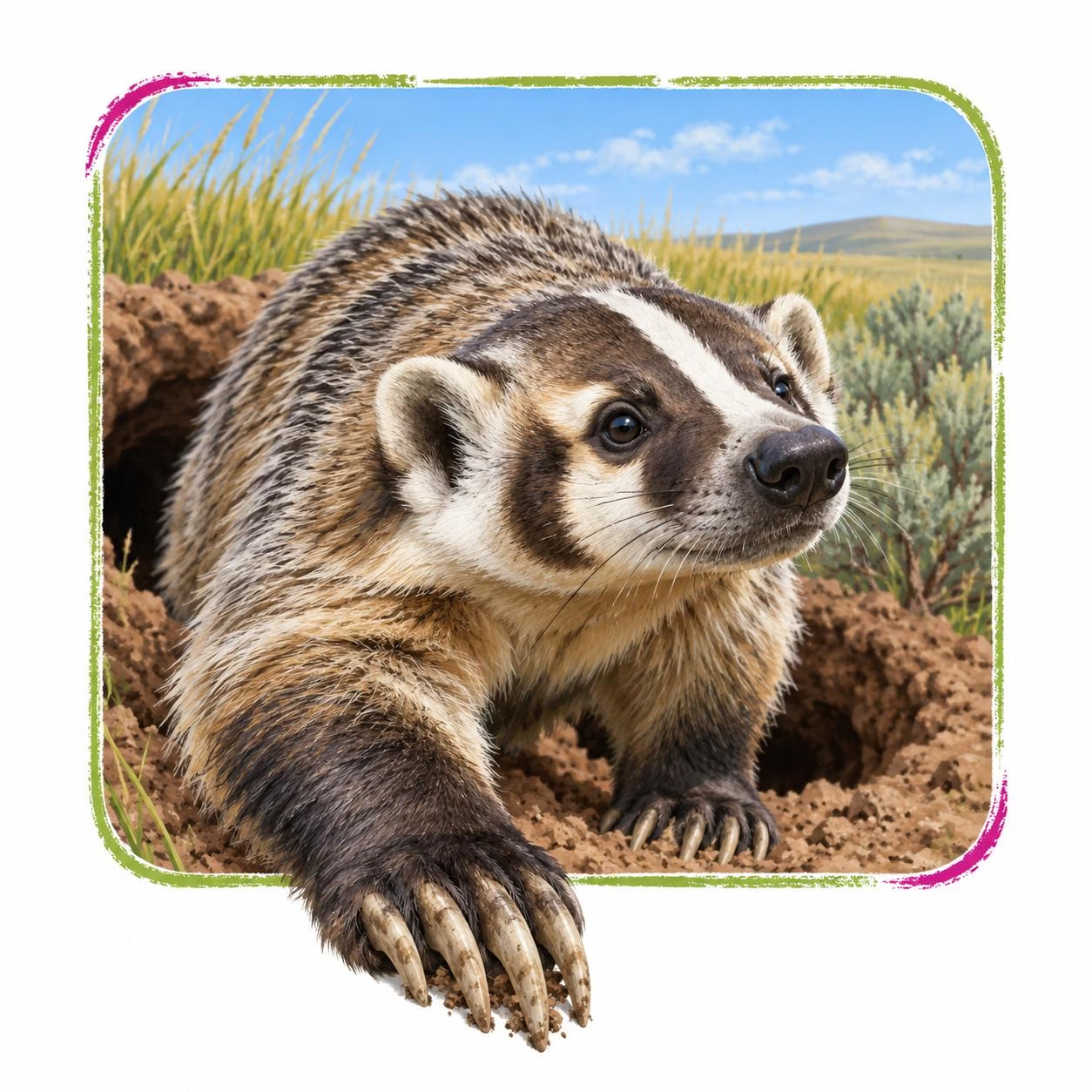
American Badger in its natural Prairies, grasslands, sagebrush steppe, deserts, farms, open shrublands, mountain meadows, and other open habitats with diggable soil habitat