
American Bison Facts for Kids
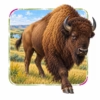
The American bison is the largest land mammal in North America. Often called a buffalo, it is a true bison with a towering shoulder hump, shaggy front coat, short curved horns, and a powerful head. Bison graze in herds, roll in dusty wallows, push through winter snow, and reshape grasslands in ways that create food and shelter for many other species.
Quick American Bison Facts
- Animal Type: Mammal
- Group: Wild cattle
- Known For: Shoulder hump, shaggy coat, curved horns, huge herds, and dusty wallows
- Habitat: Prairies, grasslands, open woodlands, river valleys, and mountain meadows
- Diet: Grasses, sedges, and other low-growing plants
What You’ll Learn
Discover 10 mighty american bison facts for kids about huge bodies, shaggy coats, herds, grazing, and prairie life, plus a quiz, glossary, and activity
Clear explanations make them ideal for children, families, teachers, and little fact-hunters.
10 Fun American Bison Facts for Kids
1. Bison Are North America’s Largest Land Mammals
Large adult males can weigh around 900 kilograms or more, while females are usually smaller. Size varies among individuals and between plains and wood bison.
Kid Decode: A heavyweight bull can carry nearly a tonne of prairie power.
2. The Hump Is Made of Muscle
The tall shoulder hump is supported by long vertebral spines and powerful muscles that help move the enormous head.
Kid Decode: The hump is not a fat storage bag; it is a muscular engine mount.
3. Both Males and Females Have Horns
Bison of both sexes grow permanent horns with a bony core and a keratin covering. Bulls usually have thicker horns and heavier heads.
Kid Decode: In the bison world, horns are not a boys-only accessory.
4. Newborn Calves Look Orange
Young calves are born with reddish-orange coats that gradually darken during their first months of life.
Kid Decode: A baby bison begins as a bright little cinnamon puff.
5. Bison Roll in Wallows
A bison may roll in bare soil or mud to shed loose hair, reduce biting insects, cool its body, and leave scent during the breeding season.
Kid Decode: One rolling giant can turn a dusty hollow into a prairie landmark.
6. Wallows Create Tiny Habitats
Repeated wallowing removes plants and forms shallow depressions that can collect rainwater and support insects, amphibians, and different plant species.
Kid Decode: A bison bath can become a pocket-sized wetland for the neighbours.
7. They Sweep Snow With Their Heads
Bison swing their massive heads from side to side to uncover buried grasses during snowy winters.
Kid Decode: The prairie snowplow comes with horns, fur, and no steering wheel.
8. They Live in Changing Herds
Females and young often form groups, while adult bulls may live alone or in smaller bands outside the summer breeding season.
Kid Decode: The herd rearranges itself as seasons, ages, and family jobs change.
9. The Rut Is Loud and Dusty
During the summer breeding season, bulls bellow, wallow, scent-mark, and compete for access to females.
Kid Decode: Bison romance arrives with rumbling, dust clouds, and very little subtlety.
10. They Survived a Near Collapse
Tens of millions once lived across North America, but mass killing and habitat loss reduced them to only a few hundred by the late 1800s. Conservation, Tribal restoration, ranching, and protected herds prevented extinction, though truly wild conservation herds remain limited.
Kid Decode: The comeback saved the species, but the original prairie thunder has not fully returned.
The Weirdest American Bison Fact
Bison use their massive heads as living snowplows, sweeping aside deep snow to reach hidden grass during harsh winters.
Try This American Bison Activity
American Bison Prairie Drawing Activity
Draw an American bison herd crossing a wide grassland. Add a huge bull with a shoulder hump, cows with calves, one orange newborn, curved horns, a dusty wallow, prairie dogs, wildflowers, and a bison sweeping snow away from hidden grass in a small winter inset.
Quick American Bison Quiz
- What is the largest land mammal in North America? Answer: The American bison.
- What supports a bison’s shoulder hump? Answer: Long vertebral spines and powerful muscles.
- Do female bison have horns? Answer: Yes.
- What colour are many newborn calves? Answer: Reddish orange.
- What is a bison wallow? Answer: A shallow dusty or muddy depression where bison roll.
Mini Glossary
- Bovid: A hoofed mammal from the family containing cattle, bison, buffalo, sheep, goats, and antelopes.
- Ruminant: A hoofed mammal that regurgitates and rechews partly digested plant food.
- Wallow: A bare depression where an animal rolls in dust or mud.
- Rut: The seasonal breeding period of certain mammals.
- Conservation Herd: A managed population protected to preserve wildlife genes, behaviour, and ecological roles.
 Potoo Facts for Kids
 Mudpuppy Facts for Kids
 Bee Hummingbird Facts for Kids
 Riojasaurus Facts for Kids
More Animal Facts for Kids
Visit the full animal facts library or explore a focused animal group.
More Extinct Animal Facts for Kids
Discover dinosaurs, Ice Age giants, prehistoric sea creatures, recently extinct species, and other animals from the past.
Fact check note: Fact checked with the U.S. National Park Service Bison Facts program, the IUCN Red List assessment for Bison bison, Smithsonian’s National Zoo American bison account, and U.S. Department of the Interior bison conservation resources.

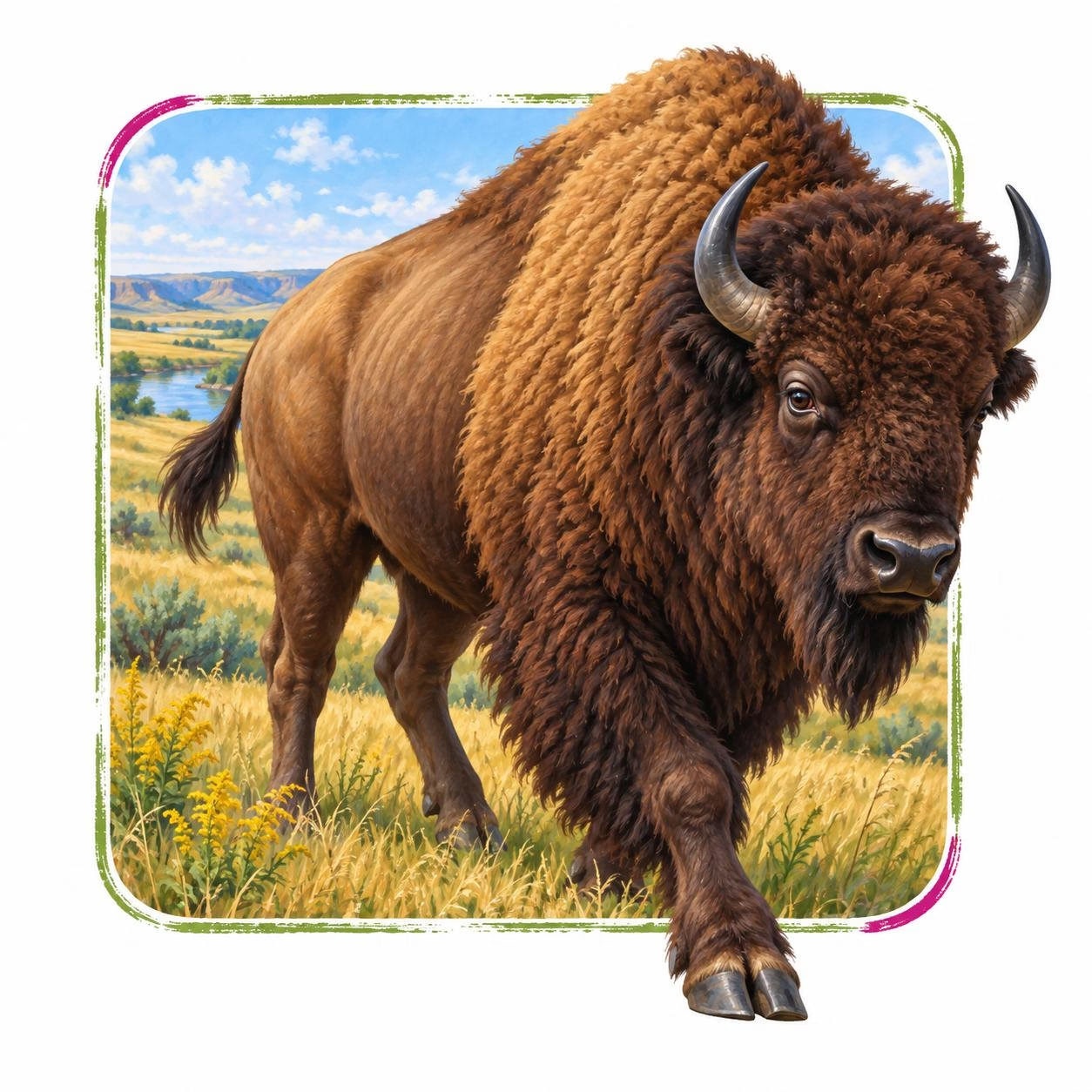
American Bison in its natural Prairies, grasslands, open woodlands, river valleys, sagebrush plains, and mountain meadows across protected and managed parts of North America habitat