
American Crocodile Facts for Kids
The American crocodile is a large true crocodile that lives from southern Florida and Mexico through the Caribbean, Central America, and northern South America. It has a narrower, more pointed snout than the American alligator and often shows a large lower tooth even when its mouth is closed. Salt glands help it use coastal lagoons, mangroves, estuaries, and other brackish habitats, although young crocodiles still benefit greatly from freshwater.
Quick American Crocodile Facts
- Animal Type: Reptile
- Group: True crocodile
- Known For: Narrow snout, visible lower teeth, salt glands, coastal habitat, and long-distance movement
- Habitat: Mangroves, estuaries, lagoons, rivers, lakes, reservoirs, and coastal shorelines
- Diet: Fish, crabs, turtles, birds, mammals, and other available animals
What You’ll Learn
Learn 10 amazing american crocodile facts for kids about long snouts, powerful tails, swimming, coastal habitats, and nesting, plus a quiz, glossary, and activity
Simple explanations make them fun for children, families, teachers, and young wildlife explorers.
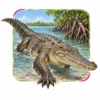
10 Fun American Crocodile Facts for Kids
1. It Is a True Crocodile
The American crocodile belongs to Crocodylidae, the family of true crocodiles, rather than the alligator and caiman family.
Kid Decode: It carries the crocodile family name on its narrow, toothy face.
2. Its Snout Is Narrower Than an Alligator’s
The snout is usually long and V-shaped, while an American alligator generally has a broader, rounder U-shaped snout.
Kid Decode: One face forms a pointed V while the nearby alligator prefers a broad U.
3. A Lower Tooth Often Stays Visible
When the jaws close, the large fourth tooth of the lower jaw usually fits into a notch and remains visible outside the upper jaw.
Kid Decode: Its closed-mouth smile still keeps one impressive tooth on display.
4. It Can Handle Salty Water
Special salt glands on the tongue remove excess salt, allowing American crocodiles to use brackish and marine-influenced habitats.
Kid Decode: Its tongue contains a tiny desalination system.
5. Young Crocodiles Need Fresher Water
Hatchlings and juveniles are less able to cope with high salinity than large adults, so freshwater flow and low-salinity nursery areas improve survival and growth.
Kid Decode: The smallest crocodiles need the gentlest salt setting.
6. Large Adults Can Travel Far
Satellite tracking and field records show that American crocodiles can move long distances through coastal waters, rivers, lagoons, and even across stretches of sea.
Kid Decode: A crocodile may turn one coastline into a very long swimming route.
7. Females Dig Hole Nests
Females usually excavate nests in sand, soil, or human-made berms above the waterline and cover the eggs after laying.
Kid Decode: The nursery begins as a carefully buried pocket in warm ground.
8. Mothers Help Hatchlings
A female may open the nest after hearing calls from the young and carry or guide hatchlings toward nearby water.
Kid Decode: Jaws built for grabbing prey can also become a baby-crocodile transport basket.
9. Florida Crocodiles Have Recovered
Protection and habitat management helped the small South Florida population grow, and nesting success has improved greatly since monitoring began in the 1970s.
Kid Decode: The comeback began with safe nests, protected shores, and decades of patient counting.
10. The Species Is Still Vulnerable
Globally, the American crocodile is listed as Vulnerable because habitat loss, killing, fishing interactions, pollution, and disturbance continue to affect populations.
Kid Decode: A recovery in one region does not erase danger across an enormous range.
The Weirdest American Crocodile Fact
Salt glands in its tongue let the American crocodile travel through coastal and even marine waters, yet its hatchlings still grow best where freshwater keeps salinity lower.
Try This American Crocodile Activity
American Crocodile Coast Drawing Activity
Draw an American crocodile resting beside a tropical mangrove lagoon. Add a long V-shaped snout, visible lower fourth tooth, gray-green armored body, powerful tail, salt-gland tongue inset, fish and crabs, a sandy hole nest, chirping hatchlings, and a map linking Florida, the Caribbean, Central America, and northern South America.
Quick American Crocodile Quiz
- How does an American crocodile’s snout compare with an alligator’s? Answer: It is usually narrower and more V-shaped.
- Which lower tooth is often visible when the mouth closes? Answer: The large fourth tooth.
- What helps it remove extra salt? Answer: Salt glands on the tongue.
- Where do females place their eggs? Answer: In covered hole nests dug above the waterline.
- What is its global IUCN category? Answer: Vulnerable.
Mini Glossary
- Crocodylid: A member of the true crocodile family.
- Estuary: A place where river water mixes with seawater.
- Brackish: Slightly salty water containing both fresh water and seawater.
- Salt Gland: An organ that removes excess salt from the body.
- Hatchling: A young animal newly emerged from an egg.
 Hawksbill Sea Turtle Facts for Kids
 Purple Finch Facts for Kids
 Cat Facts for Kids
 Hesperocyon Facts for Kids
More Animal Facts for Kids
Visit the full animal facts library or explore a focused animal group.
More Extinct Animal Facts for Kids
Discover dinosaurs, Ice Age giants, prehistoric sea creatures, recently extinct species, and other animals from the past.
Fact check note: Fact checked with the IUCN Red List assessment for Crocodylus acutus, U.S. Geological Survey spatial and nesting ecology research, U.S. Fish and Wildlife Service recovery resources, and long-term monitoring studies from South Florida.

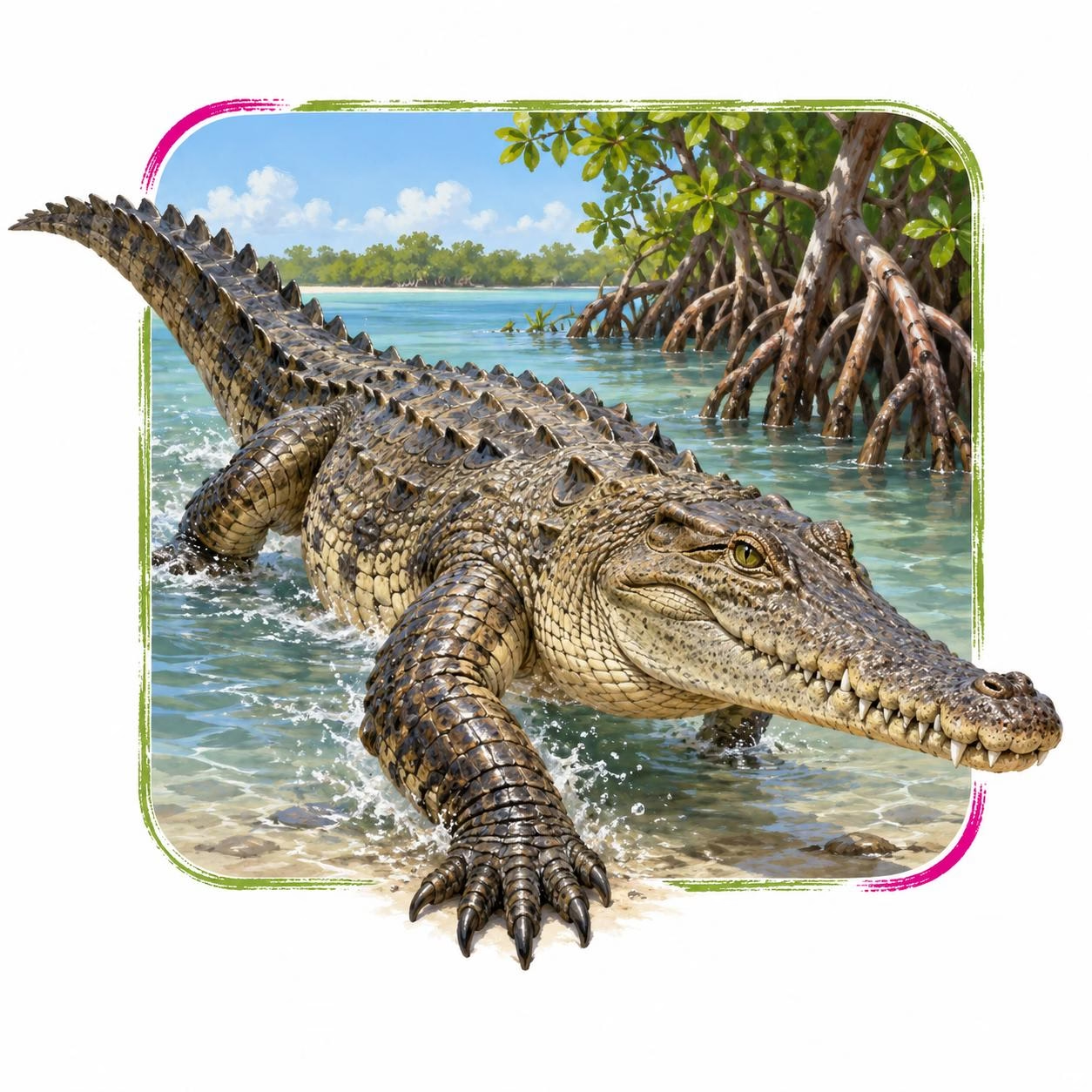
American Crocodile in its natural Mangrove estuaries, coastal lagoons, brackish marshes, rivers, lakes, reservoirs, islands, beaches, and sheltered marine shorelines habitat