
American Kestrel Facts for Kids
American kestrels are tiny colorful falcons found across much of the Americas. They hunt from wires, poles, trees, or hovering flight, using sharp eyesight, quick wings, and talons to catch insects and small animals.
Quick American Kestrel Facts
- Animal Type: Bird
- Group: Falcon, raptor, and bird of prey
- Known For: Small size, hovering flight, colorful males, rusty backs, slate-blue wings, dark face marks, chicks, and cavity nests
- Habitat: Open fields, grasslands, deserts, farms, meadows, roadsides, parks, towns, woodland edges, and nest cavities or nest boxes
- Diet: Grasshoppers, beetles, crickets, dragonflies, lizards, mice, voles, small birds, and other small prey depending on season
What You’ll Learn
Explore 10 fascinating osprey facts for kids about fishing, reversible toes, huge nests, diving, and life near water, with a quiz, glossary, and activity
These facts are explained simply for kids, parents, teachers, and curious little fact-finders.
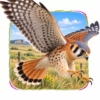
10 Fun American Kestrel Facts for Kids
1. American Kestrels Are Birds
American kestrels are birds, so they have feathers, beaks, wings, and lay eggs.
Kid Decode: An American kestrel is a pocket-sized falcon with sky-hunter sparks.
2. They Are Falcons
American kestrels belong to the falcon group, a raptor family known for speed and pointed wings.
Kid Decode: They are little falcons, not baby hawks.
3. Baby American Kestrels Are Chicks
Baby American kestrels are called chicks or eyases while they grow in the nest.
Kid Decode: An eyas is a fluffy falcon trainee with a future zoom button.
4. They Are Tiny Raptors
The American kestrel is the smallest falcon in North America.
Kid Decode: It proves a raptor can be small and still fierce.
5. Males Are Very Colorful
Male American kestrels often show slate-blue wings, rusty backs, and bold face marks.
Kid Decode: This little bird wears a whole paintbox of feathers.
6. They Can Hover
American kestrels can hover facing into the wind while searching for prey below.
Kid Decode: They can pause in the air like someone hit the sky’s hold button.
7. They Hunt Insects and Small Animals
Kestrels eat many insects, plus lizards, mice, and other small prey.
Kid Decode: Grasshoppers are definitely on the tiny falcon menu.
8. They Nest in Cavities
American kestrels nest in holes in trees, cliffs, buildings, or nest boxes.
Kid Decode: They do not build fancy stick nests; they borrow a ready-made room.
9. They Have Dark Face Marks
American kestrels have dark vertical marks on the face that help with identification.
Kid Decode: Those marks look like tiny falcon face paint.
10. They Need Open Habitat
Kestrels need open hunting areas, insects, safe nest cavities, and perches.
Kid Decode: A good kestrel neighborhood has fields, food, and a high lookout spot.
The Weirdest American Kestrel Fact
An American kestrel can hover in one spot while scanning the ground for insects and small prey.
Try This American Kestrel Activity
American Kestrel Drawing Activity
Draw an American kestrel hovering over an open field. Add pointed wings, rusty back, slate-blue wings, dark face marks, sharp talons, grasshoppers, a mouse in grass, chicks in a nest box, a fence perch, and wind arrows.
Quick American Kestrel Quiz
- What animal group are American kestrels in? Answer: Birds.
- What are baby American kestrels called? Answer: Chicks or eyases.
- What kind of raptor is an American kestrel? Answer: A falcon.
- What can kestrels do while facing into the wind? Answer: Hover.
- Where do American kestrels often nest? Answer: In cavities or nest boxes.
Mini Glossary
- Bird: An animal with feathers, a beak, and wings.
- Eyas: A young falcon chick in the nest.
- Falcon: A raptor group often known for pointed wings and fast flight.
- Raptor: A bird of prey with sharp talons and a hooked beak.
- Cavity Nest: A nest inside a hole in a tree, cliff, wall, or nest box.
 Catfish Facts for Kids
 Southern Elephant Seal Facts for Kids
 Carpenter Bee Facts for Kids
 Short-Faced Bear Facts for Kids
More Animal Facts for Kids
Visit the full animal facts library or explore a focused animal group.
More Extinct Animal Facts for Kids
Discover dinosaurs, Ice Age giants, prehistoric sea creatures, recently extinct species, and other animals from the past.
Fact check note: Fact checked with Cornell Lab American kestrel resources, Hawk Mountain American kestrel resources, and trusted raptor education references.

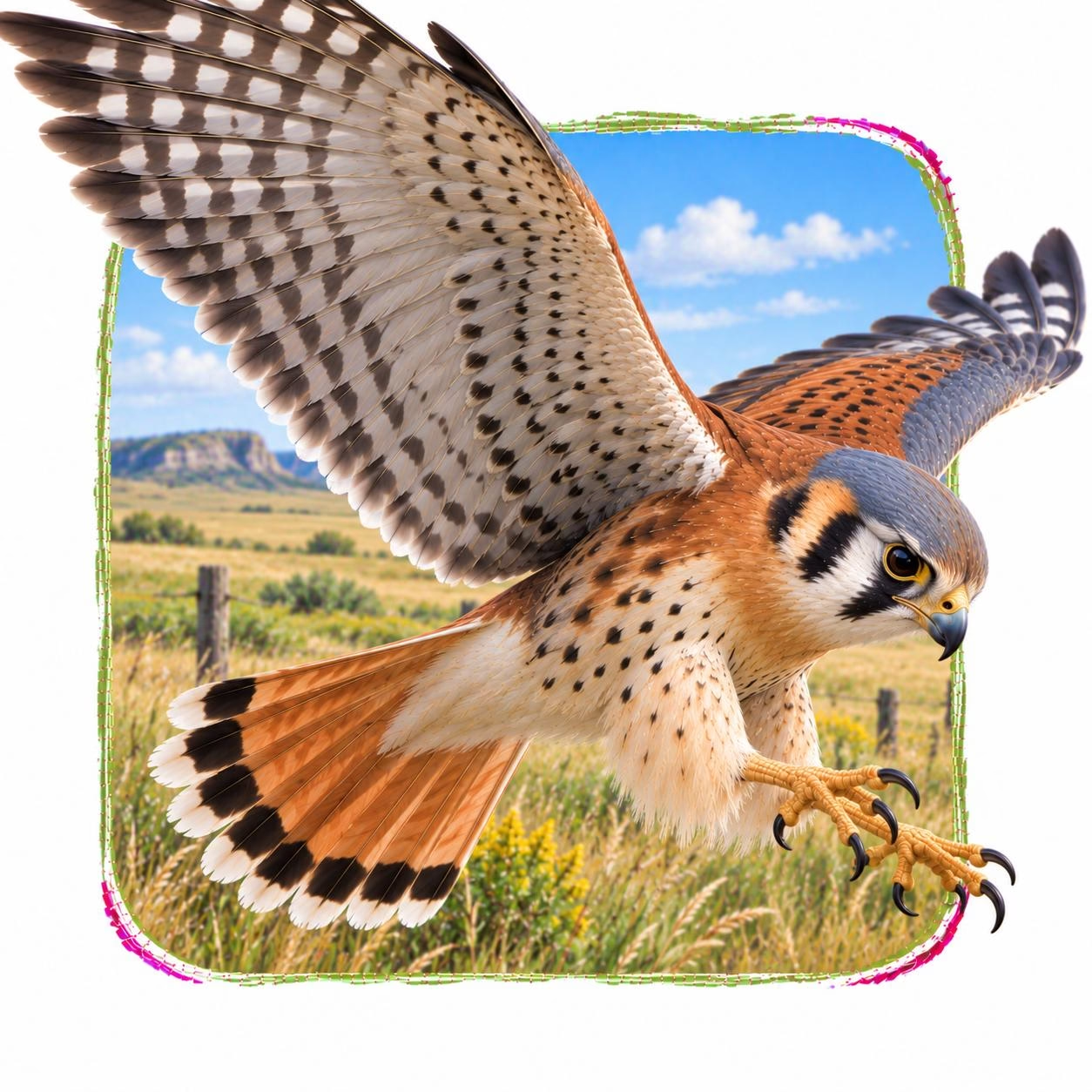
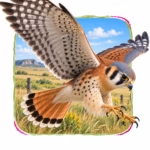
American Kestrel in its natural Grasslands habitat