
American Mink Facts for Kids
The American mink is a sleek semi-aquatic member of the weasel family native to North America. It has a long flexible body, short legs, dense dark fur, partly webbed toes, and a thick tail. Mink patrol shorelines and wetlands, slipping between land and water to hunt fish, crayfish, frogs, birds, eggs, and small mammals. The species is now often called Neogale vison, although older sources use Neovison vison.
Quick American Mink Facts
- Animal Type: Mammal
- Group: Weasel family
- Known For: Sleek body, dense fur, strong swimming, scent glands, and opportunistic hunting
- Habitat: Streams, rivers, ponds, lakes, marshes, swamps, and rocky coasts
- Diet: Fish, crayfish, frogs, birds, eggs, rodents, rabbits, and other available prey
What You’ll Learn
Learn 10 sleek american mink facts for kids about swimming, thick fur, hunting, wetlands, and nighttime behavior, with a quiz, glossary, and activity
These simple facts are written for kids, parents, teachers, and curious young minds.
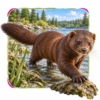
10 Fun American Mink Facts for Kids
1. American Mink Are Mustelids
They belong to Mustelidae, the mammal family containing weasels, otters, badgers, ferrets, martens, and wolverines.
Kid Decode: This river hunter shares a family tree with both tiny weasels and burly wolverines.
2. They Have Long Flexible Bodies
A narrow body, short legs, rounded ears, pointed muzzle, and thick tail help a mink squeeze through roots, rocks, tunnels, and shoreline vegetation.
Kid Decode: Its body can pour through a gap like a furry ribbon.
3. They Are Strong Swimmers
Partly webbed toes and a flexible body help American mink paddle, dive, and chase prey in shallow water, although they also hunt extensively on land.
Kid Decode: It switches from river torpedo to shoreline runner without changing outfits.
4. Their Fur Traps Warm Air
American mink have dense underfur covered by glossy guard hairs that help keep the skin relatively dry and insulated during short swims.
Kid Decode: The coat carries a warm air layer beneath its shiny outer roof.
5. They Eat Whatever Prey Is Available
The diet changes with season and habitat and can include rodents, muskrats, fish, crayfish, frogs, birds, eggs, reptiles, insects, and carrion.
Kid Decode: The menu is written by whatever the riverbank offers that day.
6. They Often Use Second-Hand Dens
A mink may rest or raise kits in an abandoned muskrat or beaver burrow, hollow log, root cavity, rock pile, or sheltered space near water.
Kid Decode: The riverside home is often rented from an animal that moved out earlier.
7. They Are Usually Solitary
Adults normally travel and hunt alone, marking home ranges and avoiding most same-sex neighbours outside the breeding season.
Kid Decode: One mink usually patrols the shoreline as a one-animal expedition.
8. They Produce Strong-Smelling Musk
Anal scent glands release a powerful odour used in communication and defense when a mink feels threatened.
Kid Decode: The tiny river hunter carries an emergency smell cloud.
9. Pregnancy Can Pause Briefly
Females use delayed implantation, meaning a fertilized egg may wait before attaching to the uterus and continuing development. This helps births occur during a favourable season.
Kid Decode: The baby calendar includes a biological pause button.
10. Young Mink Are Called Kits
A female raises one litter in a den, and the blind, small kits grow rapidly before following her and learning to hunt.
Kid Decode: The nursery begins underground, but the lessons soon move to the water’s edge.
The Weirdest American Mink Fact
An American mink can release a strong-smelling musk from scent glands when alarmed, giving this sleek swimmer a skunk-like defensive surprise.
Try This American Mink Activity
American Mink Riverbank Drawing Activity
Draw an American mink moving between a stream and a tangled riverbank. Add a long dark body, pointed muzzle, rounded ears, thick tail, partly webbed toes, glossy fur, fish and crayfish underwater, a hollow-log den with kits, and a scent-marking clue beside a shoreline rock.
Quick American Mink Quiz
- Which mammal family contains the American mink? Answer: The weasel family, Mustelidae.
- What helps it swim? Answer: Partly webbed toes, a flexible body, and strong paddling movements.
- What does it eat? Answer: A wide range of fish, crayfish, frogs, birds, eggs, and small mammals.
- What is delayed implantation? Answer: A pause before a fertilized egg attaches and continues developing.
- What are baby mink called? Answer: Kits.
Mini Glossary
- Mustelid: A member of the weasel family.
- Semi-Aquatic: Spending substantial time both on land and in water.
- Guard Hair: A longer outer hair that protects dense underfur.
- Delayed Implantation: A reproductive pause before an embryo attaches and resumes development.
- Home Range: The area an animal regularly travels while finding food, shelter, and mates.
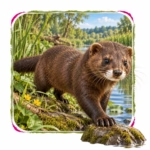
 Goral Facts for Kids
 Bluefin Tuna Facts for Kids
 Baboon Facts for Kids
 Smilodon Facts for Kids
More Animal Facts for Kids
Visit the full animal facts library or explore a focused animal group.
More Extinct Animal Facts for Kids
Discover dinosaurs, Ice Age giants, prehistoric sea creatures, recently extinct species, and other animals from the past.
Fact check note: Fact checked with New York State Department of Environmental Conservation’s mink account, Alaska Department of Fish and Game’s American mink profile, state wildlife-agency life-history resources, and current mammal taxonomy recognising Neogale vison.

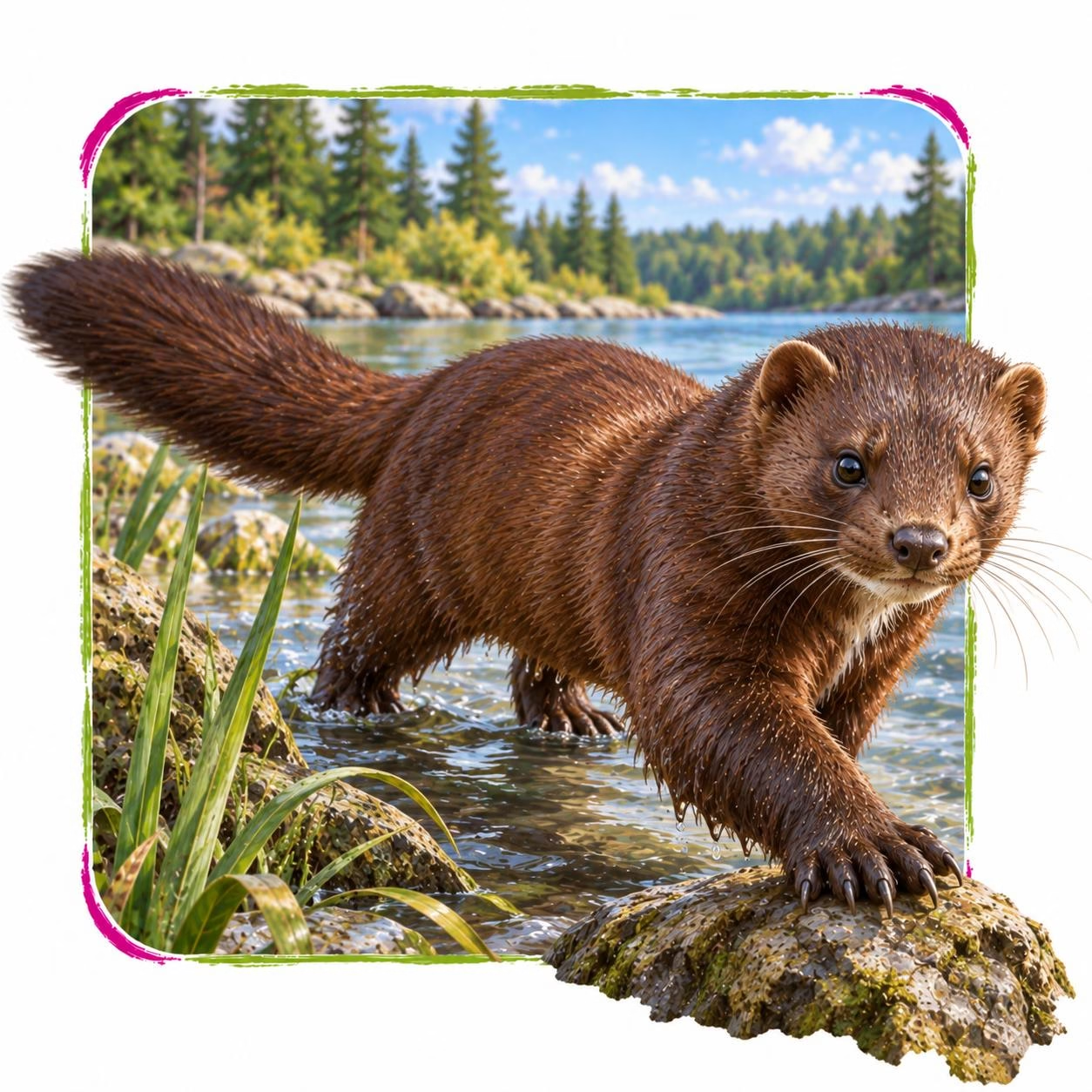
American Mink in its natural Streams, rivers, ponds, lakes, marshes, swamps, forested shorelines, rocky coasts, and nearby upland habitats across North America habitat