
American Tree Sparrow Facts for Kids
The American tree sparrow is a plump North American songbird with a rusty cap, a two-coloured bill, and often a small dark spot on its plain breast. Despite its name, it usually forages and nests close to the ground. It breeds near the Arctic treeline and spends winter in weedy fields, marsh edges, gardens, and snowy backyards farther south.
Quick American Tree Sparrow Facts
- Animal Type: Bird
- Group: New World sparrow
- Known For: Rusty cap, two-coloured bill, breast spot, snowy winter flocks, and tundra migration
- Habitat: Arctic scrub, tundra edges, weedy fields, marshes, hedgerows, and winter gardens
- Diet: Seeds in colder months and mostly insects during the breeding season
What You’ll Learn
Explore 10 fascinating american tree sparrow facts for kids about rusty caps, winter flocks, seeds, migration, and northern habitats, with a quiz, glossary, and activity
These easy facts are made for kids, parents, teachers, and curious young learners.
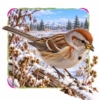
10 Fun American Tree Sparrow Facts for Kids
1. It Is Not the Eurasian Tree Sparrow
The American tree sparrow is Spizelloides arborea, a native North American sparrow. The Eurasian tree sparrow is a different species with a black cheek spot.
Kid Decode: One tree-sparrow name hides two birds from different parts of the world.
2. The Name Is Slightly Misleading
American tree sparrows spend much of their time on the ground and usually nest on or close to the ground rather than high in trees.
Kid Decode: The tree sparrow often ignores the tree and gets straight down to ground business.
3. It Has a Rusty Cap
Adults have a rusty crown and rusty eye stripe on a gray head, a streaked brown back, and a mostly plain gray or buff breast.
Kid Decode: Its head looks topped with a neat little cinnamon cap.
4. Its Bill Has Two Colours
The small bill is usually dark on top and yellowish below, providing one of the most useful identification clues.
Kid Decode: The beak arrives in a tidy two-tone design.
5. The Breast Spot Is Not Always Clear
Many individuals show one dark smudge in the centre of the otherwise unstreaked breast, but the mark can be faint or absent.
Kid Decode: Its tiny shirt button sometimes fades almost completely away.
6. It Breeds Near the Arctic Treeline
In summer the species moves to Alaska and northern Canada, nesting where scattered willows, alders, birches, and spruces meet open tundra.
Kid Decode: Its summer address sits where the last little trees meet the enormous tundra.
7. Most Nests Sit Near the Ground
The female builds an open cup of moss, grass, bark, and twigs in a grass tussock, beneath a shrub, or occasionally on a low branch.
Kid Decode: The nursery hides in the grass instead of balancing in a treetop.
8. Its Diet Flips With the Seasons
From autumn through spring it eats mostly seeds. During June and July it switches heavily toward insects and other small invertebrates, especially while feeding chicks.
Kid Decode: Winter brings a seed bowl; summer brings a protein-packed insect platter.
9. It Knocks Seeds Onto the Snow
American tree sparrows have been seen beating exposed grass heads with their wings so seeds fall onto the snow where they can collect them.
Kid Decode: The wings briefly become seed-shaking kitchen tools.
10. It Migrates Mostly at Night
Flocks travel between tundra breeding grounds and wintering areas in southern Canada and the northern or central United States, with much of the migration occurring after dark.
Kid Decode: A tiny sparrow can cross huge distances while most people are asleep.
The Weirdest American Tree Sparrow Fact
An American tree sparrow may beat grass seed heads with its wings, knocking seeds onto the snow and then hopping down to collect its freshly shaken meal.
Try This American Tree Sparrow Activity
American Tree Sparrow Snow Drawing Activity
Draw an American tree sparrow in a snowy field. Add a rusty cap, gray face, rusty eye stripe, two-coloured bill, plain breast with a small dark spot, long tail, bent grass stems, falling seeds, a small winter flock, and a tundra ground nest in a summer inset.
Quick American Tree Sparrow Quiz
- Is the American tree sparrow the same as the Eurasian tree sparrow? Answer: No.
- What colour is its crown? Answer: Rusty or reddish brown.
- Where does it usually nest? Answer: On or close to the ground.
- What does it mainly eat in winter? Answer: Seeds.
- When does much of its migration occur? Answer: At night.
Mini Glossary
- Sparrow: A small seed-eating songbird, though different sparrow families occur in different regions.
- Treeline: The edge beyond which conditions are too harsh for trees to grow normally.
- Tundra: A cold, mostly treeless habitat with low-growing plants.
- Migrant: An animal that travels seasonally between regions.
- Tussock: A thick clump of grass or similar plants.
 Cockatiel Facts for Kids
 Pufferfish Facts for Kids
 Blobfish Facts for Kids
 Pink-Headed Duck Facts for Kids
More Animal Facts for Kids
Visit the full animal facts library or explore a focused animal group.
More Extinct Animal Facts for Kids
Discover dinosaurs, Ice Age giants, prehistoric sea creatures, recently extinct species, and other animals from the past.
Fact check note: Fact checked with Cornell Lab of Ornithology’s American Tree Sparrow overview and life-history account, Birds of the World’s Spizelloides arborea species account, Partners in Flight assessments, and Canadian bird-status resources.

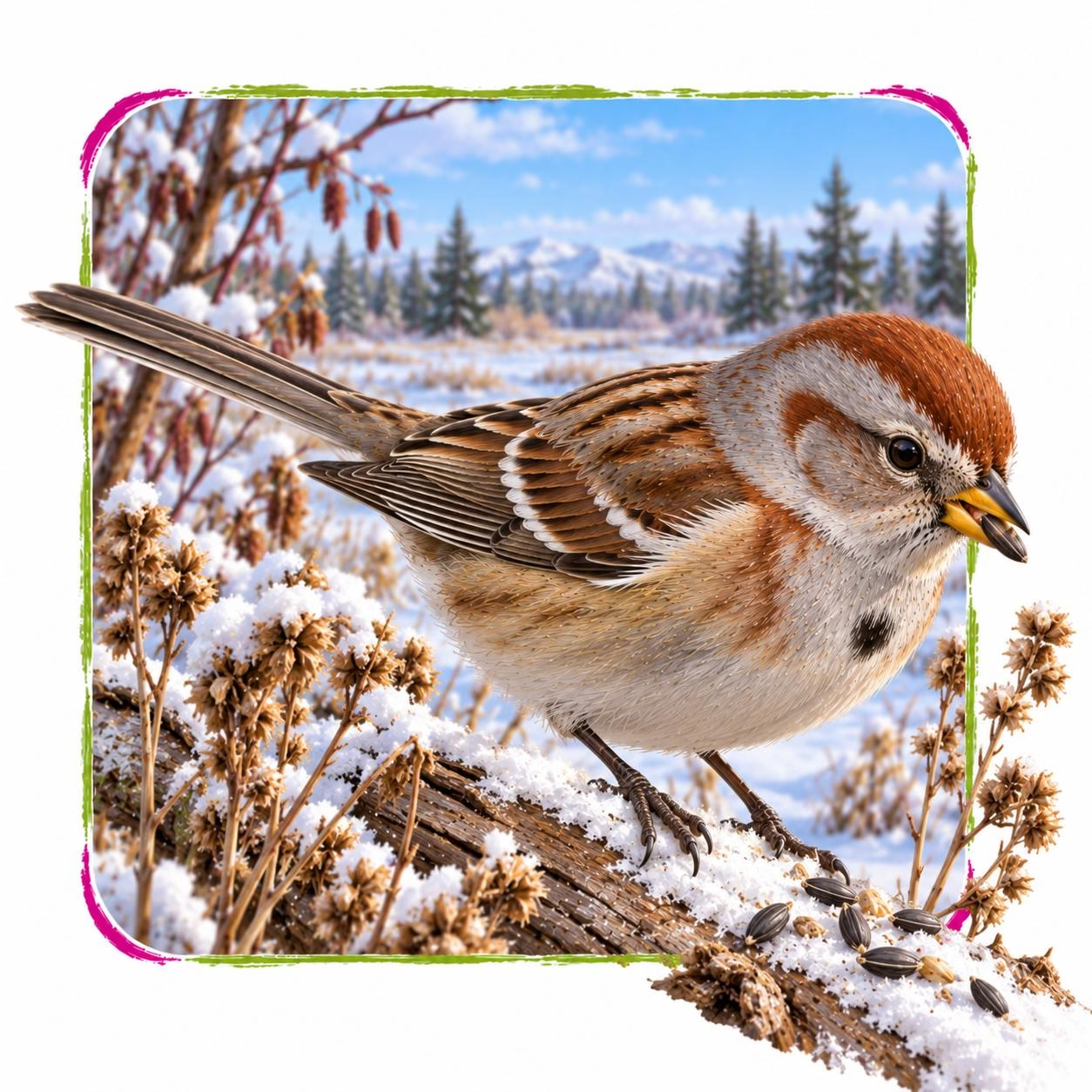
American Tree Sparrow in its natural Arctic and subarctic scrub, tundra edges, willow thickets, weedy fields, marshes, hedgerows, open woodland, gardens, and snowy winter farmland habitat