
Anhinga Facts for Kids
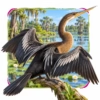
The anhinga is a long-necked waterbird of warm freshwater wetlands in the Americas. It swims with much of its dark body submerged, making the exposed neck resemble a snake. Wettable feathers and dense bones reduce buoyancy, while a dagger-like bill and spring-powered neck help it catch fish underwater. After diving, it often spreads its wings dramatically to dry.
Quick Anhinga Facts
- Animal Type: Bird
- Group: Darter
- Known For: Snake-like neck, wettable feathers, dagger bill, spread-wing drying, and turkey-shaped tail
- Habitat: Lakes, ponds, marshes, swamps, slow rivers, and mangrove lagoons
- Diet: Mostly fish, plus crayfish and other small aquatic animals
What You’ll Learn
Learn 10 amazing anhinga facts for kids about snake-like necks, diving, swimming, spear-like bills, and wetland life, plus a quiz, glossary, and activity
Simple explanations make them great for children, families, teachers, and young bird lovers.
10 Fun Anhinga Facts for Kids
1. Anhingas Are Darters
The anhinga belongs to Anhingidae, the darter family. Its closest living relatives include other darters of Africa, Asia, and Australasia.
Kid Decode: This American snakebird belongs to a worldwide club of underwater fish stabbers.
2. Its Neck Looks Like a Snake
While swimming, the body may sink almost completely below the surface, leaving the long S-shaped neck and head visible.
Kid Decode: A quiet wetland can suddenly appear to contain one swimming feathered snake.
3. Wet Feathers Reduce Buoyancy
Anhinga plumage becomes more thoroughly wetted than the plumage of many waterbirds. Together with dense bones, this helps the bird sink and swim underwater without fighting strong buoyancy.
Kid Decode: Waterlogged feathers are inconvenient in the air but excellent for sneaking below fish.
4. It Dries With Wings Spread
After swimming, an anhinga often perches with its wings extended so the feathers can dry and the body can absorb warmth.
Kid Decode: The famous pose is part laundry line and part solar panel.
5. Its Bill Is a Fish Spear
The long straight bill has sharp edges and a pointed tip. Anhingas thrust the head forward to impale or seize fish underwater.
Kid Decode: The neck fires the beak like a spring-loaded fishing spear.
6. It Tosses Fish Before Swallowing
After bringing prey to the surface, an anhinga may flip a fish into the air and catch it headfirst before swallowing.
Kid Decode: Dinner sometimes performs one final somersault.
7. The Tail Resembles a Turkey’s
A long, broad, fan-shaped tail helps with steering and gives the bird one of its nicknames, water turkey.
Kid Decode: The snake neck comes attached to a surprisingly turkey-like rudder.
8. It Can Soar Very High
Anhingas ride rising columns of warm air called thermals, sometimes reaching heights of several thousand feet with little flapping.
Kid Decode: The underwater hunter can leave the lake and become a silent cross in the clouds.
9. They Nest in Wetland Colonies
Pairs usually build bulky stick platforms in trees or shrubs near or above water, sometimes among herons, egrets, ibises, and cormorants.
Kid Decode: The nesting tree can become a crowded waterbird apartment block.
10. Males and Females Look Different
Adult males are mostly dark with silvery wing markings, while females and many immature birds have paler tan or buff heads, necks, and upper breasts.
Kid Decode: The same species arrives in dark-and-silver and warm tan-necked editions.
The Weirdest Anhinga Fact
Anhinga feathers become wet enough to help the bird sink almost completely below the surface, turning the visible neck into what looks like a swimming snake.
Try This Anhinga Activity
Anhinga Snakebird Drawing Activity
Draw an anhinga hunting in a warm wetland. Add a dark submerged body, long snake-like neck, dagger bill, fish underwater, broad turkey-like tail, webbed feet, and a second bird perched with wings spread to dry. Include a stick nest in a tree above the water.
Quick Anhinga Quiz
- What other name is often used for the anhinga? Answer: Snakebird or water turkey.
- Why does it sit low in the water? Answer: Wet plumage and dense bones reduce buoyancy.
- What is its pointed bill used for? Answer: Impaling or seizing fish.
- Why does it spread its wings after swimming? Answer: To dry its feathers and warm up.
- Where does it usually build its nest? Answer: In a tree or shrub near or over water.
Mini Glossary
- Darter: A long-necked waterbird adapted for pursuing fish underwater.
- Buoyancy: The upward force that helps an object or animal float.
- Thermal: A rising column of warm air that soaring birds can ride.
- Colonial Nester: A bird that nests near many other birds.
- Impale: To pierce something with a pointed object.
 Weedy Sea Dragon Facts for Kids
 Alpaca Facts for Kids
 Giant Panda Facts for Kids
 Hyaenodon Facts for Kids
More Animal Facts for Kids
Visit the full animal facts library or explore a focused animal group.
More Extinct Animal Facts for Kids
Discover dinosaurs, Ice Age giants, prehistoric sea creatures, recently extinct species, and other animals from the past.
Fact check note: Fact checked with Cornell Lab of Ornithology’s Anhinga overview and life-history account, Florida Fish and Wildlife Conservation Commission resources, Birds of the World’s Anhinga anhinga species account, and comparative research on darter plumage and underwater locomotion.

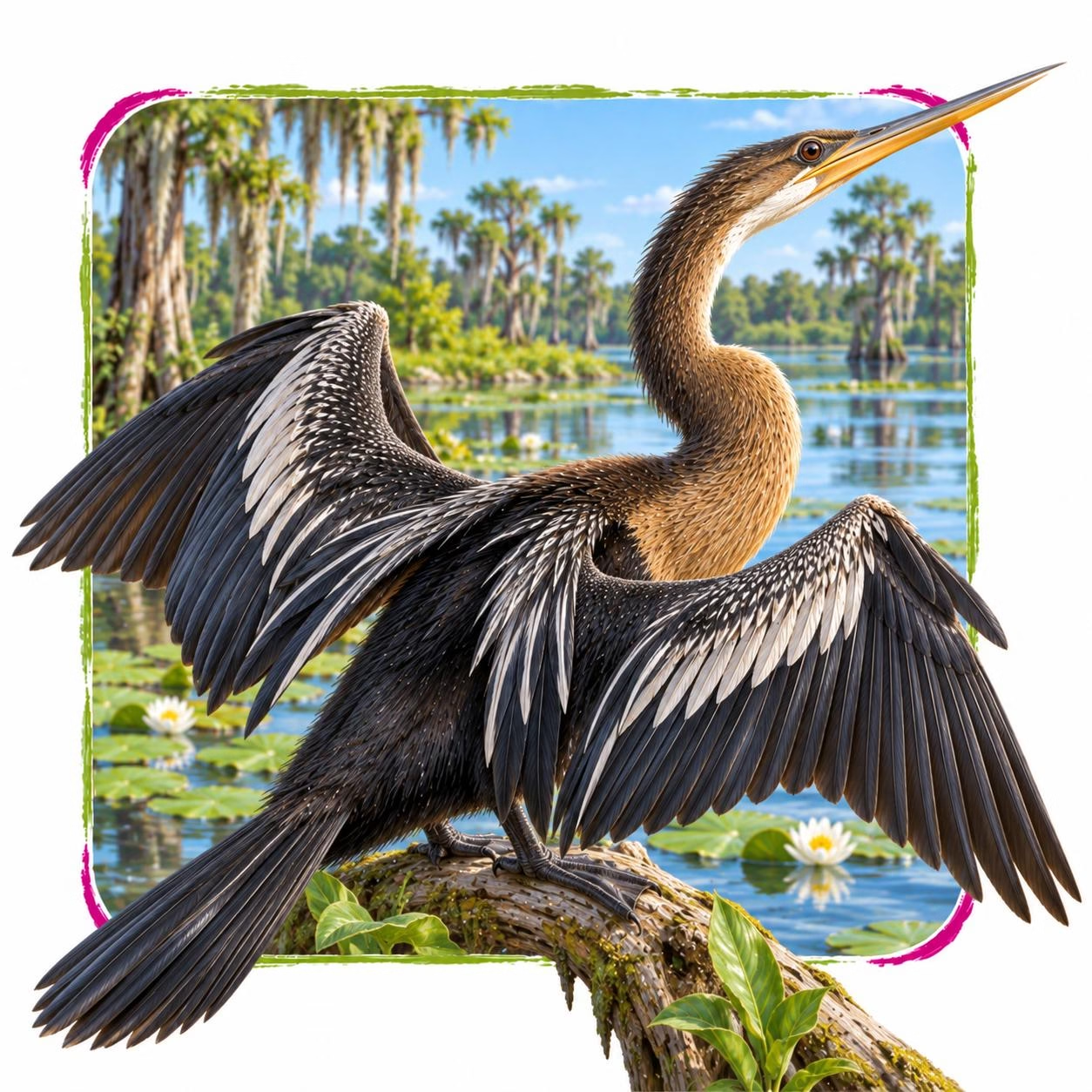
Anhinga in its natural Freshwater lakes, ponds, marshes, swamps, slow rivers, wooded wetlands, reservoirs, and mangrove lagoons in warm parts of the Americas habitat