
Anole Facts for Kids
Anoles are a remarkably diverse group of small and medium-sized lizards native to warmer parts of the Americas. Different species live on tree trunks, twigs, grass, rocks, and forest canopies. Many anoles have adhesive toe pads and a colourful throat fan called a dewlap, which they display with head bobs and push-ups. This page describes anoles as a group because their size, colour, diet, and behaviour vary greatly among hundreds of species.
Quick Anole Facts
- Animal Type: Reptile
- Group: Anole lizards
- Known For: Colourful dewlaps, adhesive toe pads, head-bobbing displays, and remarkable island diversity
- Habitat: Tropical forests, woodlands, scrub, gardens, grasslands, rocks, and tree canopies
- Diet: Mostly insects and other small animals, with fruit, nectar, or plant material eaten by some species
What You’ll Learn
Discover 10 colorful anole facts for kids about dewlaps, climbing, sticky toes, color changes, and tropical habitats, with a quiz, glossary, and activity
These facts are explained simply for kids, parents, teachers, and curious little fact-finders.
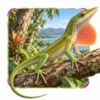
10 Fun Anole Facts for Kids
1. Anoles Are American Lizards
Anoles evolved in the Americas and occur naturally from the southeastern United States and Caribbean through Mexico, Central America, and much of tropical South America.
Kid Decode: The anole family stretches across the warm Americas like a living lizard map.
2. They Form an Enormous Species Group
Scientists recognise hundreds of anole species. Their exact genus arrangement remains debated, so some researchers keep most in Anolis while others divide them among several genera.
Kid Decode: The anole name covers a reptile crowd large enough to fill many branches of the family tree.
3. Many Have Colourful Dewlaps
A dewlap is a flap of skin beneath the throat. Anoles extend it during courtship, territorial warnings, and species recognition, and its colour and size differ widely among species.
Kid Decode: The hidden throat flag unfolds whenever an anole has something important to announce.
4. Toe Pads Help Them Climb
Many anoles have expanded pads beneath their toes covered with microscopic structures that increase contact with leaves, bark, walls, and other surfaces.
Kid Decode: Each tiny foot carries climbing technology far smaller than a grain of sand.
5. Different Species Use Different Perches
Caribbean anoles repeatedly evolved body types suited to trunks, twigs, grass, crowns, or the ground. Scientists call these habitat-linked forms ecomorphs.
Kid Decode: One island can offer several lizard jobs, each with its own body design.
6. Some Can Change Colour
Certain species, including green anoles, can shift between shades such as green and brown in response to temperature, light, stress, and social conditions. Anoles are not true chameleons.
Kid Decode: The colour change is a body signal and temperature response, not an invisibility cloak.
7. They Communicate With Push-Ups
Anoles combine head bobs, body movements, dewlap flashes, and push-up-like displays. Each species has its own timing and pattern.
Kid Decode: A serious lizard message may arrive as a brightly flagged exercise routine.
8. They Can Release Their Tails
When grabbed by a predator, many anoles can detach part of the tail. The lost section wriggles and distracts the attacker while the lizard escapes.
Kid Decode: The emergency escape plan leaves the predator arguing with a dancing tail.
9. A New Tail Can Grow
An anole may regenerate a replacement tail, but it usually contains cartilage instead of rebuilding the original chain of vertebrae and may differ in colour or shape.
Kid Decode: The spare tail works, although evolution does not issue a perfect factory replacement.
10. Females Usually Lay Small Clutches
Many female anoles lay a single egg at a time and repeat the process during the breeding season. The exact schedule and nesting site vary among species.
Kid Decode: The nursery often begins with one tiny egg tucked into soil or leaf litter.
The Weirdest Anole Fact
On separate Caribbean islands, anoles repeatedly evolved similar trunk, twig, grass, and canopy body types, creating one of evolution’s clearest examples of nature solving the same climbing problems again and again.
Try This Anole Activity
Anole Island Drawing Activity
Draw three anoles using different parts of a tropical tree. Add one on a broad trunk, one balanced on a thin twig, and one among leaves. Give them species-appropriate toe pads, long tails, colourful dewlaps, head-bob motion lines, insects, and a small panel showing a regenerated tail.
Quick Anole Quiz
- Where are anoles native? Answer: Warmer parts of the Americas.
- What is the colourful throat fan called? Answer: A dewlap.
- What helps many anoles grip surfaces? Answer: Adhesive toe pads with microscopic structures.
- Are anoles true chameleons? Answer: No.
- What can happen to the tail during a predator attack? Answer: It may detach and later regrow.
Mini Glossary
- Dewlap: An extendable flap of skin beneath an anole’s throat.
- Ecomorph: A body form adapted to a particular type of habitat or perch.
- Adhesion: The ability to stick or grip a surface.
- Autotomy: Deliberately shedding a body part, such as the tail, to escape danger.
- Regeneration: Growing a replacement for a lost or damaged body part.
 Mule Deer Facts for Kids
 Gorilla Facts for Kids
 Bullfrog Facts for Kids
 Hatzegopteryx Facts for Kids
More Animal Facts for Kids
Visit the full animal facts library or explore a focused animal group.
More Extinct Animal Facts for Kids
Discover dinosaurs, Ice Age giants, prehistoric sea creatures, recently extinct species, and other animals from the past.
Fact check note: Fact checked with Losos’s 2009 Current Biology review of anole diversity, Castañeda and de Queiroz’s research on adhesive toe pads and dewlaps, comparative studies of Caribbean anole ecomorphs, and Smithsonian National Zoo anole resources.

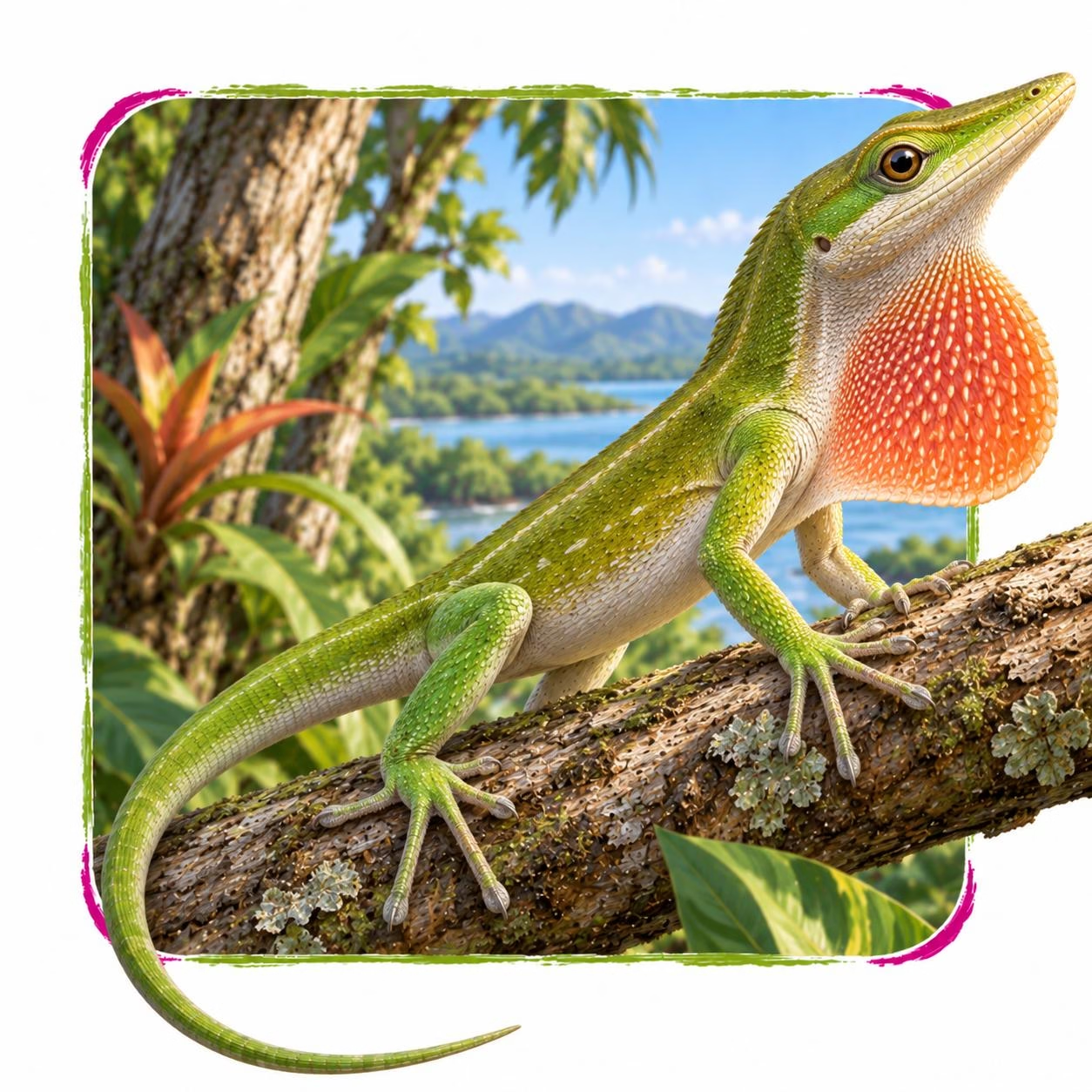
Anole in its natural Tropical and subtropical forests, woodlands, scrub, gardens, grasslands, rocks, tree trunks, twigs, and canopies throughout the warmer Americas habitat