
Antarctic Fur Seal Facts for Kids
The Antarctic fur seal is an eared seal that breeds mainly on sub-Antarctic islands and hunts in the cold Southern Ocean. Thick underfur once made it a target for commercial hunters, but protection allowed an extraordinary recovery during the twentieth century. The story has taken a darker turn: warming seas and reduced access to krill have driven a major modern decline, and the IUCN listed the species as Endangered in 2026.
Quick Antarctic Fur Seal Facts
- Animal Type: Mammal
- Group: Eared seal
- Known For: Dense fur, external ear flaps, long front flippers, krill hunting, and crowded breeding beaches
- Habitat: Southern Ocean waters, sub-Antarctic islands, rocky coasts, tussock grass, and breeding beaches
- Diet: Mainly Antarctic krill in many regions, plus fish and squid
What You’ll Learn
Explore 10 fascinating antarctic fur seal facts for kids about thick fur, flippers, swimming, pups, and life around the Southern Ocean, plus a quiz, glossary, and activity
Easy explanations make them fun for children, families, teachers, and young marine-life fans.
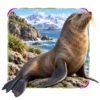
10 Fun Antarctic Fur Seal Facts for Kids
1. It Is an Eared Seal
Antarctic fur seals belong to Otariidae, the family containing fur seals and sea lions. Small external ear flaps distinguish them from true seals.
Kid Decode: The tiny ear flap is one quick clue that this swimmer belongs to the eared-seal team.
2. It Can Walk on All Four Flippers
An Antarctic fur seal can rotate its hind flippers forward beneath the body, allowing it to move over land more effectively than true seals.
Kid Decode: On shore, four flippers become an awkward but surprisingly useful walking set.
3. Its Fur Is Extremely Dense
A thick insulating underfur lies beneath longer guard hairs. Air trapped in this coat reduces heat loss in cold water.
Kid Decode: The seal carries a warm bubble-filled jacket into the Southern Ocean.
4. Males Are Much Larger Than Females
Adult males can be several times heavier than adult females and develop broad shoulders, thick necks, and a more powerful build.
Kid Decode: One breeding beach contains the same species in dramatically different size settings.
5. Bulls Defend Breeding Territories
During the breeding season, large males compete for sections of beach and try to control access to groups of females. Most males do not successfully hold a territory until they are older.
Kid Decode: The loudest beach property dispute comes with whiskers and flippers.
6. Mothers Recognise Their Own Pups
After returning from feeding trips, females use calls and smell to locate their pups among thousands of noisy seals.
Kid Decode: The colony sounds chaotic, yet a mother can find one familiar voice in the crowd.
7. Krill Is a Crucial Food
At South Georgia, Antarctic krill can form most of the diet of breeding females. Fish and squid become more important in some seasons and regions.
Kid Decode: This seal’s food web rests heavily on a crustacean smaller than a child’s finger.
8. They Are Skilled Divers
Antarctic fur seals use their long front flippers for propulsion and can make repeated dives while searching for prey, often feeding at night when krill move upward.
Kid Decode: The underwater hunt follows the nightly elevator ride of tiny krill.
9. They Recovered From Near Extinction
Commercial sealers killed vast numbers for their pelts during the eighteenth and nineteenth centuries. Legal protection and abundant food later allowed the population to rebound.
Kid Decode: A species once reduced to a remnant rebuilt one of the Southern Ocean’s largest seal populations.
10. They Are Endangered Again
The IUCN moved the species from Least Concern to Endangered in 2026 after estimating that mature numbers fell by more than half between 1999 and 2025, largely as climate change reduced access to krill.
Kid Decode: The comeback story gained a dangerous new chapter when the ocean food cupboard shifted.
The Weirdest Antarctic Fur Seal Fact
A mother returning from sea can identify her own pup by combining its individual call with its smell, even on a beach crowded with thousands of nearly identical youngsters.
Try This Antarctic Fur Seal Activity
Antarctic Fur Seal Colony Drawing Activity
Draw an Antarctic fur seal colony on a sub-Antarctic beach. Add a large dark bull, smaller silver-gray females, dark newborn pups, tiny external ear flaps, long front flippers, tussock grass, krill beneath the waves, and call lines helping a mother locate her pup.
Quick Antarctic Fur Seal Quiz
- What kind of seal is the Antarctic fur seal? Answer: An eared seal.
- What tiny crustacean is especially important in its diet? Answer: Antarctic krill.
- How does a mother find her pup? Answer: By recognising its call and smell.
- Why was the species hunted heavily? Answer: For its dense fur.
- What IUCN category did it enter in 2026? Answer: Endangered.
Mini Glossary
- Otariid: An eared seal or sea lion that can rotate its hind flippers beneath its body.
- Underfur: A dense inner layer of hair that traps insulating air.
- Krill: Small shrimp-like crustaceans forming a major part of Southern Ocean food webs.
- Territory: An area an animal occupies and defends.
- Endangered: An IUCN category indicating a very high risk of extinction in the wild.
 Matamata Turtle Facts for Kids
 Mongoose Facts for Kids
 Grizzly Bear Facts for Kids
 Panochthus Facts for Kids
More Animal Facts for Kids
Visit the full animal facts library or explore a focused animal group.
More Extinct Animal Facts for Kids
Discover dinosaurs, Ice Age giants, prehistoric sea creatures, recently extinct species, and other animals from the past.
Fact check note: Fact checked with the IUCN Red List’s 2026 Arctocephalus gazella assessment, the British Antarctic Survey’s long-term South Georgia population research, Forcada and colleagues’ 2023 Global Change Biology study, and Animal Diversity Web’s Antarctic fur seal account.

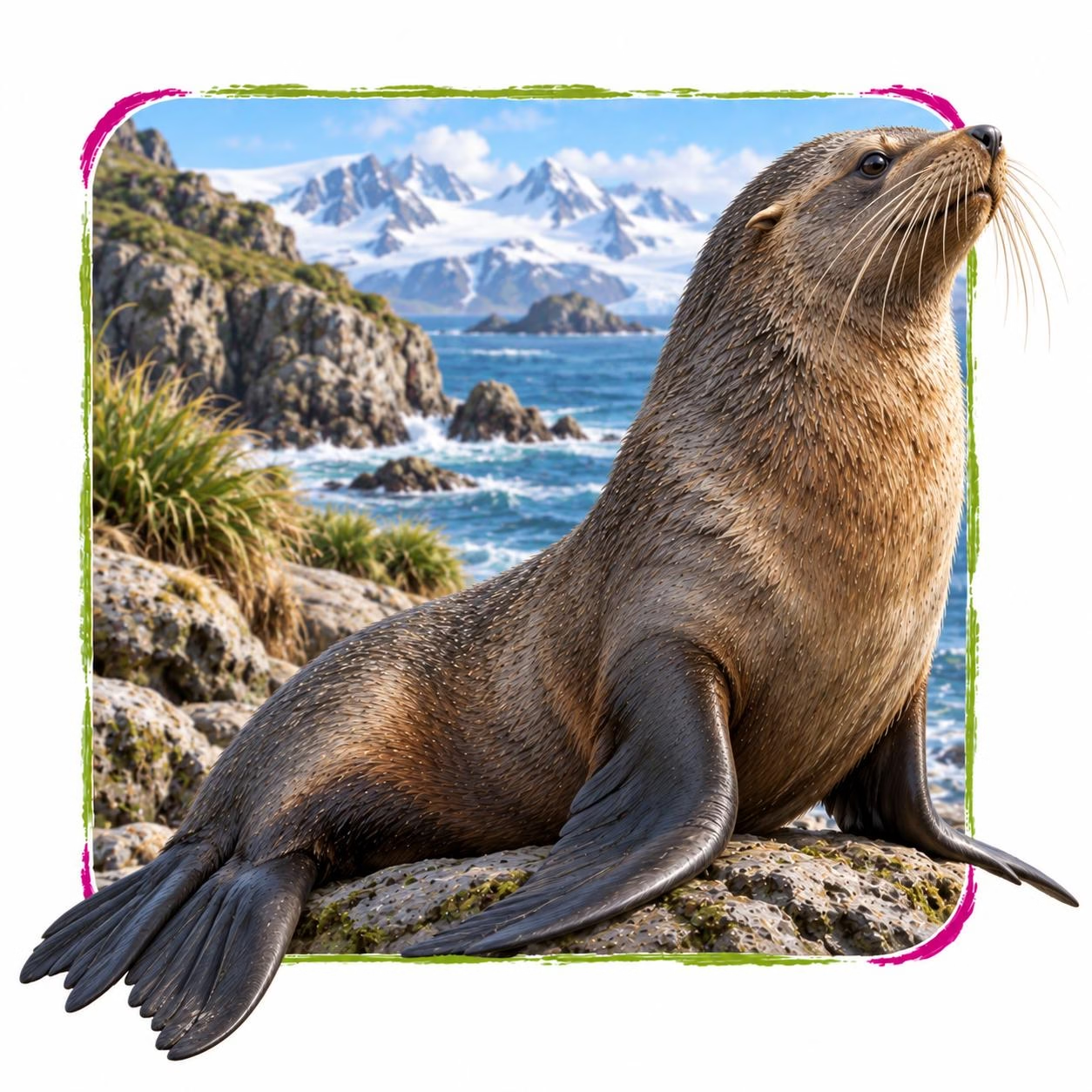
Antarctic Fur Seal in its natural Southern Ocean waters, sub-Antarctic islands, rocky shores, breeding beaches, tussock grass, continental shelves, and cold open-ocean feeding grounds habitat