
Anteater Facts for Kids
Anteaters are four living species of unusual mammals from Central and South America: the giant anteater, northern tamandua, southern tamandua, and silky anteater. They have no teeth, but their long snouts, sticky tongues, powerful claws, and excellent sense of smell make them expert hunters of ants and termites. Some walk across grasslands, while others climb through forest canopies with gripping tails.
Quick Anteater Facts
- Animal Type: Mammal
- Group: Vermilinguan xenarthran
- Known For: Long snout, sticky tongue, toothless mouth, powerful front claws, and ant-eating diet
- Habitat: Rainforests, dry forests, savannas, grasslands, wetlands, and scrub
- Diet: Mostly ants and termites, with other insects or occasional foods in some species
What You’ll Learn
Learn 10 amazing anteater facts for kids about long snouts, sticky tongues, giant claws, ants, and life in the Americas, with a quiz, glossary, and activity
These simple facts are written for kids, parents, teachers, and curious young minds.
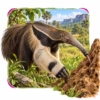
10 Fun Anteater Facts for Kids
1. There Are Four Living Anteater Species
The living group includes the giant anteater, northern tamandua, southern tamandua, and silky anteater. They range from a tiny tree dweller to a ground animal longer than many adults are tall.
Kid Decode: The anteater collection runs from pocket-sized fluff to a giant walking feather-duster tail.
2. They Are Related to Sloths
Anteaters and sloths belong to the mammal order Pilosa. They are not close relatives of aardvarks, pangolins, echidnas, or numbats, even though those animals also eat ants.
Kid Decode: The ant-eating lifestyle evolved several times on separate mammal branches.
3. Anteaters Have No Teeth
All living anteaters are toothless. They swallow small prey whole, and a muscular stomach helps crush and process the insects.
Kid Decode: The mouth skipped teeth entirely and sent the grinding job farther down the digestive system.
4. Their Tongues Are Long and Sticky
Specialised tongue muscles and sticky saliva let anteaters rapidly sweep ants and termites from tunnels. Tongue length and speed differ among the four species.
Kid Decode: The tongue behaves like a speedy living conveyor belt coated in glue.
5. Powerful Claws Open Insect Nests
Long curved front claws tear into termite mounds, rotting wood, and ant nests. Giant anteaters can also use these claws in defense if threatened.
Kid Decode: The same claws open lunchboxes and discourage anything trying to turn the anteater into lunch.
6. Smell Guides the Hunt
Anteaters have an excellent sense of smell and use it to locate insect colonies. Their eyesight and hearing are generally less important during feeding.
Kid Decode: The nose finds a hidden city before the claws open one small door.
7. They Do Not Empty Every Colony
An anteater usually feeds briefly before soldier insects gather or bite. Moving among many nests prevents one colony from being completely destroyed.
Kid Decode: It takes a quick snack and leaves before the insect security team fully arrives.
8. Some Anteaters Live in Trees
Silky anteaters are highly arboreal, and tamanduas spend substantial time climbing. Their prehensile tails can grip branches, while the giant anteater’s bushy tail is not prehensile.
Kid Decode: Some tails work like a fifth climbing hand, while the giant species carries a magnificent blanket instead.
9. They Protect Their Claws While Walking
Giant anteaters and tamanduas curl their large front claws inward and place weight on the sides or knuckles of the forefeet.
Kid Decode: The walking style keeps the valuable digging hooks from scraping blunt against the ground.
10. Mothers Usually Carry One Baby
Anteaters generally give birth to a single young. Giant anteater and tamandua babies ride on their mother’s back, where their markings can help break up the combined outline.
Kid Decode: The baby travels as a striped backpack with fur.
The Weirdest Anteater Fact
All four living anteater species have no teeth at all, yet specialised tongues, sticky saliva, claws, and muscular stomachs let them thrive on colonies containing thousands of tiny insects.
Try This Anteater Activity
Four Anteaters Drawing Activity
Draw the four living anteater species together. Add a giant anteater walking on the ground with a huge bushy tail, two tamanduas climbing with gripping tails, and a tiny silky anteater on a branch. Show long snouts, curved claws, sticky tongues, ants, termites, and a baby riding on its mother’s back.
Quick Anteater Quiz
- How many living anteater species are there? Answer: Four.
- Which living mammals are their close relatives? Answer: Sloths.
- Do anteaters have teeth? Answer: No.
- What do their front claws open? Answer: Ant nests, termite mounds, and insect-filled wood.
- How do many anteater babies travel? Answer: Riding on their mother’s back.
Mini Glossary
- Vermilingua: The mammal group containing living anteaters.
- Xenarthran: A member of the mammal group containing anteaters, sloths, and armadillos.
- Prehensile: Able to curl around and grip something, such as a branch.
- Arboreal: Adapted for living or moving in trees.
- Insectivore: An animal that eats mainly insects.
 Goose Facts for Kids
 Mule Facts for Kids
 Burrowing Owl Facts for Kids
 Carnotaurus Facts for Kids
More Animal Facts for Kids
Visit the full animal facts library or explore a focused animal group.
More Extinct Animal Facts for Kids
Discover dinosaurs, Ice Age giants, prehistoric sea creatures, recently extinct species, and other animals from the past.
Fact check note: Fact checked with Gaudin and colleagues’ 2018 Mammalian Species review of the giant anteater, Gardner’s taxonomy of Vermilingua, Smithsonian National Zoo giant anteater and tamandua resources, and anteater ecology research summarised by the IUCN SSC Anteater, Sloth and Armadillo Specialist Group.

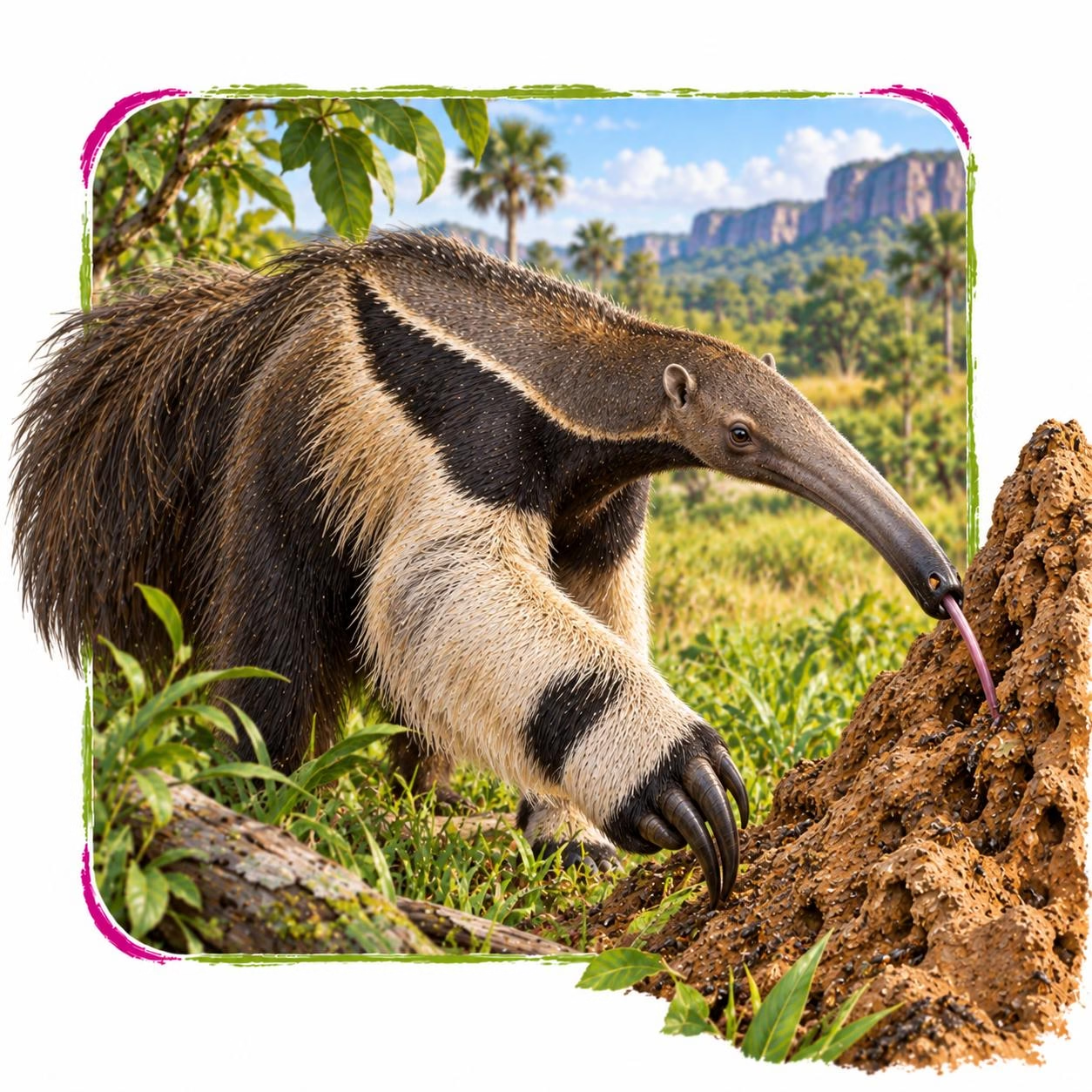
Anteater in its natural Tropical rainforests, dry forests, savannas, grasslands, wetlands, scrublands, woodland edges, and tree canopies across Central and South America habitat