
Arctic Hare Facts for Kids
The Arctic hare is a large hare built for the treeless tundra of northern Canada and Greenland. Thick fur, short ears, a compact body, and enormous furry feet help it survive bitter wind and snow. Far-northern hares stay white for most or all of the year, while some southern populations develop gray-brown summer coats that blend with exposed rock and vegetation.
Quick Arctic Hare Facts
- Animal Type: Mammal
- Group: Hare
- Known For: White winter fur, short ears, huge hind feet, fast bounding, and Arctic survival
- Habitat: Tundra, polar desert, rocky slopes, coastal plains, and treeless plateaus
- Diet: Willows, saxifrages, grasses, herbs, buds, bark, roots, berries, mosses, and lichens
What You’ll Learn
Learn 10 snowy arctic hare facts for kids about thick fur, powerful legs, camouflage, food, and polar survival, plus a quiz, glossary, and activity
Simple explanations make them fun for children, families, teachers, and young wildlife explorers.
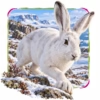
10 Fun Arctic Hare Facts for Kids
1. Arctic Hares Are Not Rabbits
Hares usually have longer legs and larger feet than rabbits, and their young are born furred with open eyes. Arctic hares rest in shallow forms or snow shelters rather than living in permanent rabbit warrens.
Kid Decode: A leveret arrives dressed, awake, and much readier for tundra life than a newborn rabbit.
2. Their Bodies Conserve Heat
Short ears, a compact shape, thick fur, and a relatively small exposed surface area reduce heat loss in freezing weather. Fur also covers much of the feet.
Kid Decode: The Arctic body plan tucks in the ears and wraps nearly everything else in insulation.
3. Huge Feet Work Like Snowshoes
Broad furry hind feet spread the hare’s weight across snow and provide powerful pushes during fast bounds. The front feet help dig and steer.
Kid Decode: Each back foot is part snowshoe, part spring, and part snowy steering system.
4. Not Every Arctic Hare Changes Colour
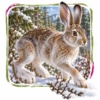
Many far-northern Arctic hares remain white throughout the year. Populations farther south may molt into gray-brown summer coats before returning to white for winter.
Kid Decode: Latitude helps decide whether the summer wardrobe stays white or turns rocky gray-brown.
5. They Do Not Hibernate
Arctic hares remain active through winter. They shelter behind rocks, in shallow ground depressions, or inside holes dug beneath snow when weather becomes severe.
Kid Decode: Winter never switches the hare off; it only sends it behind a snowy windbreak.
6. Winter Food Can Be Woody
When fresh summer plants disappear, Arctic hares dig through snow and feed heavily on woody willow, bark, twigs, buds, and roots. Summer brings more grasses, herbs, flowers, and berries.
Kid Decode: The winter salad becomes a bowl of twigs with frozen willow on top.
7. They Can Gather in Large Groups
Arctic hares may forage alone or in small groups, but at some locations they gather in groups containing dozens or even more individuals. Grouping can improve predator detection and access to good feeding areas.
Kid Decode: A quiet white hillside can suddenly reveal an entire crowd of ears.
8. They Can Stand and Hop Upright
An Arctic hare may rise on its hind legs to scan for danger and can sometimes travel a short distance in an upright bounding posture. Most rapid movement still uses all four limbs.
Kid Decode: For a few bounds, the tundra hare can look surprisingly kangaroo-like.
9. Young Hares Are Called Leverets
Females generally produce one litter during the short Arctic summer, often containing several leverets. The young are born above ground with fur and open eyes.
Kid Decode: The summer nursery opens with tiny gray-furred leverets already watching the world.
10. They Feed Arctic Predators
Arctic wolves, Arctic foxes, snowy owls, gyrfalcons, and other predators hunt Arctic hares. The hare is therefore an important link between sparse tundra plants and larger animals.
Kid Decode: One plant-eating hare helps carry the tundra’s tiny green energy into the predator food web.
The Weirdest Arctic Hare Fact
Arctic hares can rise upright and make several two-legged bounds, briefly crossing the tundra with a posture that looks more like a small kangaroo than a typical hare.
Try This Arctic Hare Activity
Arctic Hare Camouflage Drawing Activity
Draw one Arctic hare on a snowy winter tundra and another southern Arctic hare in a gray-brown summer coat among rocks and flowers. Add short black-tipped ears, enormous furry hind feet, a snow shelter, willow twigs, several leverets, and distant Arctic fox and snowy owl silhouettes.
Quick Arctic Hare Quiz
- Where do Arctic hares live? Answer: On Arctic tundra in northern Canada and Greenland.
- How do their large feet help? Answer: They spread weight on snow and power strong bounds.
- Does every Arctic hare turn gray-brown in summer? Answer: No, many far-northern hares stay white.
- Do Arctic hares hibernate? Answer: No.
- What are young hares called? Answer: Leverets.
Mini Glossary
- Hare: A rabbit relative whose young are usually born furred and with open eyes.
- Tundra: A cold, mostly treeless habitat with low-growing plants.
- Molt: The process of replacing an old coat or feathers with new growth.
- Leveret: A young hare.
- Camouflage: Colouring or shape that helps an animal blend with its surroundings.
 Mandrill Facts for Kids
 Moth Facts for Kids
 Blue Tang Facts for Kids
 Pachycephalosaurus Facts for Kids
More Animal Facts for Kids
Visit the full animal facts library or explore a focused animal group.
More Extinct Animal Facts for Kids
Discover dinosaurs, Ice Age giants, prehistoric sea creatures, recently extinct species, and other animals from the past.
Fact check note: Fact checked with the Government of Nunavut’s Arctic Hare guide, Parker’s 1977 study of Arctic hare morphology, reproduction, diet and behaviour, Landry-Ducharme and colleagues’ 2024 High Arctic habitat research, and current IUCN and Arctic Genomics conservation resources.

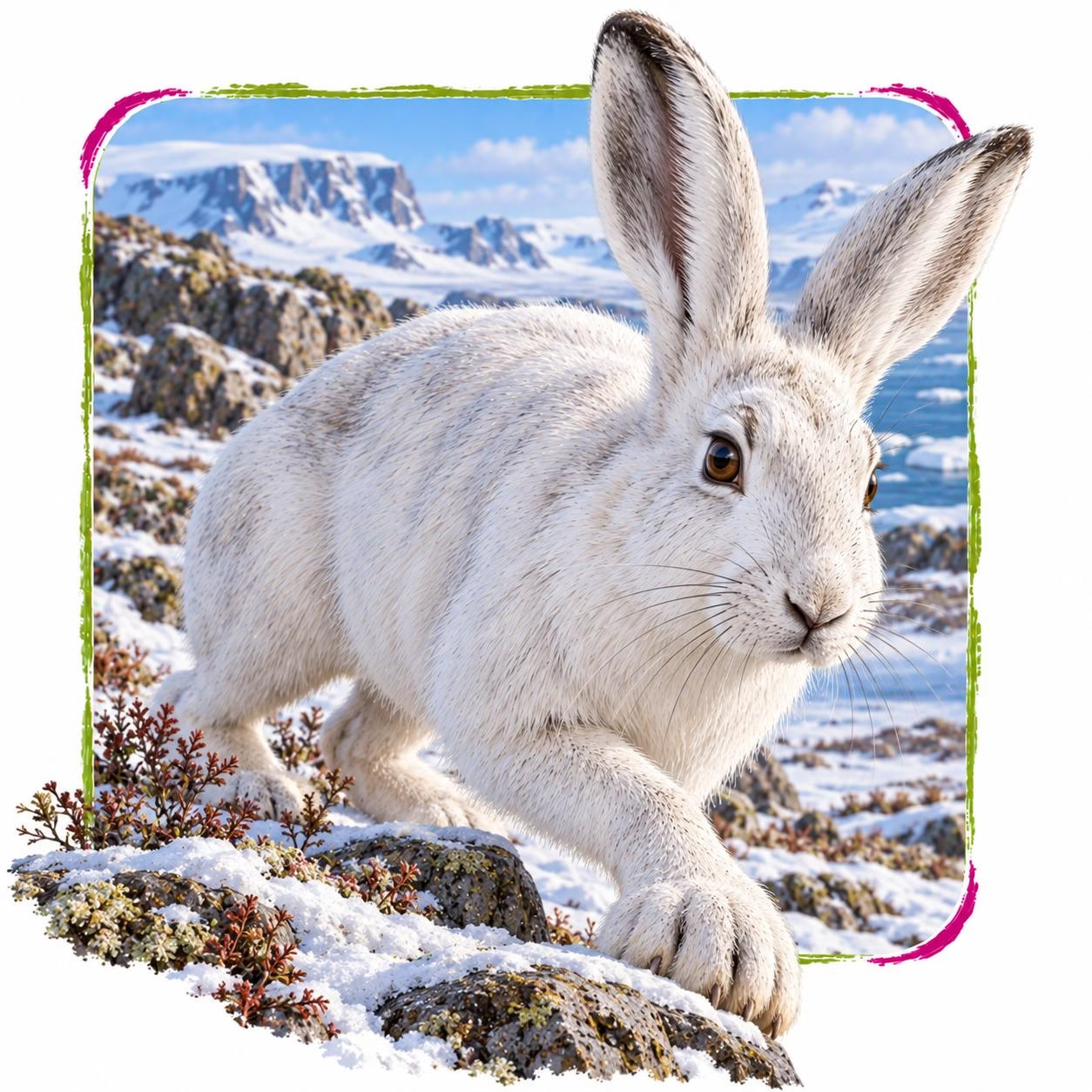
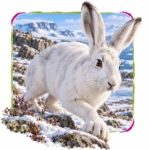
Arctic Hare in its natural Arctic tundra, polar desert, rocky slopes, coastal plains, treeless plateaus, and High Arctic valleys across northern Canada and Greenland habitat