
Asian Palm Civet Facts for Kids
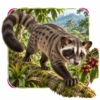
The Asian palm civet is a mostly nocturnal mammal native to South and Southeast Asia. It belongs to the civet family, Viverridae, rather than the cat or raccoon families. A dark facial mask, long body, grasping feet, strong claws, and a tail nearly as long as the body help it move through forests, farms, gardens, and even some towns while searching for ripe fruit and small prey.
Quick Asian Palm Civet Facts
- Animal Type: Mammal
- Group: Civet or viverrid
- Known For: Masked face, nighttime climbing, fruit eating, seed dispersal, and strong scent
- Habitat: Forests, plantations, orchards, gardens, and wooded urban areas
- Diet: Fruit, nectar, palm sap, insects, eggs, and small vertebrates
What You’ll Learn
Discover 10 fascinating asian palm civet facts for kids about climbing, long tails, nighttime life, fruit, and Asian rainforests, with a quiz, glossary, and activity
These facts are explained simply for kids, parents, teachers, and curious little fact-finders.
10 Fun Asian Palm Civet Facts for Kids
1. It Is a Civet, Not a Cat
Asian palm civets belong to Viverridae, a family that also includes genets and other civets. Their pointed faces and climbing habits can look cat-like, but they are not members of the cat family.
Kid Decode: The nickname toddy cat contains a cat, but the family tree firmly says civet.
2. It Wears a Dark Facial Mask
Most have grayish or brownish shaggy fur, dark legs and tail, pale marks around the face, and dark lines or spots across the back. Markings vary among regions and individuals.
Kid Decode: Its face looks decorated for a moonlit masquerade.
3. It Is Mostly Active at Night
Asian palm civets usually rest by day in tree hollows, tangled vines, roofs, or other sheltered places and begin foraging around dusk. Activity changes with food, disturbance, and moonlight.
Kid Decode: Sunset opens the civet’s fruit market and climbing gym at the same time.
4. It Is an Excellent Climber
Strong claws and flexible ankles help the civet grip bark and move through trees. Its long tail helps with balance, but the tail is not truly prehensile and cannot grasp branches like a hand.
Kid Decode: The tail works as a balancing pole rather than an extra climbing hand.
5. Fruit Is a Major Part of Its Diet
Figs, palms, mangoes, papayas, bananas, berries, and other ripe fruits can form much of the diet. The civet also eats insects, eggs, small mammals, reptiles, and other available foods.
Kid Decode: Its menu mixes a tropical fruit bowl with several tiny surprise side dishes.
6. It Spreads Seeds Through Forests
Many swallowed seeds pass through the digestive system and are deposited away from the parent tree. This makes palm civets important seed dispersers in forests and fragmented habitats.
Kid Decode: One wandering civet can plant tomorrow’s trees inside a trail of droppings.
7. It Communicates With Scent
Scent glands near the rear of the body produce a strong-smelling secretion. Civets rub scent on surfaces and investigate odours to learn about neighbours, territories, and possible mates.
Kid Decode: The nighttime message board is written in smells instead of ink.
8. It Is Usually Solitary
Adults generally forage alone and overlap mainly during breeding or where food is concentrated. Mothers care for dependent young, often called kits, inside tree hollows or other protected dens.
Kid Decode: Most adults order dinner for one, while kits stay tucked inside the nursery.
9. It Is Linked to Kopi Luwak Coffee
Kopi luwak is made from coffee seeds collected after civets eat and pass coffee cherries. Wild collection is difficult to verify, and caged production can cause serious animal-welfare problems.
Kid Decode: The world’s strangest coffee story begins with a ripe cherry and ends in civet droppings.
10. It Adapts to Human Landscapes
Asian palm civets can use plantations, gardens, roofs, and city trees when food and shelter are available. Adaptability helps the species persist, but trapping, wildlife trade, hunting, traffic, and conflict still cause harm.
Kid Decode: The masked night climber can turn a fruit tree beside a house into part of its forest route.
The Weirdest Asian Palm Civet Fact
Coffee seeds that pass through an Asian palm civet are sold as kopi luwak, but many civets used for commercial coffee are confined in poor conditions, so the famous product carries an important animal-welfare warning.
Try This Asian Palm Civet Activity
Asian Palm Civet Night Drawing Activity
Draw an Asian palm civet climbing through a fruiting tree after sunset. Add a dark facial mask, pale face marks, shaggy gray-brown fur, black legs, a long unringed tail, strong claws, ripe figs or mangoes, a tree-hollow den with kits, and seeds sprouting beneath the tree.
Quick Asian Palm Civet Quiz
- Which mammal family contains the Asian palm civet? Answer: Viverridae, the civet family.
- When is it mainly active? Answer: At night.
- What forms a large part of its diet? Answer: Ripe fruit.
- How does it help forests? Answer: It disperses seeds in its droppings.
- Can its tail grip branches like a monkey’s tail? Answer: No, it mainly helps with balance.
Mini Glossary
- Viverrid: A member of the mammal family containing civets and genets.
- Nocturnal: Mainly active at night.
- Arboreal: Adapted for climbing or living in trees.
- Seed Dispersal: Moving seeds away from the plant that produced them.
- Non-Prehensile: Unable to curl around and firmly grasp an object.
 Oryx Facts for Kids
 Black-Backed Jackal Facts for Kids
 Worm Facts for Kids
 Josephoartigasia Facts for Kids
More Animal Facts for Kids
Visit the full animal facts library or explore a focused animal group.
More Extinct Animal Facts for Kids
Discover dinosaurs, Ice Age giants, prehistoric sea creatures, recently extinct species, and other animals from the past.
Fact check note: Fact checked with the IUCN Red List assessment for Paradoxurus hermaphroditus, Animal Diversity Web’s Asian palm civet account, peer-reviewed research on Paradoxurus seed dispersal and urban ecology, and wildlife-welfare studies of kopi luwak production.

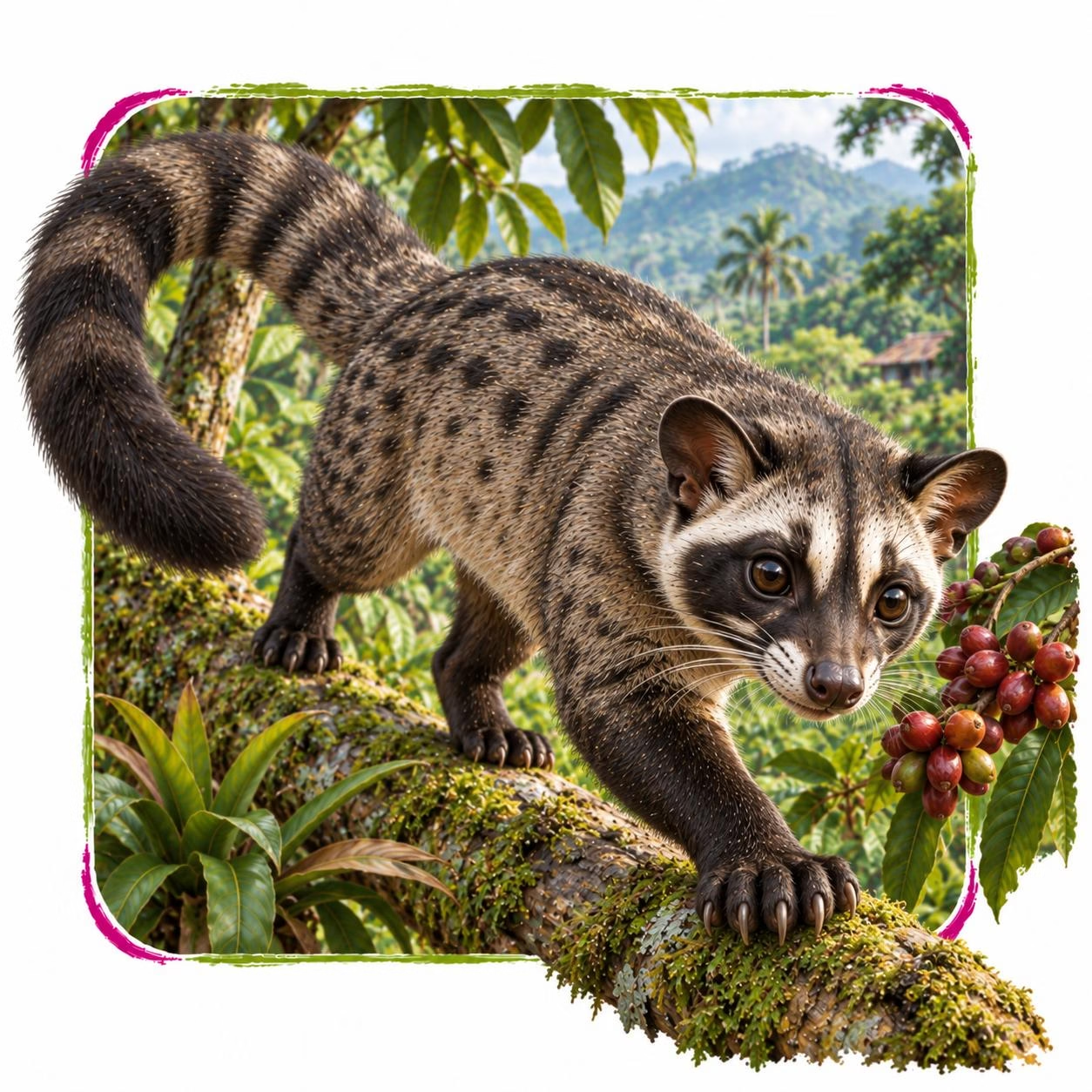
Asian Palm Civet in its natural Tropical and subtropical forests, secondary woodland, plantations, orchards, gardens, mangroves, and wooded urban areas across South and Southeast Asia habitat