
Asiatic Black Bear Facts for Kids
The Asiatic black bear is a medium-sized forest bear found across parts of southern, eastern, and southeastern Asia. It is also called the Asian black bear or moon bear because many individuals carry a pale crescent-shaped patch on the chest. Strong curved claws and flexible bodies make these bears skilled climbers, while an adaptable omnivorous diet changes with the seasons.
Quick Asiatic Black Bear Facts
- Animal Type: Mammal
- Group: Bear
- Known For: Pale chest crescent, rounded ears, tree climbing, seasonal feeding, and forest life
- Habitat: Broadleaf forests, mixed forests, mountain woodland, tropical forest, and shrubland
- Diet: Fruit, nuts, leaves, shoots, insects, honey, carrion, and occasional vertebrates
What You’ll Learn
Explore 10 amazing asiatic black bear facts for kids about moon-shaped chest patches, climbing, forest habitats, diet, and strong claws, plus a quiz, glossary, and activity
Easy explanations make them great for children, families, teachers, and young animal fans.

10 Fun Asiatic Black Bear Facts for Kids
1. It Is Also Called the Moon Bear
Many Asiatic black bears have a white or cream V-shaped or crescent patch on the chest. The exact shape and size vary, and a few bears have faint or reduced markings.
Kid Decode: The moon on its chest comes in crescents, Vs, splashes, and occasional faint editions.
2. Its Ears Look Surprisingly Large
Rounded ears project clearly above the head and often appear larger than those of an American black bear. Long hair around the neck can create a shaggy mane.
Kid Decode: The ears rise above the fur like two round listening dishes.
3. It Is an Excellent Tree Climber
Powerful limbs, curved claws, and flexible joints let Asiatic black bears climb for fruit, nuts, safety, rest, and escape. Young and medium-sized bears are especially agile in trees.
Kid Decode: A moon bear can turn a tall trunk into a vertical forest path.
4. It Builds Platforms in Branches
While feeding, a bear may pull branches inward and sit or rest on the resulting platform. These leafy structures can remain visible high in fruiting or nut-bearing trees.
Kid Decode: After dinner, the tree may contain a giant untidy bear nest made from bent branches.
5. Its Diet Changes With the Seasons
Spring foods can include fresh shoots, roots, and insects. Summer and autumn bring berries, cherries, acorns, beechnuts, and other energy-rich foods needed before winter.
Kid Decode: The forest menu changes from spring greens to an autumn nut festival.
6. It Is an Omnivore
Although plants often dominate the diet, Asiatic black bears also eat ants, beetle larvae, honey, eggs, carrion, and occasional mammals. Diet differs among habitats and populations.
Kid Decode: The bear is mainly a forest forager, not a dedicated meat hunter.
7. Winter Denning Varies
Bears in cold northern or mountain regions may spend months in winter dens, while some southern populations remain active. Pregnant females are especially likely to den before giving birth.
Kid Decode: Winter can mean a long bedroom stay in the north and ordinary forest business farther south.
8. Cubs Are Born Tiny
Females usually give birth during the denning season. Newborn cubs are blind, nearly hairless, and tiny compared with their mother, then remain dependent for many months.
Kid Decode: A powerful tree-climbing bear begins life as a squeaking bundle small enough to cradle.
9. They Communicate With Scent and Sound
Asiatic black bears leave scent on trees, make claw and bite marks, and use grunts, huffs, roars, or cries. Mothers and cubs also use close-range calls.
Kid Decode: A scratched tree can serve as a forest noticeboard written with claws and smell.
10. The Species Is Vulnerable
Habitat loss, forest fragmentation, illegal killing, snaring, trade in body parts, and bear-bile farming have driven declines in many regions. The IUCN lists the species as Vulnerable.
Kid Decode: The chest moon still shines across Asia, but many of its forest routes are shrinking.
The Weirdest Asiatic Black Bear Fact
An Asiatic black bear may pull fruiting branches beneath itself until they form a large leafy platform, leaving a conspicuous feeding nest high in the canopy.
Try This Asiatic Black Bear Activity
Moon Bear Forest Drawing Activity
Draw an Asiatic black bear climbing a mountain forest tree. Add glossy black fur, large rounded ears, a pale chest crescent, strong curved claws, a leafy feeding platform, acorns and berries, a winter tree-hollow den with cubs, and scent marks on a nearby trunk.
Quick Asiatic Black Bear Quiz
- Why is it called a moon bear? Answer: Many have a pale crescent or V-shaped chest patch.
- What helps it climb trees? Answer: Strong limbs, curved claws, and flexible joints.
- Does every population remain in a winter den for the same length of time? Answer: No.
- What does it eat? Answer: Plants, insects, honey, carrion, and occasional vertebrates.
- What is its IUCN category? Answer: Vulnerable.
Mini Glossary
- Ursid: A member of the bear family.
- Omnivore: An animal that eats both plant and animal foods.
- Arboreal: Adapted for climbing or spending time in trees.
- Denning: Sheltering for an extended period, often during winter or reproduction.
- Fragmentation: The breaking of continuous habitat into smaller separated pieces.
 Grizzly Bear Facts for Kids
 Arctic Fox Facts for Kids
 Southern Brown Bandicoot Facts for Kids
 Ambulocetus Facts for Kids
More Animal Facts for Kids
Visit the full animal facts library or explore a focused animal group.
More Extinct Animal Facts for Kids
Discover dinosaurs, Ice Age giants, prehistoric sea creatures, recently extinct species, and other animals from the past.
Fact check note: Fact checked with the IUCN Red List assessment for Ursus thibetanus, the International Association for Bear Research and Management species profile, peer-reviewed studies of Asiatic black bear diet and denning, and regional research on tree climbing and conservation threats.

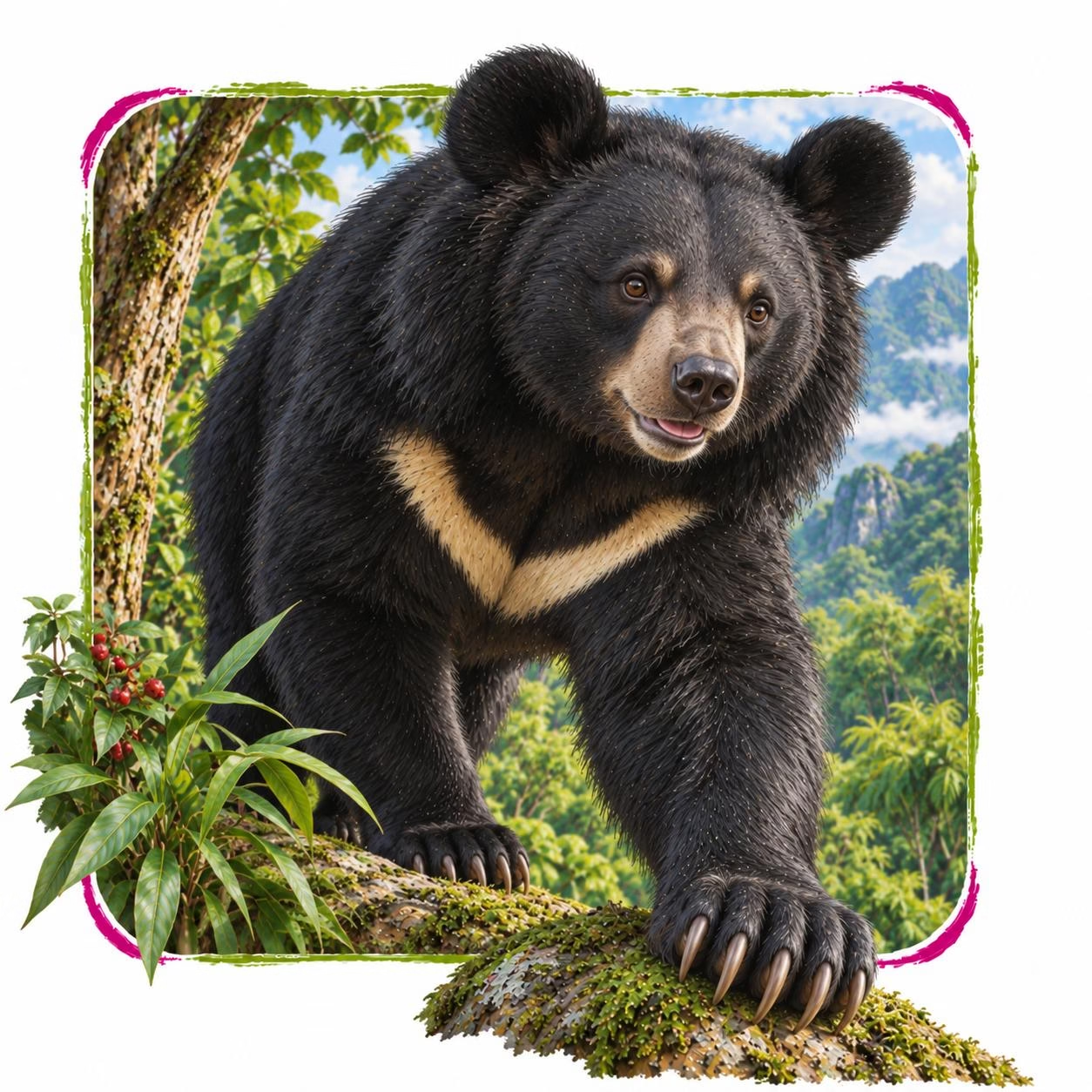
Asiatic Black Bear in its natural Temperate broadleaf and mixed forests, tropical and subtropical forests, mountain woodland, bamboo forest, shrubland, and forested valleys across Asia habitat