
Bactrian Camel Facts for Kids
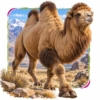
The Bactrian camel is a large domesticated camel from Central Asia with two humps, a thick winter coat, and broad feet for travelling across cold deserts and dry steppes. Its scientific name is Camelus bactrianus. It is different from both the one-humped dromedary and the Critically Endangered wild camel, Camelus ferus, which is a separate species.
Quick Bactrian Camel Facts
- Animal Type: Mammal
- Group: Camelid
- Known For: Two humps, thick winter fur, broad feet, and long-distance transport
- Habitat: Cold deserts, dry steppes, mountain valleys, farms, and caravan routes
- Diet: Grasses, shrubs, leaves, thorny plants, hay, and other vegetation
What You’ll Learn
Discover 10 hardy bactrian camel facts for kids about two humps, thick coats, desert survival, wide feet, and Central Asian habitats, plus a quiz, glossary, and activity
Clear explanations make them fun for children, families, teachers, and little fact-hunters.
10 Fun Bactrian Camel Facts for Kids
1. It Has Two Humps
A Bactrian camel carries two humps, while a dromedary has one. The humps are made mostly of fat rather than water and can shrink or lean when stored energy is used.
Kid Decode: The two-hump backpack stores fuel, not a pair of water tanks.
2. It Is Mainly a Domestic Animal
People have raised Bactrian camels for thousands of years for transport, milk, meat, wool, and hides. Most living Camelus bactrianus belong to managed or feral populations rather than truly wild herds.
Kid Decode: This camel helped carry families and goods across Asia long before trucks appeared.
3. The Wild Camel Is a Different Species
The wild camel, Camelus ferus, is not simply an escaped Bactrian camel. Genetic research supports recognising it as a separate species with its own evolutionary history.
Kid Decode: Two humps do not make every camel the same species.
4. Its Coat Changes With the Seasons
A long shaggy winter coat insulates the camel through bitter cold. Much of that fur is shed in spring, sometimes hanging in loose sheets before the shorter summer coat appears.
Kid Decode: Spring can make the camel look as though its giant woolly sweater is falling apart.
5. Wide Feet Spread Its Weight
Each foot has two toes resting on a broad flexible pad. The pad spreads under pressure and helps prevent the camel from sinking deeply into sand, gravel, or snow.
Kid Decode: Its feet work like soft desert snowshoes.
6. Its Face Blocks Windblown Sand
Long eyelashes, bushy eyebrows, hairy ears, and nostrils that can narrow help protect the eyes, ears, and nose during dusty or icy winds.
Kid Decode: The camel arrives with goggles, ear covers, and nose shutters built into its face.
7. It Handles Huge Temperature Swings
Central Asian deserts can be fiercely hot in summer and far below freezing in winter. Dense fur, body size, flexible water balance, and fat reserves help Bactrian camels cope with both extremes.
Kid Decode: The same animal can face blazing afternoons and freezer-cold nights.
8. It Can Eat Tough Plants
Thick mobile lips help Bactrian camels select dry grasses, shrubs, salty plants, and thorny vegetation that many livestock animals avoid. They are ruminant-like foregut fermenters, but their stomach differs from a cow’s four-compartment system.
Kid Decode: A thorny shrub can still look like lunch to a camel with tough lips.
9. Camels Travel in Caravans
For centuries, Bactrian camels carried people and cargo along Central Asian trade routes, including branches of the Silk Road. A working camel can carry heavy loads, though safe amounts depend on its size, health, terrain, and care.
Kid Decode: A line of two-humped camels once worked like a slow-moving desert freight train.
10. A Baby Camel Is a Calf
A female usually gives birth to one calf after a pregnancy lasting about thirteen months. The calf can stand and follow its mother soon after birth but continues nursing for many months.
Kid Decode: The newborn arrives with long legs, soft humps, and a very experienced guide.
The Weirdest Bactrian Camel Fact
A Bactrian camel’s two humps can become floppy and lean to one side after the animal uses much of their stored fat, then become firmer again when it rebuilds its reserves.
Try This Bactrian Camel Activity
Two-Hump Camel Drawing Activity
Draw a Bactrian camel crossing a cold Central Asian desert. Add two fat-storing humps, a shaggy winter coat, long eyelashes, narrowable nostrils, broad two-toed feet, a calf, distant mountains, and a small Silk Road caravan carrying safe, balanced loads.
Quick Bactrian Camel Quiz
- How many humps does a Bactrian camel have? Answer: Two.
- What is stored mainly inside the humps? Answer: Fat.
- Is the wild camel the same species? Answer: No, it is Camelus ferus.
- How do broad foot pads help? Answer: They spread weight on sand, gravel, or snow.
- What is a baby camel called? Answer: A calf.
Mini Glossary
- Camelid: A member of the mammal family containing camels, llamas, alpacas, guanacos, and vicuñas.
- Hump: A raised fat-storage structure on a camel’s back.
- Caravan: A group travelling together, traditionally including pack animals.
- Domesticated: Changed through many generations of human breeding and management.
- Foregut Fermenter: A plant eater that uses microbes in chambers before the main stomach to break down food.
 Green Iguana Facts for Kids
 Tasmanian Devil Facts for Kids
 Elk Facts for Kids
 Tanystropheus Facts for Kids
More Animal Facts for Kids
Visit the full animal facts library or explore a focused animal group.
More Extinct Animal Facts for Kids
Discover dinosaurs, Ice Age giants, prehistoric sea creatures, recently extinct species, and other animals from the past.
Fact check note: Fact checked with Edinburgh Zoo and Denver Zoo Bactrian camel resources, genetic research distinguishing Camelus bactrianus from Camelus ferus, archaeological studies of camel domestication and Silk Road transport, and comparative camelid physiology research.

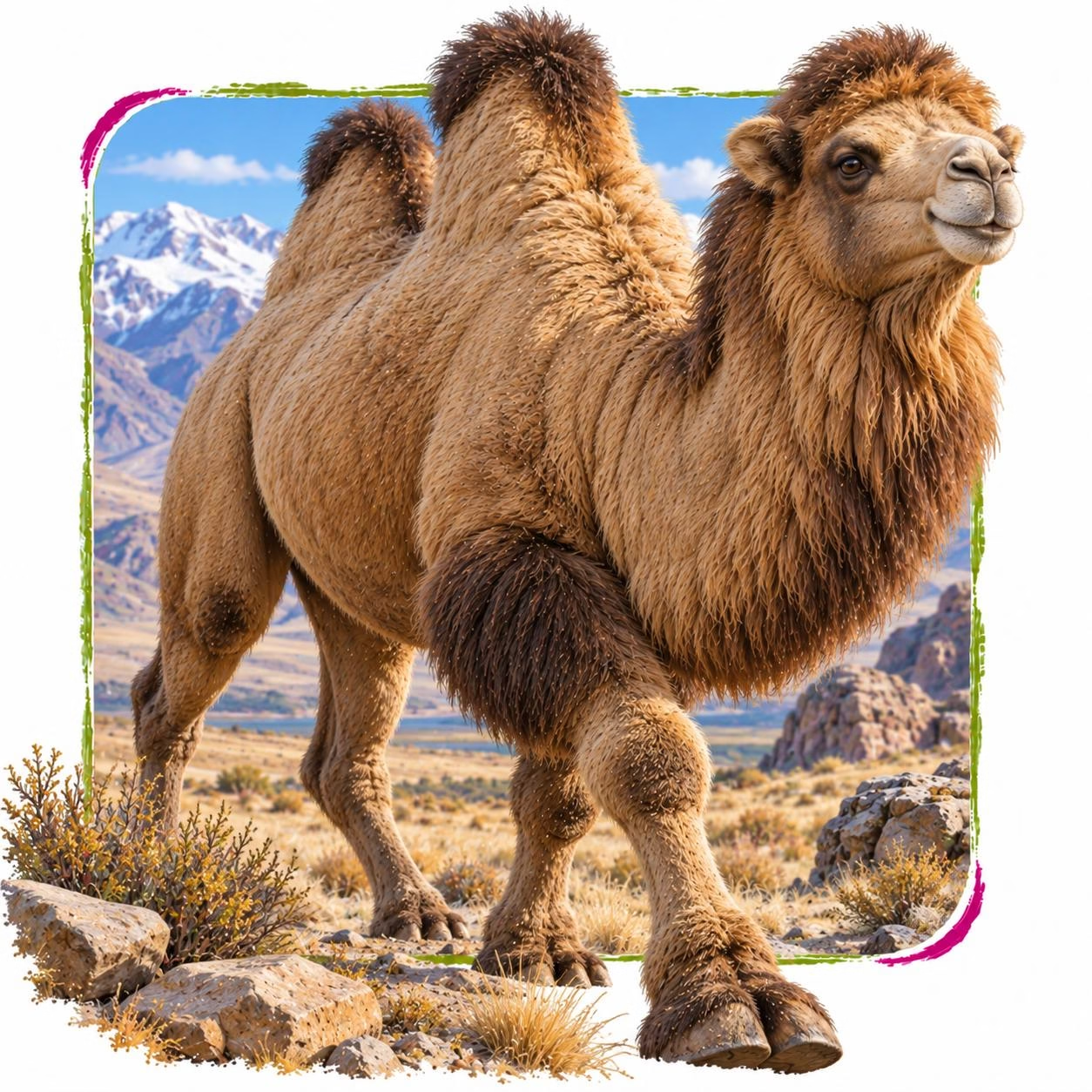
Bactrian Camel in its natural Cold deserts, dry steppes, semi-deserts, mountain valleys, farms, grazing ranges, and historic caravan landscapes of Central Asia habitat