
Ball Python Facts for Kids
Ball pythons are nonvenomous constrictor snakes from West and Central Africa. They are also called royal pythons, and their common name comes from their habit of curling into a tight ball when stressed or frightened.
Quick Ball Python Facts
- Animal Type: Reptile
- Group: Python and constrictor
- Known For: Curling into a ball, royal python name, eggs, hatchlings, constriction, heat-sensing pits, smooth scales, rodent hunting, and African grassland habitats
- Habitat: Grasslands, savannas, shrublands, open forests, termite mounds, burrows, farms, and warm habitats in West and Central Africa
- Diet: Rodents, small mammals, birds, and other warm-blooded prey depending on age, size, and habitat
What You’ll Learn
Learn 10 amazing garter snake facts for kids about stripes, live birth, hunting, swimming, and garden habitats, with a quiz, glossary, and activity
These simple facts are written for kids, parents, teachers, and curious young minds.
10 Fun Ball Python Facts for Kids
1. Ball Pythons Are Reptiles
Ball pythons are reptiles, so they have scales, breathe air, and depend on outside warmth.
Kid Decode: A ball python is a smooth snake with a built-in curl-up button.
2. They Are Pythons
Ball pythons belong to the python group, which includes nonvenomous constrictor snakes.
Kid Decode: They are muscle-coil hunters, not venom users.
3. Baby Ball Pythons Are Hatchlings
Baby ball pythons are called hatchlings after they come out of eggs.
Kid Decode: A hatchling ball python is a tiny royal noodle with patterns.
4. They Lay Eggs
Female ball pythons lay eggs and often coil around them to help protect them.
Kid Decode: The mother becomes a living snake blanket around the eggs.
5. They Curl Into a Ball
When scared or stressed, ball pythons may tuck the head in and curl into a tight ball.
Kid Decode: That defensive pose gives the snake its famous name.
6. They Are Also Called Royal Pythons
Ball pythons are also known as royal pythons.
Kid Decode: The name sounds fancy, and the snake wears a golden-brown pattern suit.
7. They Use Constriction
Ball pythons catch prey by wrapping around it and squeezing.
Kid Decode: Their hunting power is in the coils.
8. They Have Heat-Sensing Pits
Ball pythons have small heat-sensing pits that help them detect warm prey.
Kid Decode: Those pits are like tiny temperature radar spots.
9. They Shed Their Skin
As ball pythons grow, they shed their old outer skin.
Kid Decode: Shedding is snake laundry day, but with the whole outfit at once.
10. They Need Wild Protection
Ball pythons are heavily collected and traded, so wild populations need careful protection and responsible choices.
Kid Decode: A popular pet snake still begins as a wild animal with a real habitat story.
The Weirdest Ball Python Fact
A ball python curls into a tight ball when frightened, hiding its head safely inside its coils.
Try This Ball Python Activity
Ball Python Drawing Activity
Draw a ball python in an African grassland burrow. Add brown and gold patterns, curled ball defense pose, hatchlings, eggs with mother coiled around them, heat-sensing pit labels, mouse tracks, shed skin, grasses, termite mound, and a “respect wild snakes” sign.
Quick Ball Python Quiz
- What animal group are ball pythons in? Answer: Reptiles.
- What are baby ball pythons called? Answer: Hatchlings.
- What is another name for the ball python? Answer: Royal python.
- Why is it called a ball python? Answer: It curls into a tight ball when frightened or stressed.
- How do ball pythons catch prey? Answer: By constriction.
Mini Glossary
- Reptile: An animal group with scales that breathes air and often lays eggs.
- Hatchling: A newly hatched baby animal.
- Python: A group of nonvenomous constrictor snakes.
- Constrictor: A snake that wraps around prey and squeezes.
- Heat-Sensing Pit: A small organ that helps some snakes detect warm animals nearby.
 Mamba Facts for Kids
 Harp Seal Facts for Kids
 Domestic Cat Facts for Kids
 Archaeopteryx Facts for Kids
More Animal Facts for Kids
Visit the full animal facts library or explore a focused animal group.
More Extinct Animal Facts for Kids
Discover dinosaurs, Ice Age giants, prehistoric sea creatures, recently extinct species, and other animals from the past.
Fact check note: Fact checked with San Diego Zoo python resources, Dublin Zoo ball python resources, IUCN ball python references, and trusted reptile education sources.

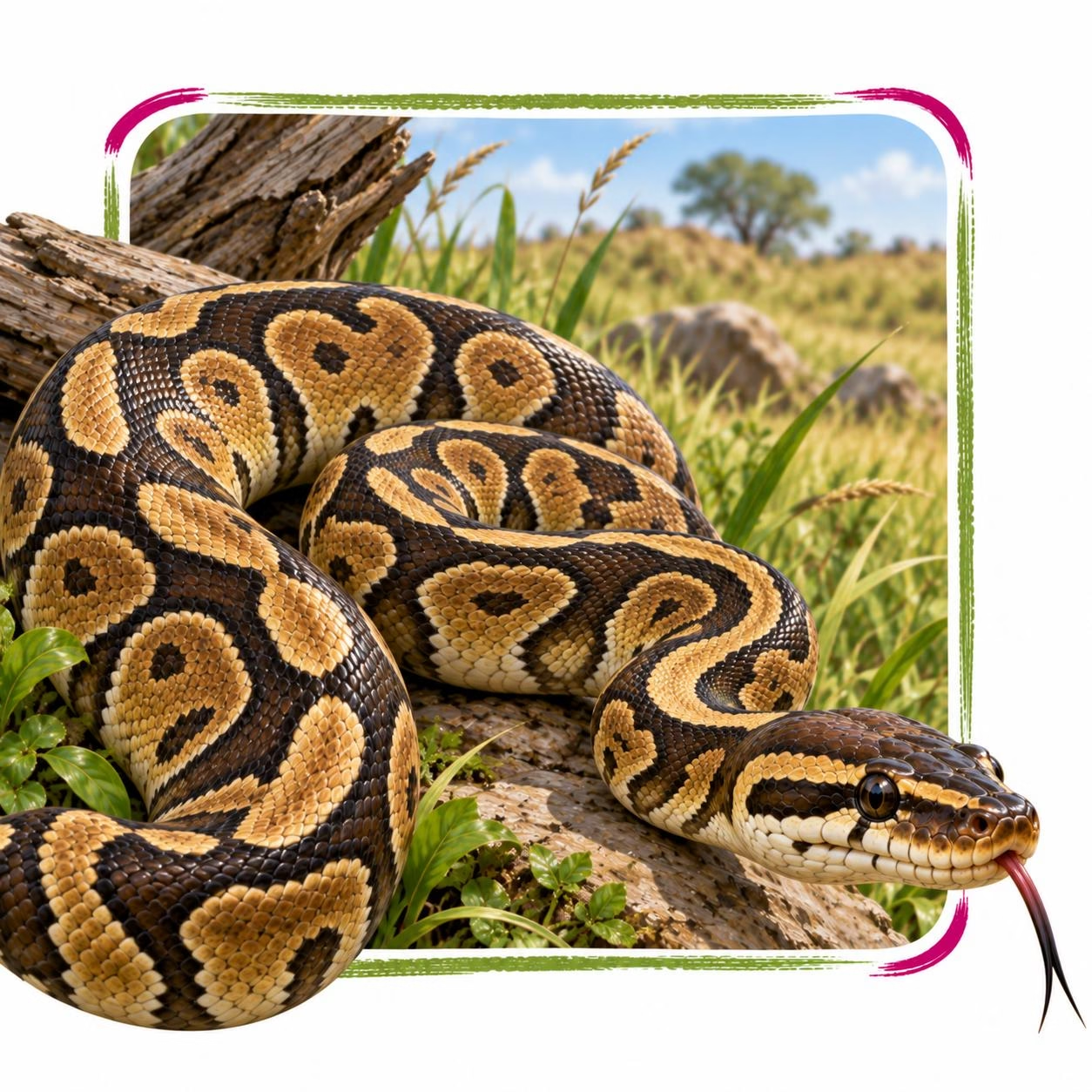
Ball Python in its natural Grasslands habitat