
Banteng Facts for Kids
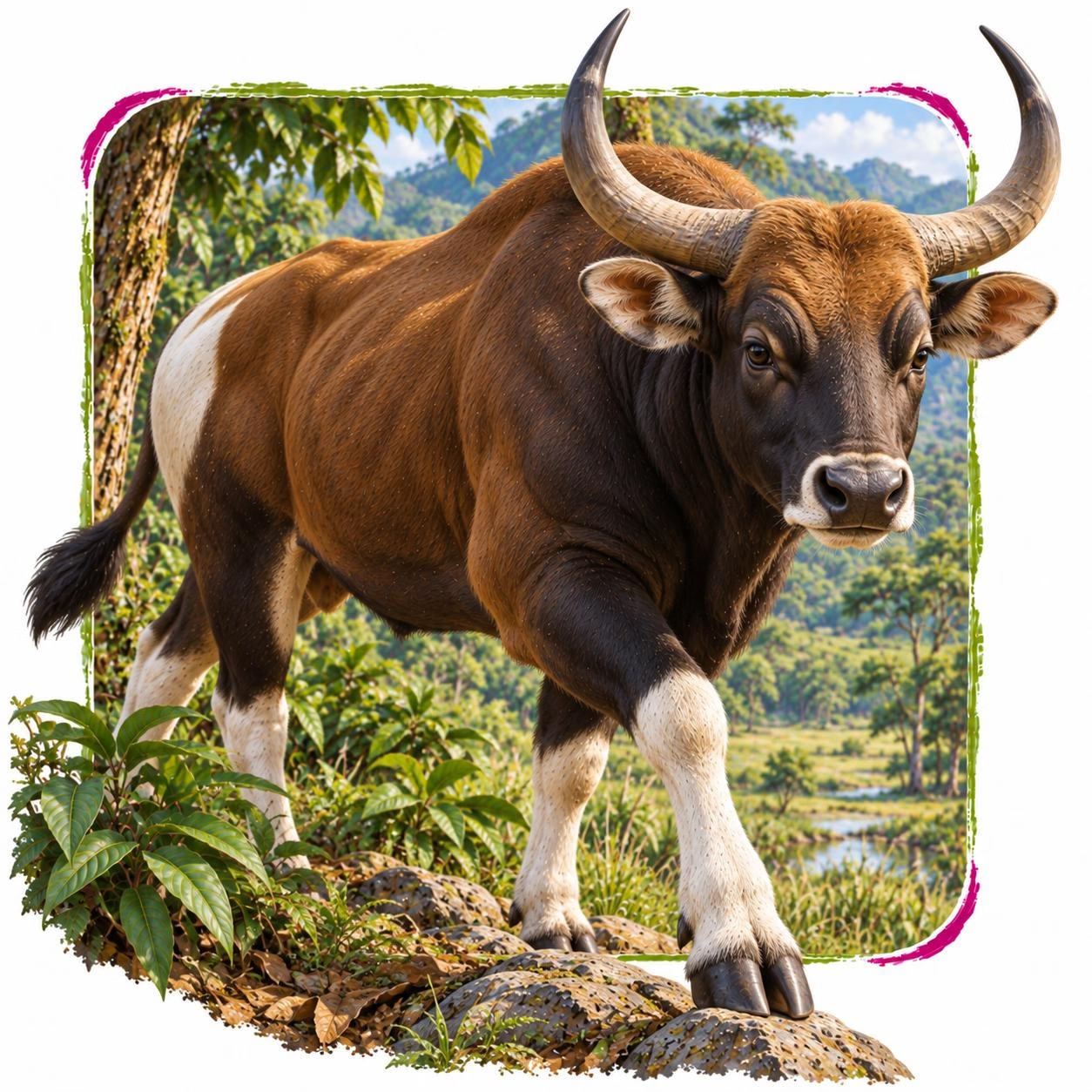
The banteng is a rare species of wild cattle native to Southeast Asia. Its scientific name is Bos javanicus. White lower legs, a large pale rump patch, curved horns, and strong differences between adult bulls and cows make it one of Asia’s most distinctive bovids. Wild populations have fallen sharply, and the IUCN changed the species’ status to Critically Endangered in 2024.
Quick Banteng Facts
- Animal Type: Mammal
- Group: Wild cattle
- Known For: White stockings, pale rump patch, curved horns, and strong male-female colour differences
- Habitat: Tropical forest, dry woodland, grassland, forest clearings, and abandoned farmland
- Diet: Grasses, bamboo, leaves, shoots, herbs, and other vegetation
What You’ll Learn
Explore 10 fascinating banteng facts for kids about curved horns, herd life, grazing, forest habitats, and Southeast Asian wildlife, with a quiz, glossary, and activity
These easy facts are made for kids, parents, teachers, and curious young learners.
10 Fun Banteng Facts for Kids
1. Banteng Are Wild Cattle
Banteng belong to Bovidae and the cattle genus Bos. They are related to gaur, yaks, domestic cattle, and other bovines but form their own species.
Kid Decode: This forest heavyweight is genuine wild cattle, not a deer wearing horns.
2. Their Legs Wear White Stockings
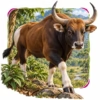
Most banteng have sharply contrasting white lower legs. They also carry a large white or cream rump patch and pale markings around the muzzle.
Kid Decode: The forest outfit includes four bright socks and one enormous white patch at the back.
3. Bulls and Cows Often Look Different
Adult males of some populations become dark brown or nearly black, while females and young animals are usually reddish or chestnut brown. Colour varies among subspecies and regions.
Kid Decode: One herd can display dark chocolate bulls beside cinnamon-coloured cows.
4. Both Sexes Have Horns
Male and female banteng grow permanent horns, although bulls usually have thicker, more strongly curved horns. The horns have bony cores covered by keratin.
Kid Decode: Every adult can carry horns, but the bulls usually choose the heavyweight version.
5. They Use Forest and Grassland Together
Banteng feed in grassy clearings, open woodland, and abandoned fields but often retreat into forest for shade, shelter, and safety. Habitat use changes with season and disturbance.
Kid Decode: The clearing works as a dining room while the forest becomes the hiding room.
6. They Graze and Browse
Banteng eat grasses, bamboo, herbs, leaves, shoots, and other plant material. They are ruminants that regurgitate cud and chew it again.
Kid Decode: The menu switches between lawn mower and leafy branch sampler.
7. Herds Are Usually Small
Females, calves, and young animals often form modest herds, sometimes accompanied by an adult bull. Mature males may also travel alone or in male groups.
Kid Decode: Banteng society ranges from family groups to one enormous bull minding his own business.
8. Calves Can Follow Their Mothers
A female normally gives birth to one calf after a pregnancy of roughly nine to ten months. The calf can stand and move soon after birth and stays close to its mother.
Kid Decode: The newborn has only a short wobble period before joining the forest walk.
9. Bali Cattle Came From Banteng
People domesticated banteng in Indonesia, producing Bali cattle used for meat, work, and farming. Domestic, feral, and hybrid cattle are not the same as protected wild banteng populations.
Kid Decode: One wild cattle species helped create a domestic breed kept by millions of people.
10. Wild Banteng Are Critically Endangered
Poaching, habitat loss, fragmentation, disease, competition with livestock, and breeding with domestic cattle have caused severe declines. The IUCN uplisted Bos javanicus from Endangered to Critically Endangered in 2024.
Kid Decode: The white stockings still cross Asian forests, but far fewer pairs remain.
The Weirdest Banteng Fact
A large feral banteng population lives in northern Australia after domestic animals were introduced there in the nineteenth century, even while the original wild populations in Southeast Asia are Critically Endangered.
Try This Banteng Activity
Banteng Forest Drawing Activity
Draw a banteng herd stepping from tropical forest into a grassy clearing. Add one dark adult bull, reddish cows, a calf, white lower legs, pale rump patches, curved horns, bamboo, hoofprints, and a conservation sign linking protected forest patches.
Quick Banteng Quiz
- What kind of animal is a banteng? Answer: Wild cattle.
- What colour are the lower legs? Answer: Usually white.
- Do females have horns? Answer: Yes.
- Which domestic cattle descended from banteng? Answer: Bali cattle.
- What is the current IUCN category? Answer: Critically Endangered.
Mini Glossary
- Bovid: A hoofed mammal from the family containing cattle, buffalo, sheep, goats, and antelopes.
- Bovine: A member of the cattle-and-buffalo branch of bovids.
- Ruminant: A mammal that regurgitates and rechews partly digested plant food.
- Feral: Living freely after descending from domesticated animals.
- Fragmentation: The breaking of continuous habitat into smaller separated pieces.
 Chameleon Facts for Kids
 Indian Cobra Facts for Kids
 Green Iguana Facts for Kids
 Daspletosaurus Facts for Kids
More Animal Facts for Kids
Visit the full animal facts library or explore a focused animal group.
More Extinct Animal Facts for Kids
Discover dinosaurs, Ice Age giants, prehistoric sea creatures, recently extinct species, and other animals from the past.
Fact check note: Fact checked with the IUCN SSC Asian Wild Cattle Specialist Group’s 2024 banteng reassessment, the IUCN Species Survival Commission 2024–2025 report, peer-reviewed studies of Bos javanicus ecology and genetics, and zoo and conservation-program species accounts.

Banteng in its natural Tropical evergreen and deciduous forests, dry woodland, bamboo, savannas, grasslands, forest clearings, and abandoned farmland across Southeast Asia habitat