
Barnacle Facts for Kids
Barnacles are ocean crustaceans that spend adult life attached to rocks, shells, boats, piers, whales, or other surfaces. They may look like tiny shells or bumps, but they are relatives of crabs, shrimp, and lobsters.
Quick Barnacle Facts
- Animal Type: Marine crustacean
- Group: Crustacean and barnacle subclass Cirripedia
- Known For: Hard plates, attached adult life, nauplius larvae, cyprid larvae, feathery cirri, tide pools, and strong cement
- Habitat: Rocky shores, tide pools, shells, docks, boats, piers, whale skin, reefs, deep sea surfaces, and marine hard surfaces depending on species
- Diet: Plankton, tiny floating animals, algae particles, organic bits, and food filtered from seawater with feathery legs
What You’ll Learn
Discover 10 fascinating sand dollar facts for kids about flat bodies, tiny spines, tube feet, feeding, and sandy seafloors, plus a quiz, glossary, and activity
Easy explanations make them fun for children, families, teachers, and young marine-life fans.
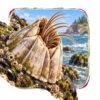
10 Fun Barnacle Facts for Kids
1. Barnacles Are Animals
Barnacles are marine crustaceans, not rocks or plants.
Kid Decode: A barnacle is a tiny stuck-on ocean animal wearing shell armor.
2. Barnacles Are Crustaceans
Barnacles are relatives of crabs, shrimp, and lobsters.
Kid Decode: They are crustaceans that chose the glued-to-a-rock lifestyle.
3. Baby Barnacles Are Larvae
Barnacles begin life as tiny swimming larvae, including nauplius and cyprid stages.
Kid Decode: A baby barnacle starts as a drifting speck before finding a place to stick.
4. Cyprid Larvae Choose a Home
The cyprid larva searches for a good surface where it can attach and become an adult.
Kid Decode: Choosing a home is the barnacle’s biggest real-estate moment.
5. Adult Barnacles Stay Attached
Most adult barnacles cement themselves to one place and do not walk around.
Kid Decode: Once settled, the barnacle basically says, “This rock is my address.”
6. Barnacles Have Hard Plates
Barnacles are protected by hard calcareous plates that form a shell-like wall.
Kid Decode: Their home is also their body armor.
7. Barnacles Feed With Cirri
Barnacles sweep feathery legs called cirri through the water to catch tiny food.
Kid Decode: Their legs work like little food-catching fans.
8. Barnacles Can Live in Tide Pools
Many barnacles survive on rocky shores where waves, sun, and tides keep changing conditions.
Kid Decode: They are tough little bump animals in splashy neighborhoods.
9. Barnacles Attach to Many Surfaces
Barnacles can grow on rocks, shells, boats, docks, and even whales depending on species.
Kid Decode: If the ocean offers a hard surface, a barnacle may inspect it.
10. Barnacles Need Clean Oceans
Barnacles need seawater, plankton, safe surfaces, and balanced coastal habitats.
Kid Decode: Healthy shorelines help the tiny filter feeders keep waving their cirri.
The Weirdest Barnacle Fact
A barnacle is a crustacean relative of crabs and shrimp, but as an adult it lives stuck in one place.
Try This Barnacle Activity
Barnacle Drawing Activity
Draw barnacles on a tide pool rock. Add hard shell plates, feathery cirri reaching out, nauplius larvae, cyprid larvae choosing a surface, waves, seaweed, shells, a crab cousin nearby, and a boat dock in the background.
Quick Barnacle Quiz
- What animal group are barnacles in? Answer: Marine crustaceans.
- What are two barnacle larval stages? Answer: Nauplius and cyprid.
- What do adult barnacles attach to? Answer: Rocks, shells, boats, docks, whales, or other surfaces.
- What feathery legs help barnacles catch food? Answer: Cirri.
- What larger animal group includes crabs, shrimp, and barnacles? Answer: Crustaceans.
Mini Glossary
- Marine Crustacean: An ocean animal in the same big group as crabs, shrimp, and lobsters.
- Nauplius: An early swimming larval stage of many crustaceans.
- Cyprid: A barnacle larval stage that searches for a place to attach.
- Cirri: Feathery barnacle legs used to sweep food from water.
- Filter Feeder: An animal that catches tiny food particles from water.
 Burrowing Owl Facts for Kids
 Guinea Pig Facts for Kids
 Spotted Hyena Facts for Kids
 Gigantoraptor Facts for Kids
More Animal Facts for Kids
Visit the full animal facts library or explore a focused animal group.
More Extinct Animal Facts for Kids
Discover dinosaurs, Ice Age giants, prehistoric sea creatures, recently extinct species, and other animals from the past.
Fact check note: Fact checked with Britannica barnacle resources, Britannica cirripede resources, and trusted marine crustacean education references.

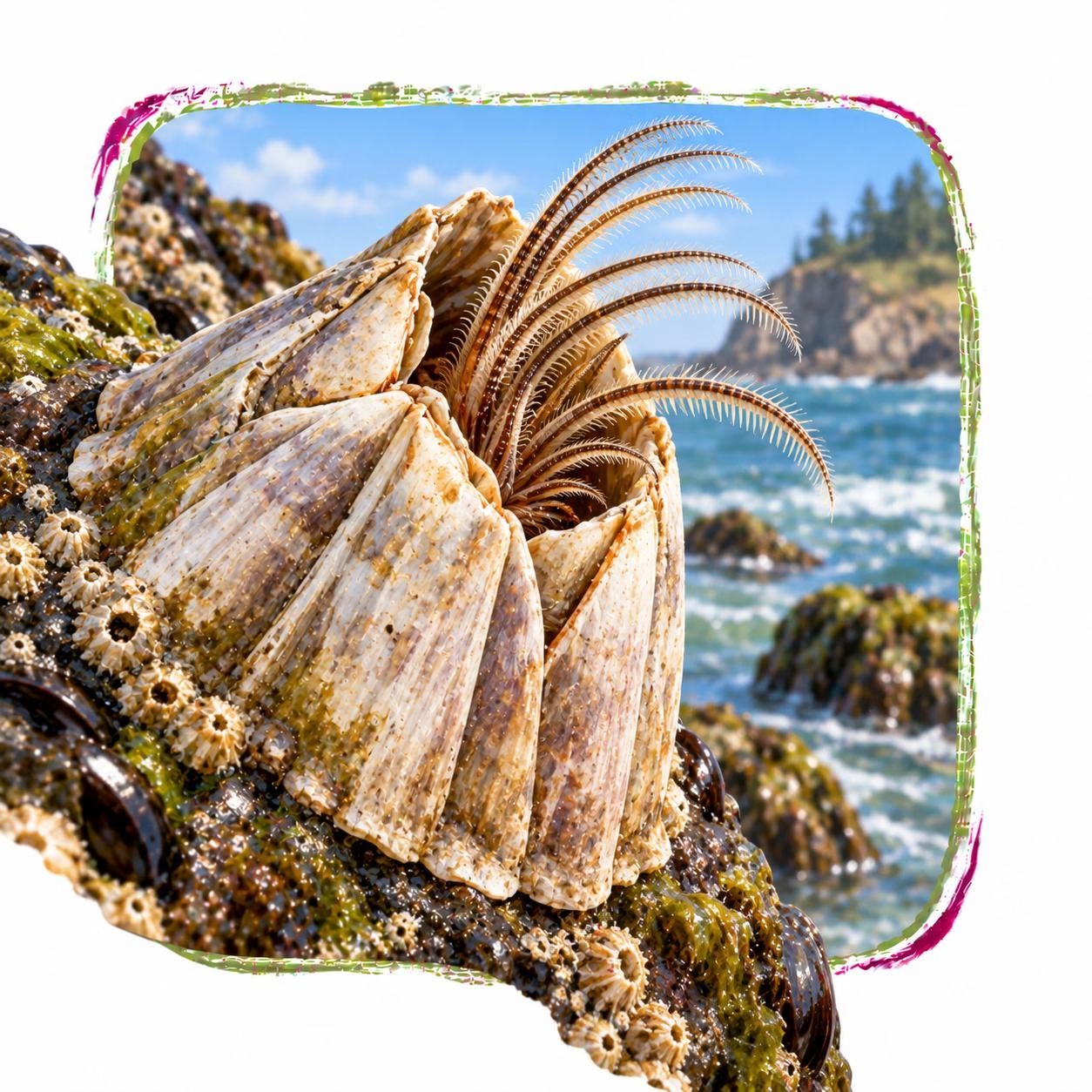
Barnacle in its natural Coasts habitat