
Basking Shark Facts for Kids
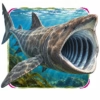
The basking shark is the second-largest living fish, after the whale shark. This enormous but harmless shark cruises through temperate oceans with its mouth wide open, allowing water to flow across bristle-like gill rakers that trap tiny zooplankton. Its scientific name is Cetorhinus maximus, and despite the dramatic gape, it does not hunt people or large marine animals.
Quick Basking Shark Facts
- Animal Type: Fish
- Group: Lamniform shark
- Known For: Huge open mouth, enormous gill slits, plankton filtering, and slow surface feeding
- Habitat: Temperate and cool coastal waters, continental shelves, and open ocean
- Diet: Zooplankton, especially copepods and other tiny drifting animals
What You’ll Learn
Discover 10 enormous basking shark facts for kids about giant mouths, filter feeding, plankton, slow swimming, and ocean life, with a quiz, glossary, and activity
These facts are explained simply for kids, parents, teachers, and curious little fact-finders.
10 Fun Basking Shark Facts for Kids
1. It Is the Second-Largest Fish
Only the whale shark grows larger. Most basking sharks seen today measure roughly 6 to 10 metres, while exceptional historical individuals may have exceeded 10 metres.
Kid Decode: One gentle fish can stretch longer than a city bus.
2. Its Giant Mouth Is a Filter
A basking shark swims forward with its enormous mouth open, using the movement of its body to push seawater across the gills. This feeding method is called ram filtration.
Kid Decode: The shark turns its whole head into a moving plankton sieve.
3. Gill Rakers Catch Tiny Food
Long bristle-like gill rakers line the gill arches and trap copepods, fish eggs, and other zooplankton while water escapes through five enormous pairs of gill slits.
Kid Decode: Millions of tiny snacks meet a forest of filters before the seawater exits.
4. It Does Not Swallow People
The throat is much narrower than the open mouth, and the shark specialises in tiny drifting prey. Basking sharks are generally passive around people, although their great size and rough skin still require respectful distance.
Kid Decode: The mouth looks like a sea monster entrance, but the menu is microscopic.
5. Its Teeth Are Tiny
Basking sharks have many rows of very small hooked teeth, but the teeth play little or no role in filtering food. Their exact use may be connected with reproduction or other behaviours.
Kid Decode: The world’s second-largest fish carries teeth better suited to a miniature model.
6. It Often Feeds Near the Surface
Plankton blooms can draw basking sharks into sunlit surface waters, where the dorsal fin, nose, and tail may be visible. The name basking came from the old idea that these sharks were simply warming in the sun.
Kid Decode: What looked like sunbathing was often an enormous fish working through lunch.
7. It Makes Long Migrations
Satellite tracking shows that basking sharks travel across seas and sometimes between ocean regions, following changing water conditions and plankton supplies. Some also dive into deep offshore water.
Kid Decode: The slow-looking surface cruiser can quietly cross an enormous ocean map.
8. It Can Leap From the Water
Basking sharks sometimes breach, launching much of the body above the surface. Scientists have suggested communication, parasite removal, courtship, or other explanations, but the exact reason is uncertain.
Kid Decode: A five-ton plankton eater can suddenly perform a spectacular ocean jump.
9. Its Reproduction Is Mysterious
Scientists think basking sharks give birth to live young after embryos develop inside the mother, but mating, pregnancy length, birth sites, and litter size remain poorly known.
Kid Decode: One of the ocean’s biggest animals keeps much of its baby story hidden.
10. It Is Endangered
Past fisheries killed basking sharks for liver oil, fins, meat, and other products. Bycatch, ship strikes, entanglement, and very slow reproduction continue to threaten populations, and the IUCN lists the species as Endangered.
Kid Decode: A giant that filters millions of litres of water can still be vulnerable to one fishing net.
The Weirdest Basking Shark Fact
A basking shark may open a mouth more than a metre wide while feeding, yet it is searching for tiny copepods and other plankton rather than large prey.
Try This Basking Shark Activity
Basking Shark Filter-Feeding Drawing Activity
Draw a basking shark moving through a cool ocean plankton bloom. Add an enormous open mouth, five huge gill slits on each side, a pointed snout, tall dorsal fin, crescent-shaped tail, tiny copepods, a water-flow arrow through the gills, and a small breaching shark in the distance.
Quick Basking Shark Quiz
- What is the only living fish larger than a basking shark? Answer: The whale shark.
- How does a basking shark collect food? Answer: It swims with its mouth open and filters water through gill rakers.
- What does it mainly eat? Answer: Zooplankton such as copepods.
- Why is the name basking slightly misleading? Answer: Sharks seen near the surface are often feeding rather than simply sunbathing.
- What is its IUCN category? Answer: Endangered.
Mini Glossary
- Zooplankton: Tiny drifting animals in water.
- Gill Raker: A filtering structure attached to a fish’s gill arch.
- Ram Filtration: Filtering food by swimming forward with the mouth open.
- Pelagic: Living in open water away from the seabed.
- Bycatch: An animal accidentally caught during fishing for another species.
 Cougar Facts for Kids
 Black Rhino Facts for Kids
 Egret Facts for Kids
 Pyrotherium Facts for Kids
More Animal Facts for Kids
Visit the full animal facts library or explore a focused animal group.
More Extinct Animal Facts for Kids
Discover dinosaurs, Ice Age giants, prehistoric sea creatures, recently extinct species, and other animals from the past.
Fact check note: Fact checked with the Convention on Migratory Species basking shark profile, NOAA Fisheries and National Marine Sanctuaries resources, Sims’s 2008 review of Cetorhinus maximus biology, Doherty and colleagues’ satellite-tracking research, and the IUCN Red List assessment listing the species as Endangered.

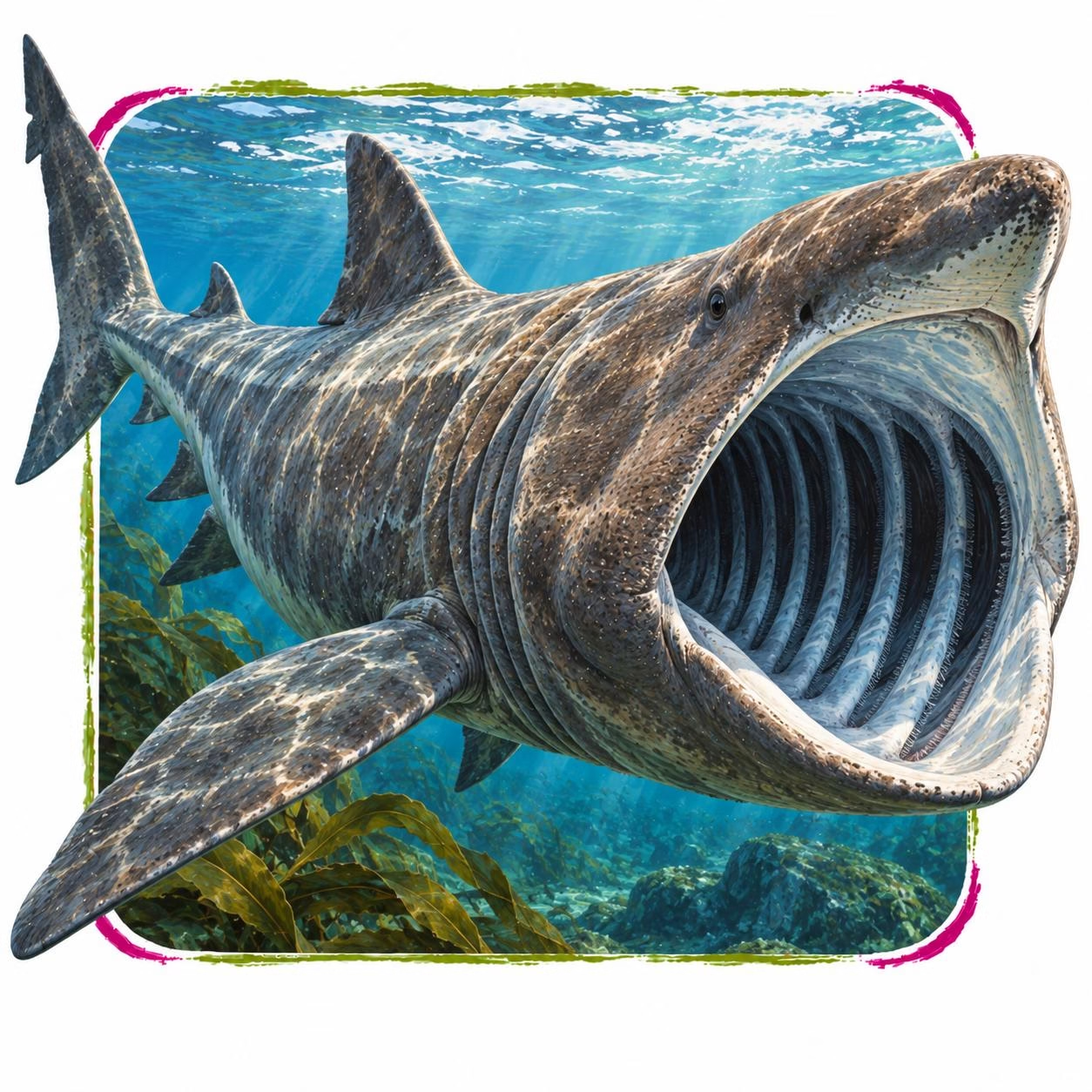
Basking Shark in its natural Temperate and boreal coastal waters, continental shelves, productive fronts, bays, and open-ocean habitats across the Atlantic, Pacific, Indian, and Southern oceans habitat