
Beetle Facts for Kids
Beetles are insects in the order Coleoptera, the largest described order of animals. Scientists have named roughly 400,000 species, from microscopic featherwing beetles to giant longhorns, scarabs, weevils, ladybirds, fireflies, and diving beetles. Their defining feature is a hardened front pair of wings called elytra, which closes over and protects the delicate flight wings and abdomen.
Quick Beetle Facts
- Animal Type: Insect
- Group: Order Coleoptera
- Known For: Hardened wing cases, extraordinary diversity, complete metamorphosis, and nearly every kind of insect diet
- Habitat: Almost every land and freshwater habitat
- Diet: Plants, fungi, wood, dung, carrion, stored food, or other animals, depending on species
What You’ll Learn
Learn 10 amazing beetle facts for kids about hard wing covers, antennae, life cycles, diets, and incredible variety, with a quiz, glossary, and activity
These simple facts are written for kids, parents, teachers, and curious young minds.
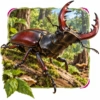
10 Fun Beetle Facts for Kids
1. About 400,000 Species Are Known
Beetles form the most species-rich described animal order, with roughly 400,000 named species and many more awaiting discovery. They account for a remarkable share of known insect diversity.
Kid Decode: The beetle catalogue is so enormous that scientists keep discovering missing pages.
2. Elytra Form Protective Wing Cases
The first pair of wings is hardened into elytra that meet along the back. These cases shield the abdomen and usually protect a folded second pair of flight wings underneath.
Kid Decode: A beetle closes two armored doors over its delicate flying equipment.
3. Coleoptera Means Sheath Wings
The order name combines Greek words referring to a sheath and a wing. It describes the way the elytra form a protective covering over the functional wings.
Kid Decode: The scientific name is a two-word instruction manual for the beetle’s back.
4. Not Every Beetle Can Fly
Many species unfold membranous hind wings and fly, but others have reduced wings or elytra fused shut. Flightless beetles can thrive on islands, mountains, deserts, caves, and forest floors.
Kid Decode: Some wing cases protect an aircraft, while others have become permanently locked luggage.
5. They Undergo Complete Metamorphosis
Beetles develop through egg, larva, pupa, and adult stages. Larvae may be called grubs, borers, wireworms, or other names and can look completely different from adults.
Kid Decode: The crawling larva enters a pupa and emerges wearing adult armor.
6. Beetle Diets Cover Almost Everything
Different species eat leaves, roots, seeds, wood, fungi, dung, carrion, stored grain, algae, snails, insects, and other small animals. Only a few food types escape the beetle menu.
Kid Decode: Some beetles garden, some hunt, some recycle, and some raid the pantry.
7. They Perform Essential Ecosystem Jobs
Dung beetles bury waste, carrion beetles recycle dead animals, predatory beetles control pests, wood feeders break down trees, and many species pollinate flowers or disperse nutrients.
Kid Decode: The beetle workforce handles cleaning, recycling, pest patrol, and flower delivery.
8. Fireflies Are Beetles
Fireflies and glow-worms belong to the beetle family Lampyridae. Many produce cold light through a chemical reaction and flash species-specific signals to find mates.
Kid Decode: One beetle family replaced ordinary courtship messages with tiny living lanterns.
9. Some Beetles Carry Chemical Weapons
Bombardier beetles mix stored chemicals in a reaction chamber and eject a hot, pulsing defensive spray toward attackers. Other beetles use foul tastes, toxins, mimicry, or tough armor.
Kid Decode: The bombardier’s rear end contains a miniature chemical defense laboratory.
10. The Biggest Beetle Depends on Measuring
Titan beetles are among the longest-bodied species, Hercules beetles can be longer when the male’s horn is included, and giant goliath beetles are among the heaviest. Different measurements produce different champions.
Kid Decode: The beetle size contest needs separate trophies for body, horn, and weight.
The Weirdest Beetle Fact
A bombardier beetle fires its defensive chemicals in rapid pulses, controlling a reaction hot enough to produce a steaming spray without cooking the beetle itself.
Try This Beetle Activity
Beetle Diversity Drawing Activity
Draw a beetle museum shelf featuring a ladybird, stag beetle, weevil, diving beetle, dung beetle, firefly, and bombardier beetle. Add opened elytra revealing folded flight wings, the egg-larva-pupa-adult life cycle, and labels showing recycling, hunting, glowing, swimming, and plant feeding.
Quick Beetle Quiz
- What is the scientific order containing beetles? Answer: Coleoptera.
- What are elytra? Answer: The hardened front wings that protect the body and flight wings.
- Can every beetle fly? Answer: No.
- What are the four life stages? Answer: Egg, larva, pupa, and adult.
- Are fireflies really beetles? Answer: Yes.
Mini Glossary
- Coleoptera: The insect order containing beetles.
- Elytron: One hardened front wing of a beetle; the plural is elytra.
- Exoskeleton: A hard outer covering that supports and protects an arthropod.
- Larva: The immature feeding stage between egg and pupa.
- Bioluminescence: Light produced by a living organism through a chemical reaction.


 Fiddler Crab Facts for Kids
 Mite Facts for Kids
 European Shag Facts for Kids
 Proconsul Facts for Kids
More Animal Facts for Kids
Visit the full animal facts library or explore a focused animal group.
More Extinct Animal Facts for Kids
Discover dinosaurs, Ice Age giants, prehistoric sea creatures, recently extinct species, and other animals from the past.
Fact check note: Fact checked with the Natural History Museum’s Coleoptera and beetle-diversity resources, Smithsonian insect-diversity and Coleoptera collection information, peer-reviewed reviews of beetle evolution and metamorphosis, and research on firefly bioluminescence and bombardier beetle chemical defense.

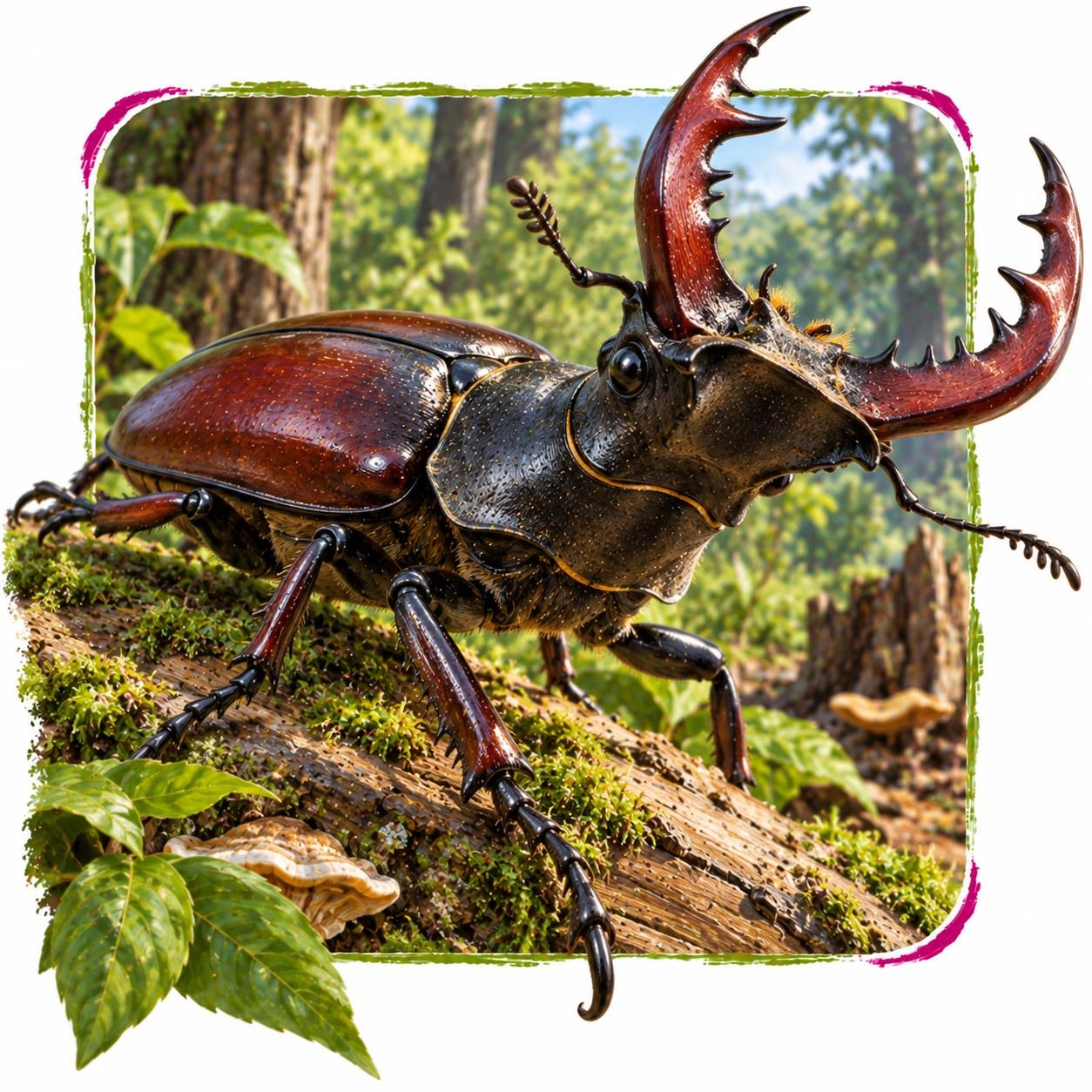
Beetle in its natural Nearly every terrestrial and freshwater habitat, including forests, grasslands, deserts, caves, farms, gardens, streams, ponds, decaying wood, soil, and animal nests habitat