
Bengal Tiger Facts for Kids
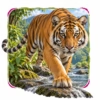
The Bengal tiger is a population of the tiger, Panthera tigris, native to the Indian subcontinent. It is traditionally called Panthera tigris tigris and lives in India, Nepal, Bhutan, and Bangladesh. Bengal tigers use forests, grasslands, river floodplains, and the mangrove islands of the Sundarbans. Each animal carries a unique pattern of dark stripes, making photographs useful for identifying individuals.
Quick Bengal Tiger Facts
- Animal Type: Mammal
- Group: Big cat
- Known For: Unique stripes, solitary hunting, powerful swimming, and enormous strength
- Habitat: Tropical forests, grasslands, floodplains, foothills, and mangrove swamps
- Diet: Deer, wild boar, wild cattle, and other available animals
What You’ll Learn
Discover 10 powerful bengal tiger facts for kids about striped coats, hunting, swimming, territories, and Asian habitats, plus a quiz, glossary, and activity
Clear explanations make them ideal for children, families, teachers, and little fact-hunters.
10 Fun Bengal Tiger Facts for Kids
1. It Is a Tiger From the Indian Subcontinent
Bengal tigers occur naturally in India, Nepal, Bhutan, and Bangladesh. India holds most of the surviving population, while smaller populations occupy connected landscapes and protected areas in neighbouring countries.
Kid Decode: The Bengal tiger’s map crosses national borders even though each cat guards its own space.
2. Every Stripe Pattern Is Unique
No two tigers have exactly the same arrangement of stripes. Researchers compare photographs of both flanks because the left and right patterns differ on one animal.
Kid Decode: A tiger carries two striped identification cards, one on each side.
3. The Skin Is Striped Too
Dark pigment occurs in the skin beneath much of the striped fur, so shaving a tiger would not reveal a completely plain orange body. The exact pattern still depends on hair and skin pigmentation.
Kid Decode: The famous pattern is more than paint sitting on the tips of the fur.
4. It Is a Powerful Swimmer
Bengal tigers willingly cross rivers and channels, cool off in water, and sometimes pursue prey near wetlands. Sundarbans tigers regularly swim between mangrove islands.
Kid Decode: For a tiger, a wide river can become part of the pathway rather than a wall.
5. It Usually Hunts Alone
Adults generally stalk prey by themselves, using cover, hearing, vision, patience, and a short explosive rush. A hunt often fails, so a successful kill must provide several meals.
Kid Decode: The striped hunter spends far more time waiting and missing than movie scenes suggest.
6. It Uses Scent to Mark Territory
Tigers spray urine, leave droppings, scratch trees, rub surfaces, and make calls that advertise identity and occupancy. Home ranges overlap more among females than among neighbouring adult males.
Kid Decode: The forest noticeboard is written with scent, scratches, and enormous paw prints.
7. Cubs Are Born Blind
A tigress normally gives birth in a sheltered den to a small litter of blind, helpless cubs. Their eyes open after birth, and they remain dependent on their mother while learning to travel and hunt.
Kid Decode: Every powerful tiger begins as a squeaking cub unable to see the den walls.
8. Tiger Mothers Teach Survival
Cubs accompany their mother for many months, gradually learning prey choice, stalking, safe travel routes, and responses to danger. They usually disperse before becoming fully mature adults.
Kid Decode: The curriculum includes forest maps, silent feet, and many failed practice stalks.
9. Sundarbans Tigers Live With Tides
In the Sundarbans, Bengal tigers navigate muddy islands, tidal creeks, salt-tolerant mangroves, and shifting shorelines. This habitat differs sharply from the dry forests and grasslands used elsewhere.
Kid Decode: One tiger population lives where the forest floor repeatedly disappears beneath the tide.
10. The Species Is Endangered
Tigers are listed as Endangered because habitat loss, prey decline, poaching, illegal trade, conflict, roads, and isolated populations continue to threaten them. India’s 2022 national estimate reported 3,682 tigers, but that number covers all wild tigers counted in India rather than a separate worldwide Bengal-tiger total.
Kid Decode: Growing numbers in some landscapes do not remove the danger from a cat that needs vast connected habitat.
The Weirdest Bengal Tiger Fact
Sundarbans Bengal tigers regularly swim through tidal channels between mangrove islands, combining big-cat hunting skills with life in one of the world’s largest watery forests.
Try This Bengal Tiger Activity
Bengal Tiger Stripe Drawing Activity
Draw a Bengal tiger moving through an Indian forest beside a river. Add an orange coat with unique black stripes, white cheek and belly fur, round ears with pale rear spots, large paws, a tigress with cubs, camera-trap boxes on two trees, and a Sundarbans inset showing a tiger swimming between mangrove islands.
Quick Bengal Tiger Quiz
- Which countries contain wild Bengal tigers? Answer: India, Nepal, Bhutan, and Bangladesh.
- Can stripe patterns identify individuals? Answer: Yes, each pattern is unique.
- Do adult Bengal tigers usually hunt in groups? Answer: No, they usually hunt alone.
- What are tiger cubs like at birth? Answer: Blind and dependent on their mother.
- What is the tiger’s IUCN category? Answer: Endangered.
Mini Glossary
- Big Cat: A member of the genus Panthera, including tigers, lions, leopards, jaguars, and snow leopards.
- Territory: An area an animal marks and defends or regularly occupies.
- Disperse: To leave the birth area and establish life elsewhere.
- Mangrove: A salt-tolerant coastal tree or shrub growing in tidal water.
- Camera Trap: An automatic camera triggered when an animal passes.


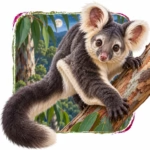 Greater Glider Facts for Kids
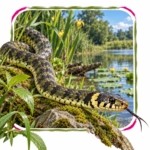 Grass Snake Facts for Kids
 Worm Facts for Kids
 Kentrosaurus Facts for Kids
More Animal Facts for Kids
Visit the full animal facts library or explore a focused animal group.
More Extinct Animal Facts for Kids
Discover dinosaurs, Ice Age giants, prehistoric sea creatures, recently extinct species, and other animals from the past.
Fact check note: Fact checked with the IUCN SSC Cat Specialist Group tiger profile, the National Tiger Conservation Authority and Wildlife Institute of India’s 2022 tiger assessment, peer-reviewed camera-trap and tiger-spatial-ecology research, and studies of Sundarbans tiger movement and habitat use.

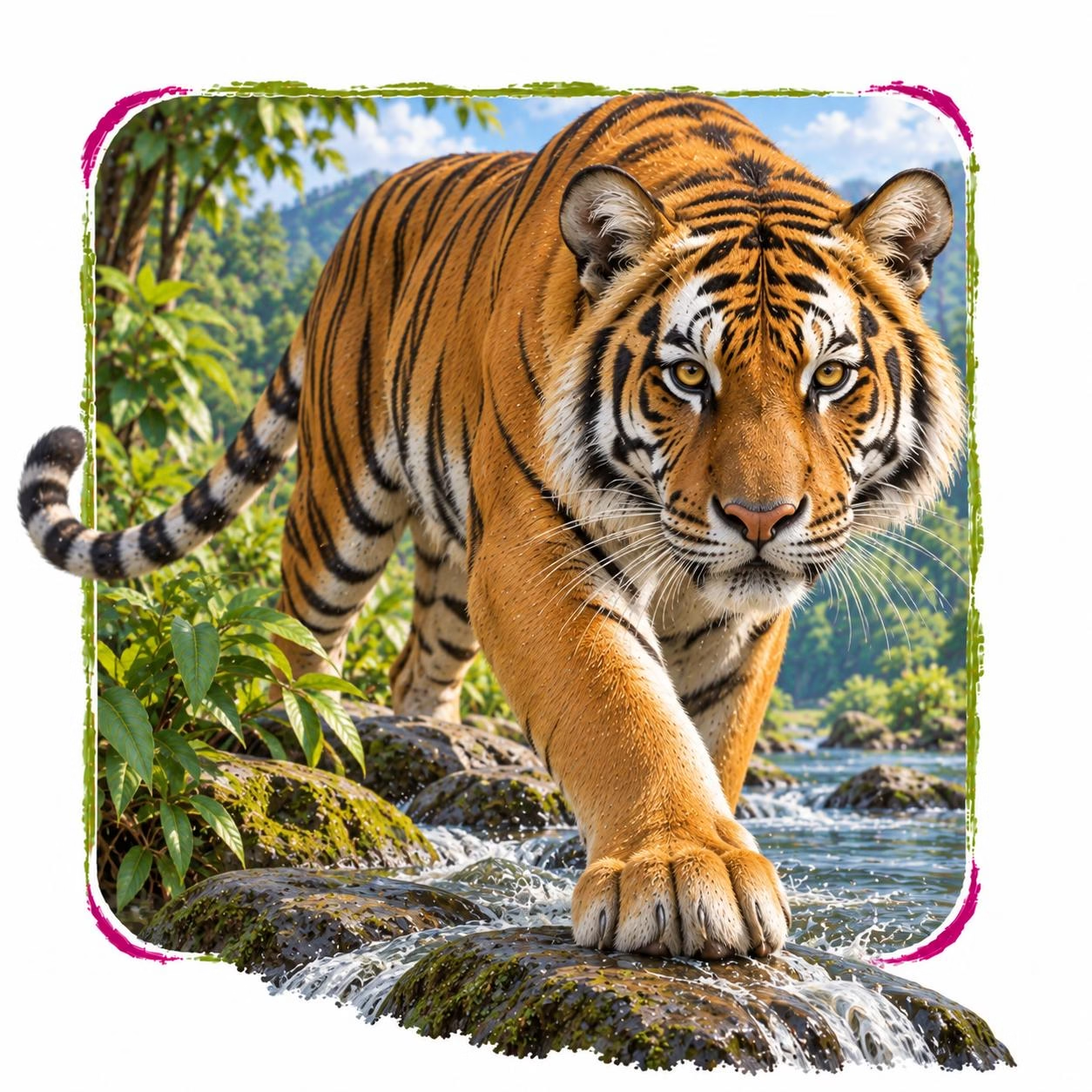
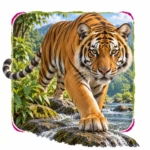
Bengal Tiger in its natural Tropical and subtropical forest, dry deciduous woodland, alluvial grassland, river floodplain, Himalayan foothills, and Sundarbans mangrove habitat across the Indian subcontinent habitat