
Bharal Facts for Kids
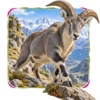
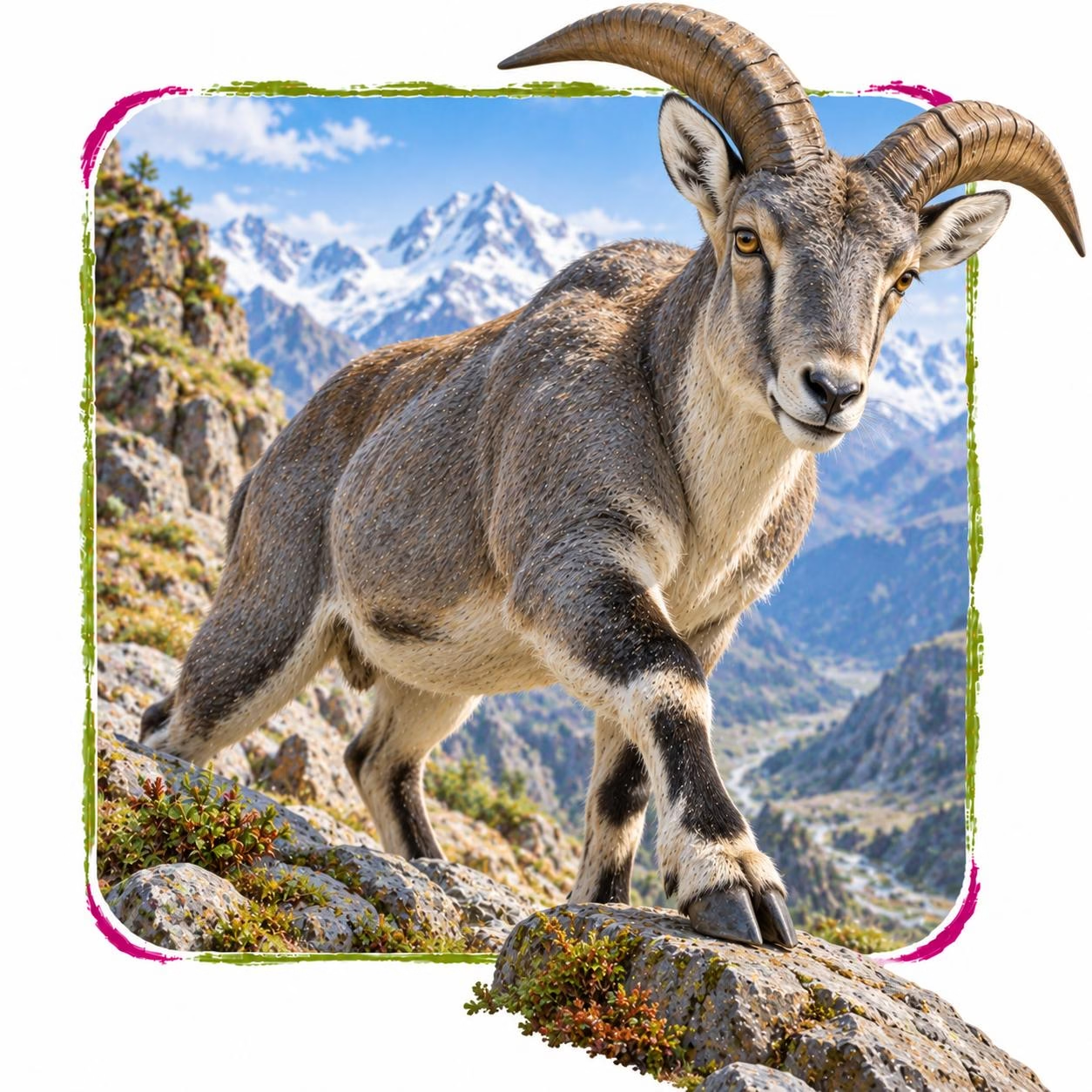
The bharal, also called the blue sheep, is a mountain-dwelling bovid of the Himalayas and Tibetan Plateau. Its scientific name is Pseudois nayaur. Although it looks partly sheep-like and partly goat-like, genetic studies place it closer to goats than to true sheep. Its slate-gray coat blends with bare cliffs, helping herds disappear against high-altitude rock.
Quick Bharal Facts
- Animal Type: Mammal
- Group: Caprine bovid
- Known For: Blue-gray camouflage, curved horns, cliff escape, and importance as snow leopard prey
- Habitat: Alpine meadows, rocky slopes, cliffs, steppe, and high mountain valleys
- Diet: Grasses, sedges, herbs, leaves, shoots, and shrubs
What You’ll Learn
Explore 10 mountain bharal facts for kids about blue-gray coats, climbing, curved horns, grazing, and Himalayan habitats, with a quiz, glossary, and activity
These easy facts are made for kids, parents, teachers, and curious young learners.
10 Fun Bharal Facts for Kids
1. It Is Also Called Blue Sheep
The name comes from the bluish or slate-gray cast of the coat rather than bright blue fur. White underparts and dark markings help outline adults, especially males.
Kid Decode: The mountain’s blue sheep is coloured more like stormy rock than a blue crayon.
2. It Is Closer to Goats Than Sheep
Bharal belong to the caprine branch of Bovidae. Molecular studies generally place Pseudois nearer to goats than to the true sheep genus Ovis, despite the common name blue sheep.
Kid Decode: The animal looks like evolution blended a sheep silhouette with goat family paperwork.
3. Its Scientific Name Means False Sheep
The genus name Pseudois combines roots meaning false and sheep. It reflects the animal’s unusual mixture of sheep-like and goat-like features.
Kid Decode: The name itself warns that this sheep label contains a taxonomic twist.
4. Both Sexes Grow Horns
Males and females carry permanent horns, but adult males usually develop much larger horns that curve outward and backward. Female horns are shorter and more slender.
Kid Decode: The ewes wear neat hooks while the rams carry sweeping mountain crescents.
5. Rock-Coloured Fur Provides Camouflage
When danger appears, bharal may freeze against cliffs and scree. Their blue-gray coats and dark leg markings can merge remarkably well with shadowed rock.
Kid Decode: An entire herd can become a row of stones simply by standing still.
6. They Escape Toward Cliffs
Bharal feed on open slopes but remain close to steep escape terrain. Split hooves, strong legs, and balance help them race across broken rock where many predators struggle to follow.
Kid Decode: The safest doorway is often a cliff that looks impossible to everyone else.
7. They Form Flexible Herds
Group size changes with season, sex, food, and disturbance. Females and young often gather together, while adult males may form separate groups outside the breeding season.
Kid Decode: The mountain crowd rearranges itself as winter, lambs, and courtship take turns.
8. They Graze and Browse
Grasses and sedges are important foods, but bharal also eat herbs, leaves, and shrubs. During winter or where livestock reduces grass, they may browse more woody plants.
Kid Decode: When the alpine lawn thins out, the menu climbs onto the shrubs.
9. They Are Key Snow Leopard Prey
Across much of the Himalayas and Tibetan Plateau, bharal form one of the most important wild prey species for snow leopards. Wolves and leopards also hunt them, while eagles may threaten young lambs.
Kid Decode: The blue sheep turns mountain plants into the energy that keeps a snow leopard alive.
10. Lambs Arrive During the Short Summer
Females usually give birth to one lamb after the harshest cold has passed and fresh high-altitude plants are becoming available. The lamb can stand and follow its mother soon after birth.
Kid Decode: The newborn has little time to wobble before beginning mountain-climbing lessons.
The Weirdest Bharal Fact
A bharal herd can freeze on bare rock and become so difficult to see that an observer may lose track of dozens of animals without any of them leaving the slope.
Try This Bharal Activity
Bharal Cliff-Camouflage Drawing Activity
Draw a bharal herd on a high Himalayan slope. Add blue-gray coats, white bellies, dark leg markings, large backward-curving horns on a ram, smaller horns on females, one lamb, patches of grass and shrubs, broken scree, snowy peaks, and a distant snow leopard searching for the camouflaged herd.
Quick Bharal Quiz
- What other name is used for the bharal? Answer: Blue sheep.
- Is it more closely related to goats or true sheep? Answer: Goats.
- Do female bharal have horns? Answer: Yes, but they are usually smaller than male horns.
- Which famous predator depends heavily on bharal? Answer: The snow leopard.
- What helps a bharal hide on cliffs? Answer: Its blue-gray rock-coloured coat.
Mini Glossary
- Caprine: A member of the goat-and-sheep branch of the bovid family.
- Alpine: Relating to high mountain environments above much of the tree growth.
- Scree: Loose broken rock covering a mountain slope.
- Graze: To feed mainly on grasses and similar low plants.
- Browse: To eat leaves, shoots, and twigs from shrubs or trees.
 Ladybug Facts for Kids
 Chinese Water Dragon Facts for Kids
 European Beaver Facts for Kids
 Sinomastodon Facts for Kids
More Animal Facts for Kids
Visit the full animal facts library or explore a focused animal group.
More Extinct Animal Facts for Kids
Discover dinosaurs, Ice Age giants, prehistoric sea creatures, recently extinct species, and other animals from the past.
Fact check note: Fact checked with Wang and Hoffmann’s Mammalian Species account of Pseudois nayaur, peer-reviewed genetic studies of caprine relationships, Mishra and colleagues’ research on bharal diet and livestock competition, snow leopard prey studies, and current IUCN information listing the species as Least Concern.

Bharal in its natural High Himalayan and Tibetan alpine meadows, rocky slopes, cliffs, scree, cold steppe, high valleys, and open mountain terrain habitat