
Black-Capped Chickadee Facts for Kids
The black-capped chickadee is a tiny North American songbird built for cold forests and snowy winters. Its black cap, black throat bib, white cheeks, gray back, and lively chick-a-dee calls make it easy to recognise. Chickadees hide food in hundreds of places, remember many of those locations, and join organised winter flocks that share warnings and search for food together.
Quick Black-Capped Chickadee Facts
- Animal Type: Bird
- Group: Chickadee or tit family
- Known For: Chick-a-dee calls, food caching, winter flocks, and remarkable memory
- Habitat: Deciduous and mixed forests, woodland edges, parks, gardens, and northern towns
- Diet: Insects, spiders, seeds, berries, and animal fat from feeders
What You’ll Learn
Discover 10 cheerful black-capped chickadee facts for kids about black caps, calls, food caching, winter survival, and woodland life, with a quiz, glossary, and activity
These facts are explained simply for kids, parents, teachers, and curious little fact-finders.

10 Fun Black-Capped Chickadee Facts for Kids
1. It Is a Tiny Northern Songbird
Black-capped chickadees are small birds weighing only about 9 to 14 grams. A black cap and bib, bright white cheeks, gray back, and buff-coloured sides make them easy to recognise.
Kid Decode: This winter survivor weighs about as much as a few coins.
2. Its Name Copies Its Call
The familiar chick-a-dee-dee-dee call helps flock members stay together, recognise neighbours, and warn about danger. The number and pattern of notes can change with the situation.
Kid Decode: The bird says its own name while passing along a woodland message.
3. More Dee Notes Can Mean Greater Danger
Experiments show that chickadees often add more dee notes when mobbing smaller, agile predators that may pose a serious threat. Other parts of the call also carry information.
Kid Decode: A longer dee-dee-dee section can turn one call into a tiny predator rating system.
4. It Stores Food for Winter
Chickadees hide individual seeds, insects, and other foods in bark cracks, leaf clusters, and tree cavities. This scatter-hoarding behaviour spreads supplies across many locations.
Kid Decode: The forest pantry contains hundreds or thousands of cupboards with one snack each.
5. Its Memory Helps Find Hidden Food
Black-capped chickadees use strong spatial memory to recover many food caches. The hippocampus, a brain region involved in memory, is especially important for this ability.
Kid Decode: The bird remembers a woodland map dotted with secret seed addresses.
6. Winter Flocks Have Social Ranks
Outside the breeding season, chickadees form small flocks with stable dominance relationships. These groups often travel with nuthatches, kinglets, woodpeckers, and other birds.
Kid Decode: One winter flock can become a mixed-species travelling neighbourhood.
7. They Lower Body Temperature at Night
During cold nights, black-capped chickadees can allow their body temperature to drop by several degrees. This controlled nighttime cooling reduces the energy needed to stay warm.
Kid Decode: The tiny bird turns down its internal thermostat until breakfast.
8. Pairs Excavate Nest Cavities
A male and female often enlarge a natural hole in soft decaying wood or use an old woodpecker cavity or nest box. The female builds a cup of moss lined with soft fur.
Kid Decode: The nursery begins with two birds doing miniature woodwork.
9. Chicks Grow Quickly
A female commonly lays several speckled eggs. Both parents feed the nestlings insects, especially caterpillars, until the young leave the cavity after only a few weeks.
Kid Decode: A handful of hungry chicks can keep two parents running an all-day caterpillar delivery service.
10. They Stay in Cold Regions Year-Round
Most black-capped chickadees do not make long seasonal migrations. Dense feathers, food caching, flocking, and flexible body temperature help them survive northern winters.
Kid Decode: Instead of escaping winter, the chickadee arrives with a complete cold-weather toolkit.
The Weirdest Black-Capped Chickadee Fact
A chickadee can change its alarm call according to the threat, often adding more dee notes when a small, manoeuvrable predator may be especially dangerous.
Try This Black-Capped Chickadee Activity
Chickadee Cache-Memory Drawing Activity
Draw a black-capped chickadee in a snowy mixed forest. Add a black cap and bib, white cheeks, a seed hidden in bark, numbered cache locations, a chick-a-dee call bubble with extra dee notes near a small owl, and a soft-lined nest cavity with chicks.
Quick Black-Capped Chickadee Quiz
- What colours appear on a black-capped chickadee’s head? Answer: A black cap and bib with white cheeks.
- Why does it hide food? Answer: To create supplies it can recover later.
- What can extra dee notes communicate? Answer: Information about a possible threat.
- What brain region helps it remember caches? Answer: The hippocampus.
- Where does it usually nest? Answer: In a tree cavity or nest box.
Mini Glossary
- Cache: A hidden store of food.
- Scatter Hoarding: Hiding separate food items in many different places.
- Hippocampus: A brain region important for memory and navigation.
- Dominance Rank: An animal’s social position within a group.
- Controlled Hypothermia: A temporary regulated drop in body temperature that saves energy.
 Axolotl Facts for Kids
 Pademelon Facts for Kids
 Sand Dollar Facts for Kids
 Diplocaulus Facts for Kids
More Animal Facts for Kids
Visit the full animal facts library or explore a focused animal group.
More Extinct Animal Facts for Kids
Discover dinosaurs, Ice Age giants, prehistoric sea creatures, recently extinct species, and other animals from the past.
Fact check note: Fact checked with Cornell Lab of Ornithology’s Black-capped Chickadee overview and life-history account, Applegate and Pravosudov’s review of memory in food-caching birds, Templeton and colleagues’ alarm-call research, and studies of chickadee winter energetics and nocturnal hypothermia.

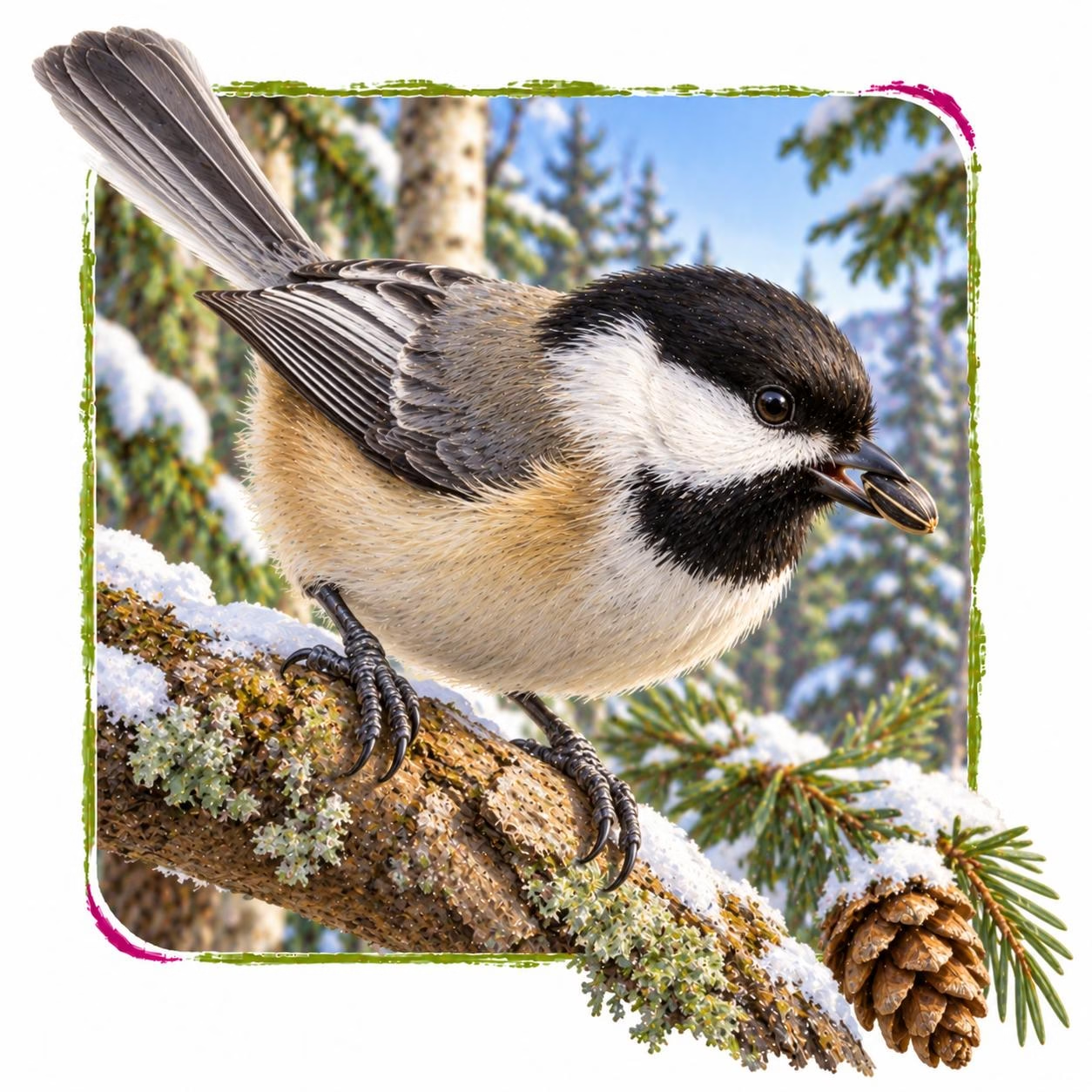
Black-Capped Chickadee in its natural Deciduous and mixed forests, woodland edges, parks, gardens, suburban trees, boreal margins, and northern towns across North America habitat