
Black Mamba Facts for Kids
Black mambas are long, fast, highly venomous snakes from parts of sub-Saharan Africa. They are not usually black on the outside; their name comes from the dark inside of the mouth, which they may show when threatened.
Quick Black Mamba Facts
- Animal Type: Reptile
- Group: Elapid snake and mamba
- Known For: Dark mouth display, fast movement, venom, long body, eggs, hatchlings, African savannas, rocky shelters, and careful-distance safety
- Habitat: Savannas, woodlands, rocky hills, scrublands, termite mounds, tree hollows, abandoned burrows, and warm habitats in eastern and southern Africa
- Diet: Birds, rodents, squirrels, bats, hyraxes, small mammals, and other small vertebrates depending on habitat
What You’ll Learn
Explore 10 clever bonobo facts for kids about social groups, communication, intelligence, forest life, and their close relationship to humans, with a quiz, glossary, and activity
These facts are explained simply for kids, parents, teachers, and curious little fact-finders.
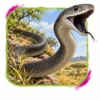
10 Fun Black Mamba Facts for Kids
1. Black Mambas Are Reptiles
Black mambas are reptiles, so they have scales, breathe air, and depend on outside warmth.
Kid Decode: A black mamba is a sleek African snake with a very serious safety bubble.
2. They Are Elapids
Black mambas belong to the elapid family, the same larger snake family as cobras and coral snakes.
Kid Decode: Elapid is the science-family badge for many front-fanged venomous snakes.
3. Baby Black Mambas Are Hatchlings
Baby black mambas are called hatchlings after they come out of eggs.
Kid Decode: A hatchling black mamba is small, but it is still a wild venomous snake.
4. Black Mambas Lay Eggs
Female black mambas lay eggs in warm hidden places such as leaf litter, hollow logs, or shelters.
Kid Decode: The egg clutch stays hidden like a secret snake nursery.
5. They Are Not Truly Black Outside
Black mambas are often gray, olive, brown, or khaki on the outside.
Kid Decode: The black part is inside the mouth, like a built-in warning sign.
6. They Show a Dark Mouth
When threatened, a black mamba may raise its head, open its dark mouth, and hiss.
Kid Decode: That open-mouth display means, “Back away, please.”
7. They Can Move Quickly
Black mambas can move fast for short bursts, especially when escaping danger.
Kid Decode: Speed helps this snake avoid trouble, not chase movie villains.
8. They Use Venom
Black mambas use powerful venom to subdue prey, so people should never approach or handle them.
Kid Decode: The best black mamba fact is also the safest: admire from far away.
9. They Are Active by Day
Black mambas are mostly active during the day, hunting and basking in warm places.
Kid Decode: This snake works the day shift in the reptile world.
10. They Help Control Small Animals
By eating rodents, birds, and other small animals, black mambas help balance ecosystems.
Kid Decode: Even feared predators have important jobs in nature.
The Weirdest Black Mamba Fact
The black mamba is named for the dark inside of its mouth, not for the color of its body.
Try This Black Mamba Activity
Black Mamba Drawing Activity
Draw a black mamba from a safe distance in an African savanna. Add gray-brown body, dark open mouth warning, eggs in leaf litter, hatchlings, forked tongue, rocky shelter, termite mound, bird and rodent icons, sunlit grass, and a “look, do not touch” safety sign.
Quick Black Mamba Quiz
- What animal group are black mambas in? Answer: Reptiles.
- What are baby black mambas called? Answer: Hatchlings.
- What snake family do black mambas belong to? Answer: Elapids.
- Why is the black mamba called black? Answer: Because the inside of its mouth is dark.
- Should people touch wild black mambas? Answer: No, never touch or approach them.
Mini Glossary
- Reptile: An animal group with scales that breathes air and often lays eggs.
- Hatchling: A newly hatched baby animal.
- Elapid: A venomous snake family that includes mambas, cobras, and coral snakes.
- Venom: A toxin an animal can deliver by biting or stinging.
- Threat Display: A warning behavior an animal uses to avoid a fight.
 Galápagos Tortoise Facts for Kids
 Cockatiel Facts for Kids
 Slow Loris Facts for Kids
 Sea Mink Facts for Kids
More Animal Facts for Kids
Visit the full animal facts library or explore a focused animal group.
More Extinct Animal Facts for Kids
Discover dinosaurs, Ice Age giants, prehistoric sea creatures, recently extinct species, and other animals from the past.
Fact check note: Fact checked with Britannica mamba resources, National Geographic black mamba references, and trusted African reptile safety education sources.

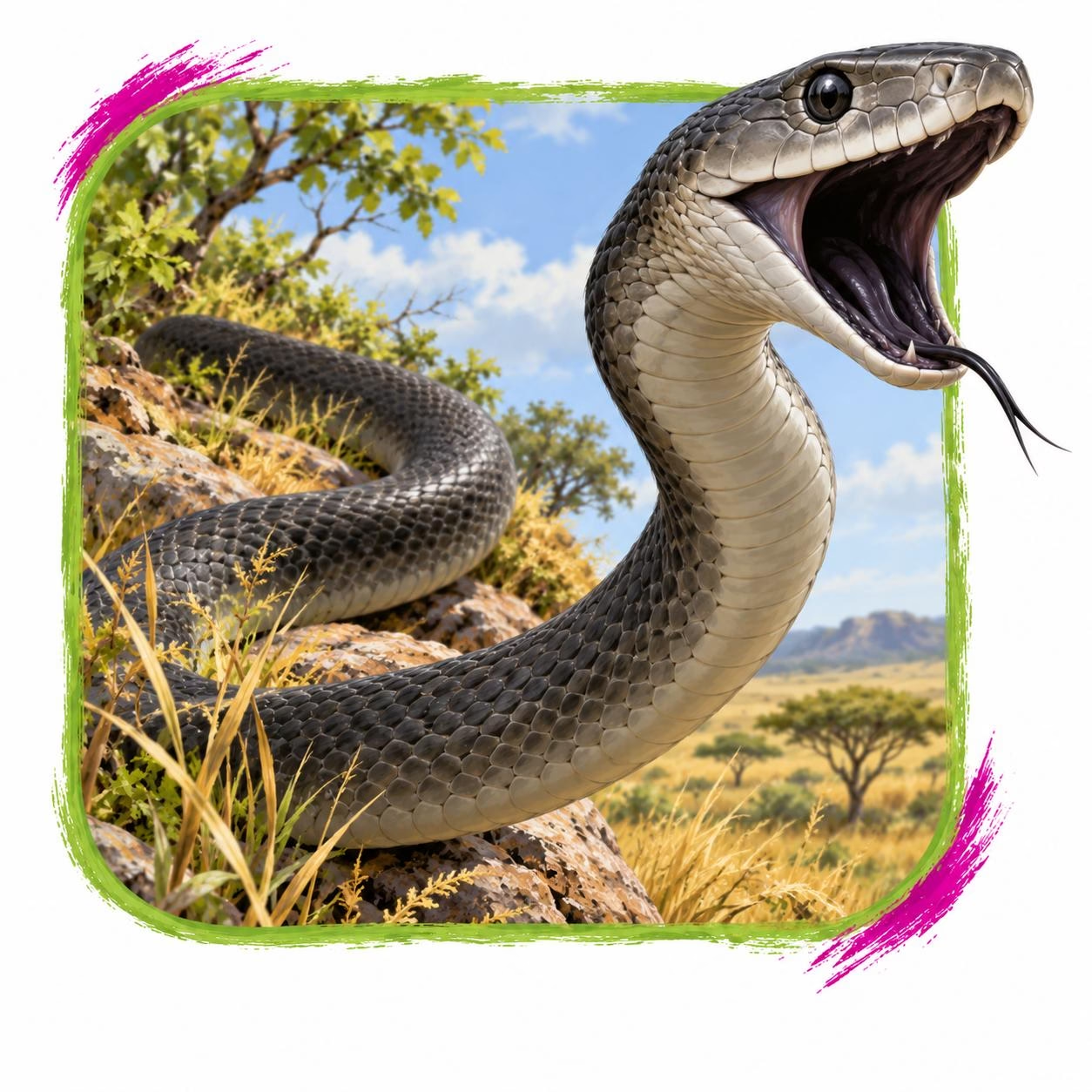
Black Mamba in its natural Savannas habitat