
Black Rhino Facts for Kids
The black rhinoceros is a large African browser with a pointed, grasping upper lip and usually two horns. Its scientific name is Diceros bicornis. Despite the name, its skin is normally gray or brown and often takes on the colour of local mud. Black rhinos live in parts of eastern and southern Africa, where they browse shrubs, mark trails with dung, and depend on intensive protection from poaching.
Quick Black Rhino Facts
- Animal Type: Mammal
- Group: Rhinoceros
- Known For: Hooked upper lip, two keratin horns, solitary behaviour, and shrub browsing
- Habitat: Savannas, shrublands, deserts, woodlands, and montane thickets
- Diet: Leaves, shoots, twigs, herbs, and woody shrubs
What You’ll Learn
Explore 10 powerful black rhino facts for kids about hooked lips, horns, thick skin, browsing, and African habitats, plus a quiz, glossary, and activity
Easy explanations make them great for children, families, teachers, and young animal explorers.
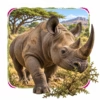
10 Fun Black Rhino Facts for Kids
1. Black Rhinos Are Not Black
Black rhinoceroses usually appear gray, brown, or mud-coloured. The name helps distinguish them from white rhinoceroses, but neither species is named accurately for its actual skin colour.
Kid Decode: The black rhino can be gray, while the white rhino is not truly white.
2. Their Upper Lip Is Hooked
A pointed prehensile upper lip can curl around leaves and twigs. This browsing tool helps separate the black rhino from the broad square-lipped grazing white rhino.
Kid Decode: Its upper lip works like a small leafy-food grabbing finger.
3. They Are Browsers
Black rhinos feed mainly on leaves, shoots, woody shrubs, herbs, and small branches. They can use many plant species and may reshape vegetation as they feed.
Kid Decode: The menu comes from bushes and branches rather than a neatly mown lawn.
4. Two Horns Grow From Keratin
Most black rhinos carry two horns, with the front horn usually longer. Rhino horns are made from tightly packed keratin fibres and have no bony core.
Kid Decode: The horn is built from the same basic material as hair and fingernails.
5. Calves Stay With Their Mothers
A female usually gives birth to one calf after a pregnancy lasting about fifteen months. The calf follows its mother for several years before becoming independent.
Kid Decode: One enormous rhino mother spends years guiding a surprisingly playful calf.
6. They Often Live Alone
Adult black rhinos are usually solitary, although mothers stay with calves and animals may tolerate one another near water, feeding places, or scent-marking sites.
Kid Decode: The usual social group is one rhino, unless a calf has joined the expedition.
7. Dung Middens Carry Messages
Black rhinos repeatedly defecate in shared dung piles called middens. They sniff the piles and scrape their feet through dung, spreading chemical information along trails.
Kid Decode: A rhino community noticeboard can be a very large pile of dung.
8. Smell and Hearing Are Excellent
Their eyesight is limited compared with their strong senses of smell and hearing. Large mobile ears swivel toward sounds, and the broad nasal passages help investigate scents.
Kid Decode: A black rhino may miss a distant shape but notice its sound or smell quickly.
9. Oxpeckers Can Act as Alarm Birds
Red-billed oxpeckers feed on ticks and other material on rhinos. Field experiments found that rhinos carrying the birds detected approaching people more often and from farther away.
Kid Decode: A small bird on the back can become a feathered early-warning system.
10. Numbers Are Recovering Slowly
Black rhinos fell from tens of thousands to only about 2,400 in the mid-1990s. Protection and careful management raised the estimated population to 6,788 by the end of 2024, but poaching and habitat pressures keep the species Critically Endangered.
Kid Decode: The comeback is real, yet every surviving horn still needs heavy protection.
The Weirdest Black Rhino Fact
Red-billed oxpeckers perched on black rhinos can act as living alarm systems, helping the large mammals detect approaching people that they might otherwise fail to notice.
Try This Black Rhino Activity
Black Rhino Browsing Drawing Activity
Draw a black rhino feeding in African scrub. Add a pointed hooked upper lip grasping a twig, two horns, large mobile ears, three-toed feet, mud on the skin, a calf beside its mother, a dung midden, and red-billed oxpeckers perched on the back.
Quick Black Rhino Quiz
- Is a black rhino actually black? Answer: No, it is usually gray, brown, or mud-coloured.
- What shape is its upper lip? Answer: Pointed, hooked, and prehensile.
- What are its horns made from? Answer: Keratin.
- What is a midden? Answer: A repeatedly used dung pile carrying scent information.
- What is the black rhino’s current IUCN category? Answer: Critically Endangered.
Mini Glossary
- Browser: An herbivore that eats leaves, shoots, and woody plants.
- Prehensile: Able to curl around and grasp something.
- Keratin: The tough material forming hair, nails, claws, and rhino horns.
- Midden: A repeatedly used dung pile that can carry scent messages.
- Critically Endangered: An IUCN category indicating an extremely high risk of extinction in the wild.
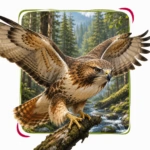 Hawk Facts for Kids
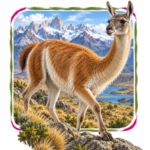 Guanaco Facts for Kids
 Cockatoo Facts for Kids
 Scutosaurus Facts for Kids
More Animal Facts for Kids
Visit the full animal facts library or explore a focused animal group.
More Extinct Animal Facts for Kids
Discover dinosaurs, Ice Age giants, prehistoric sea creatures, recently extinct species, and other animals from the past.
Fact check note: Fact checked with the IUCN’s August 2025 African rhino population update, the International Rhino Foundation’s 2025 State of the Rhino report, Save the Rhino population resources, and peer-reviewed studies of black-rhino browsing, scent marking, and oxpecker alarm benefits.

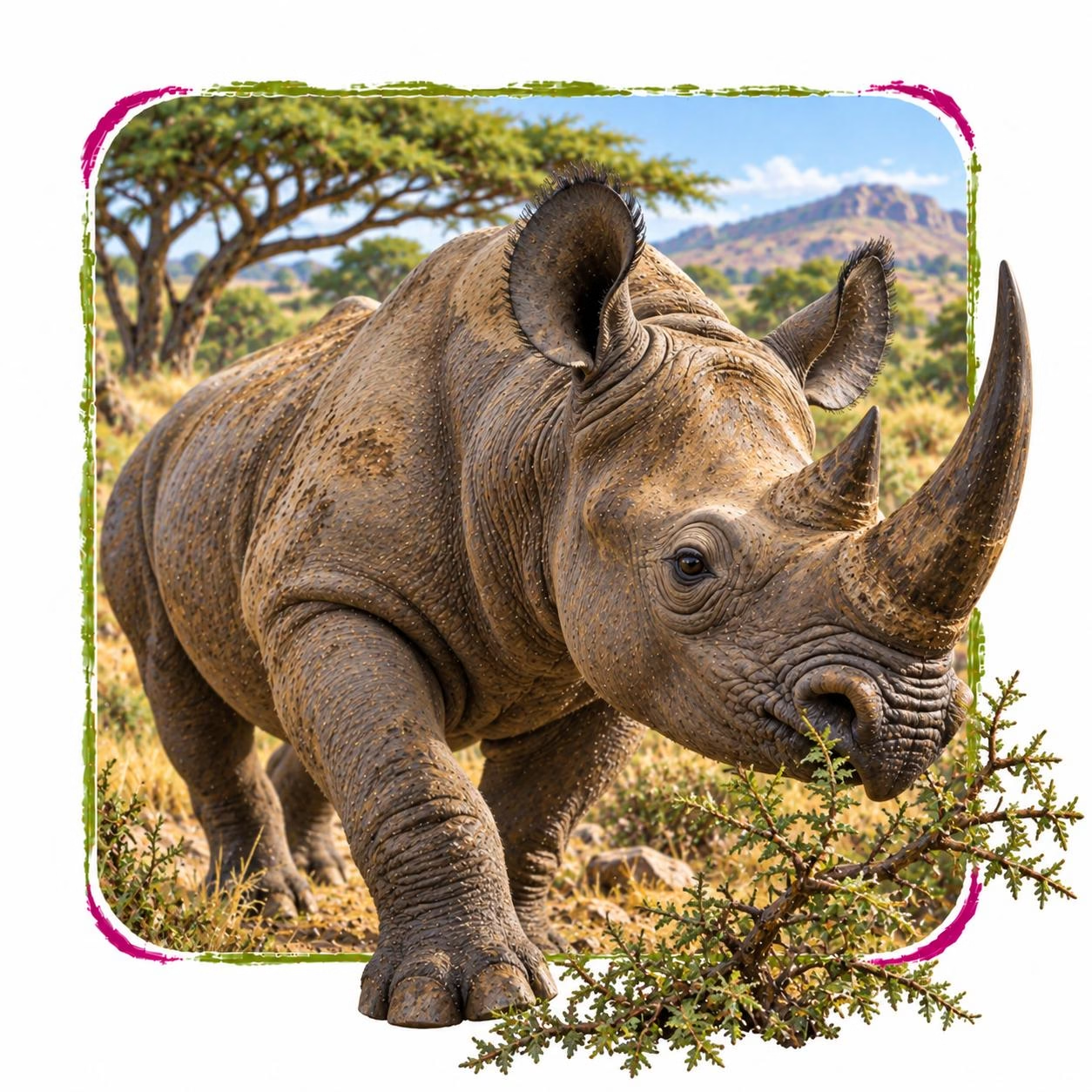
Black Rhino in its natural Savannas, thorn scrub, shrublands, dry forests, deserts, semi-deserts, montane thickets, and riverine woodland across protected parts of eastern and southern Africa habitat