
Blackbuck Facts for Kids
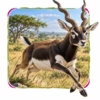
The blackbuck is a graceful antelope native mainly to India, with a small natural population in Nepal. Its scientific name is Antilope cervicapra. Adult males often develop striking dark coats and long corkscrew horns, while females are usually tan and hornless. Blackbuck live in open grasslands and plains, where strong eyesight, speed, and high bounding leaps help them detect and escape danger.
Quick Blackbuck Facts
- Animal Type: Mammal
- Group: Antelope or bovid
- Known For: Corkscrew horns, dark adult males, high-speed running, and pronking leaps
- Habitat: Grasslands, semi-arid plains, scrub, and open farmland
- Diet: Mostly grasses, plus herbs, pods, leaves, and crops
What You’ll Learn
Learn 10 speedy blackbuck facts for kids about spiral horns, fast running, herd life, grazing, and South Asian grasslands, with a quiz, glossary, and activity
These simple facts are written for kids, parents, teachers, and curious young minds.
10 Fun Blackbuck Facts for Kids
1. Blackbuck Are Indian Antelopes
Blackbuck are native mainly to India, with a small natural population in Nepal. They once occurred more widely across the Indian subcontinent but disappeared from several former areas.
Kid Decode: This spiral-horned antelope belongs to the open plains of South Asia.
2. Adult Males Become Very Dark
Young males begin tan like females, then many mature males darken to deep brown or nearly black across the back and sides. Females usually remain yellowish tan or fawn.
Kid Decode: The same species can wear a pale sandy coat or a dramatic dark one.
3. Males Grow Corkscrew Horns
Adult males usually carry long ringed horns twisting upward in spirals. Females are normally hornless, although rare horned females have been recorded.
Kid Decode: Each male carries two living corkscrews rising above his head.
4. They Are Extremely Fast
Blackbuck have long slender legs and can run at very high speed across open ground. Exact maximum speeds are difficult to verify, but their acceleration and endurance help them escape predators.
Kid Decode: The grassland runner brings serious speed without leaving a reliable stopwatch record.
5. They Leap in High Bounds
When alarmed or excited, blackbuck may perform springing leaps called pronking or stotting. The display can help the animal watch danger and signal that it is alert and fit.
Kid Decode: One bouncing escape can look as though the antelope has springs beneath its hooves.
6. They Prefer Open Country
Blackbuck thrive in short grasslands, semi-arid plains, lightly wooded areas, and farm-field mosaics with open views. Dense forest is generally unsuitable for their running lifestyle.
Kid Decode: The safest room is a wide landscape where danger can be spotted early.
7. They Graze and Need Water
Grass forms most of the diet, though blackbuck also eat herbs, pods, leaves, and cultivated plants. They usually drink regularly and often remain within travelling distance of water.
Kid Decode: The daily plan includes grass, more grass, and a dependable watering stop.
8. Males May Defend Lek Territories
In some populations, males gather in display grounds called leks and defend small neighbouring territories. Females visit the area and may choose among the displaying males.
Kid Decode: The courtship ground becomes a grid of tiny antelope stages.
9. Fawns Hide After Birth
A female usually gives birth to one fawn. During the early days, the youngster may lie quietly in vegetation while its mother feeds nearby and returns to nurse it.
Kid Decode: The newborn’s first safety trick is becoming a silent bundle of grass-coloured fur.
10. The Species Recovered but Still Faces Local Threats
Blackbuck are listed as Least Concern because numbers recovered in parts of India, but grassland conversion, roads, fences, hunting, dogs, and conflict with farming still threaten local herds.
Kid Decode: A broad conservation label can hide serious trouble in one small grassland.
The Weirdest Blackbuck Fact
Some male blackbuck defend tiny neighbouring courtship territories in a lek, turning one open patch of grassland into a carefully divided antelope display arena.
Try This Blackbuck Activity
Blackbuck Grassland Drawing Activity
Draw a blackbuck herd on an Indian grassland. Add a dark adult male with long spiral horns, tan females, one hidden fawn, cloven hooves, high pronking leaps, short grasses, a waterhole, and a small lek map showing several neighbouring male territories.
Quick Blackbuck Quiz
- Where are blackbuck native today? Answer: Mainly India, with a small natural population in Nepal.
- Which sex usually grows long corkscrew horns? Answer: Adult males.
- What is pronking? Answer: A high springing leap.
- What is a lek? Answer: A display ground containing neighbouring male territories.
- What is the blackbuck’s IUCN category? Answer: Least Concern.
Mini Glossary
- Bovid: A hoofed mammal from the family containing cattle, sheep, goats, and antelopes.
- Pronking: A high stiff-legged leap made by some hoofed mammals.
- Lek: A gathering of small display territories where males compete for mates.
- Fawn: A young antelope or deer-like hoofed mammal.
- Sexual Dimorphism: A consistent physical difference between males and females.
 Sea Slug Facts for Kids
 Sea Krait Facts for Kids
 Ladybug Facts for Kids
 Elephant Bird Facts for Kids
More Animal Facts for Kids
Visit the full animal facts library or explore a focused animal group.
More Extinct Animal Facts for Kids
Discover dinosaurs, Ice Age giants, prehistoric sea creatures, recently extinct species, and other animals from the past.
Fact check note: Fact checked with the IUCN SSC Antelope Specialist Group assessment for Antilope cervicapra, Animal Diversity Web’s blackbuck account, peer-reviewed research on blackbuck habitat use, lekking, and sexual dimorphism, and recent conservation studies of fragmented Indian grasslands.

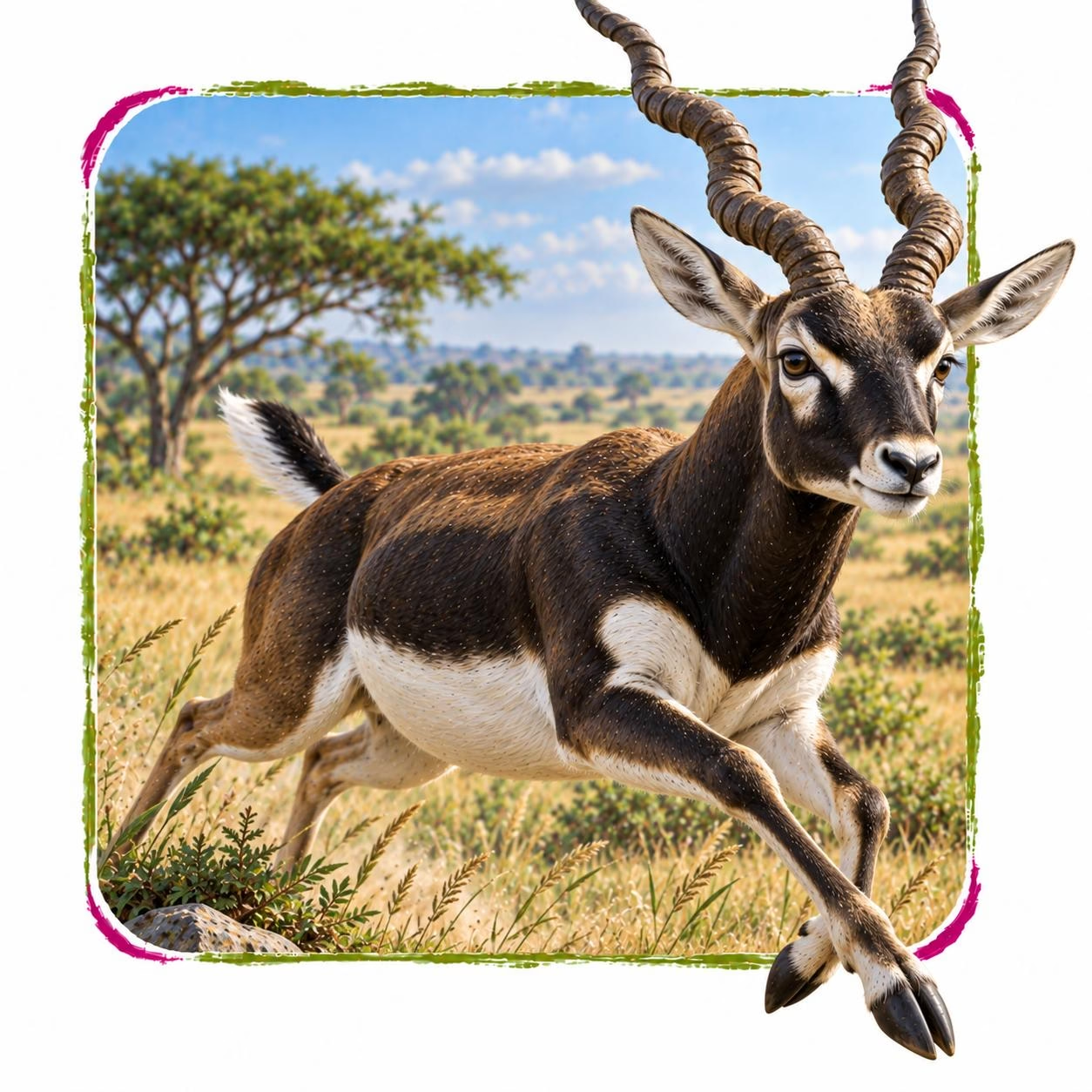
Blackbuck in its natural Short grasslands, semi-arid plains, open scrub, lightly wooded savannas, farm-field mosaics, and protected open habitats in India and Nepal habitat