
Blue-Tongued Skink Facts for Kids
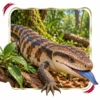
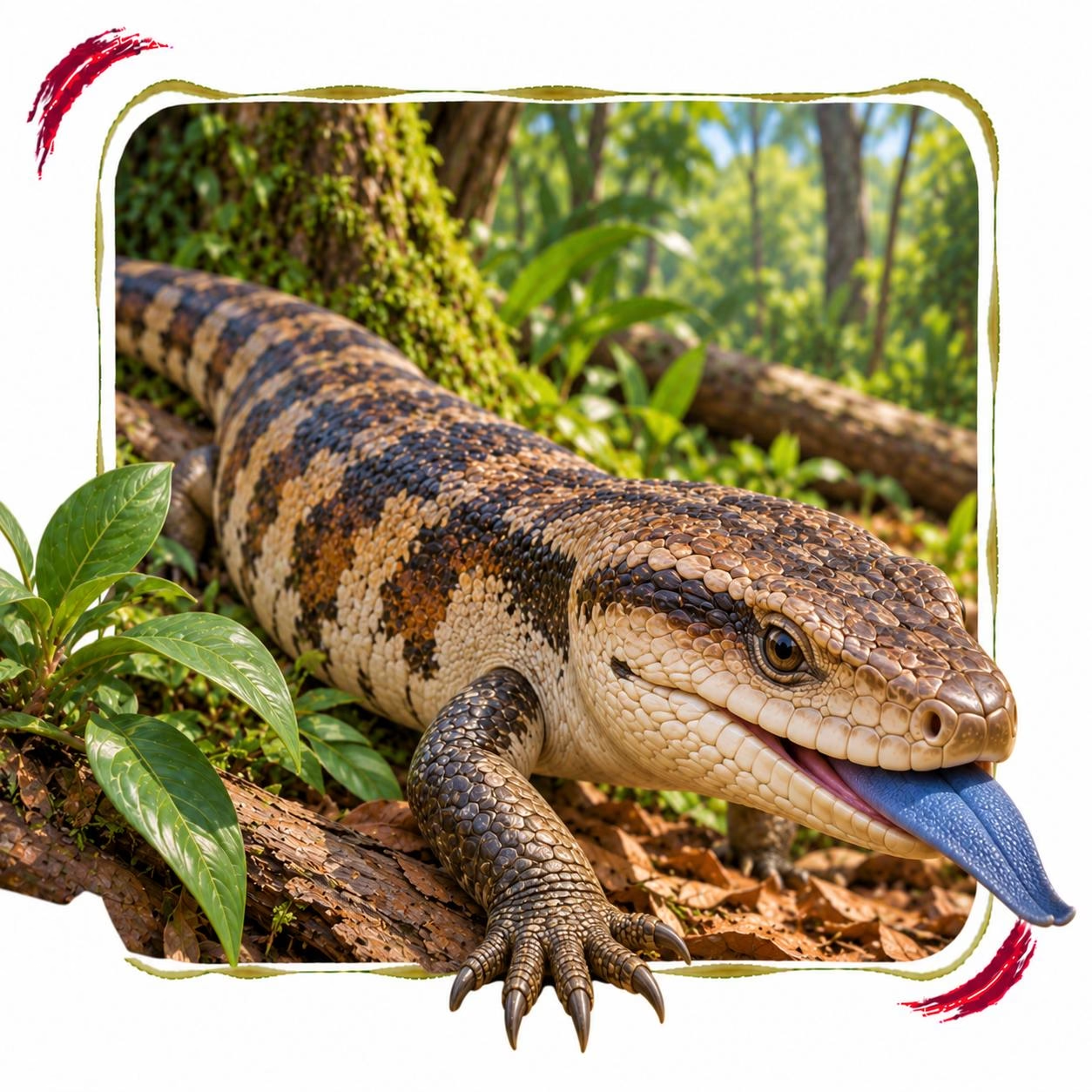
Blue-tongued skinks are chunky, smooth-scaled lizards known for their bright blue tongues. Many live in Australia and nearby regions, where they move along the ground, eat a mix of plants and small animals, and use their blue tongue to scare predators.
Quick Blue-Tongued Skink Facts
- Animal Type: Reptile
- Group: Skink lizard
- Known For: Bright blue tongue, smooth scales, short legs, and defense display
- Habitat: Open woodlands, grasslands, scrublands, gardens, leaf litter, rocky areas, and sheltered ground habitats in Australia, New Guinea, Indonesia, and nearby regions depending on species
- Diet: Snails, slugs, insects, worms, flowers, fruit, berries, leaves, and other small foods
What You’ll Learn
Learn 10 colorful blue-tongued skink facts for kids about bright tongues, smooth scales, short legs, diet, and defenses, with a quiz, glossary, and activity
Clear explanations make them great for children, families, teachers, and young animal lovers.
10 Fun Blue-Tongued Skink Facts for Kids
1. Blue-Tongued Skinks Are Reptiles
Blue-tongued skinks are reptiles with scales, claws, and body temperatures that change with their surroundings.
Kid Decode: A blue-tongued skink is a smooth little ground sausage with legs.
2. They Have Bright Blue Tongues
Blue-tongued skinks are famous for flashing a large blue tongue when they feel threatened.
Kid Decode: The blue tongue is a surprise warning flag.
3. They Use Defense Displays
When scared, a blue-tongued skink may open its mouth, show its tongue, hiss, puff up, or flatten its body.
Kid Decode: Its defense move says, I am bigger and weirder than you think.
4. They Have Smooth Scales
Blue-tongued skinks have shiny overlapping scales that help protect their bodies.
Kid Decode: Their scales look like tiny lizard armor tiles.
5. They Have Short Legs
Blue-tongued skinks have short legs and long bodies, so they usually move close to the ground.
Kid Decode: They waddle with serious tiny-leg determination.
6. Baby Blue-Tongued Skinks Are Young
Baby blue-tongued skinks are live-born young, sometimes called neonates. They can start looking after themselves soon after birth.
Kid Decode: A baby skink is a tiny tongue-flicking copy of the grown-up.
7. Blue-Tongued Skinks Give Birth to Live Young
Unlike many reptiles, blue-tongued skinks do not lay eggs outside the body. Females give birth to live young.
Kid Decode: These lizards skip the outdoor egg basket.
8. They Eat Plants and Small Animals
Blue-tongued skinks are omnivores that may eat snails, slugs, insects, worms, flowers, fruit, berries, and leaves.
Kid Decode: Their lunch can be garden salad with snail crunch.
9. They Like Basking
Blue-tongued skinks warm themselves by basking in sunny places, then search for food when active.
Kid Decode: Sunshine is their morning battery charger.
10. Blue-Tongued Skinks Need Safe Gardens
Blue-tongued skinks can be harmed by roads, pets, lawn mowers, and snail bait, so safe gardens help protect them.
Kid Decode: A skink-friendly garden is a tiny reptile refuge.
The Weirdest Blue-Tongued Skink Fact
A blue-tongued skink can scare predators by flashing a tongue so bright blue it looks almost unreal.
Try This Blue-Tongued Skink Activity
Blue-Tongued Skink Drawing Activity
Draw a blue-tongued skink in a sunny garden. Add a bright blue tongue, smooth scales, short legs, leaf litter, rocks, flowers, snails, berries, and a safe garden sign.
Quick Blue-Tongued Skink Quiz
- What color is a blue-tongued skink’s famous tongue? Answer: Blue.
- What animal group are blue-tongued skinks in? Answer: Reptiles.
- Do blue-tongued skinks give birth to live young? Answer: Yes.
- What do blue-tongued skinks eat? Answer: Snails, slugs, insects, flowers, fruit, and other foods.
- Why do they show their blue tongue? Answer: To scare or warn predators.
Mini Glossary
- Reptile: A cold-blooded animal group that includes lizards, snakes, turtles, crocodiles, and tuataras.
- Skink: A type of lizard, often with smooth shiny scales.
- Neonate: A newborn animal.
- Omnivore: An animal that eats both plants and animals.
- Basking: Sitting in warmth or sunlight to raise body temperature.
 Honey Badger Facts for Kids
 Asiatic Lion Facts for Kids
 Harpy Eagle Facts for Kids
 Lystrosaurus Facts for Kids
More Animal Facts for Kids
Visit the full animal facts library or explore a focused animal group.
More Extinct Animal Facts for Kids
Discover dinosaurs, Ice Age giants, prehistoric sea creatures, recently extinct species, and other animals from the past.
Fact check note: Fact checked with Australian Museum blue-tongue lizard resources, SeaWorld eastern blue-tongued skink resources, and trusted reptile education references.

Blue-Tongued Skink in its natural Forests habitat