
Bluefin Tuna Facts for Kids
Bluefin tuna are powerful ocean fish built for speed, distance, and life in the open sea. They have streamlined bodies, crescent-shaped tails, warm swimming muscles, and a long migration story that stretches across huge ocean spaces.
Quick Bluefin Tuna Facts
- Animal Type: Fish
- Group: Tuna, mackerel family, and pelagic fish
- Known For: Fast swimming, warm-bodied muscles, long migrations, schooling, larvae, finlets, crescent tail, and open-ocean life
- Habitat: Open oceans, continental shelves, temperate seas, warm waters, feeding grounds, spawning areas, and wide pelagic marine habitats depending on species
- Diet: Small fish, squid, crustaceans, anchovies, sardines, mackerel, herring, and other fast-moving ocean prey
What You’ll Learn
Explore 10 sleek reef shark facts for kids about streamlined bodies, sharp senses, coral reefs, hunting, and ocean life, plus a quiz, glossary, and activity
Clear explanations make them fun for children, families, teachers, and little fact-hunters.
10 Fun Bluefin Tuna Facts for Kids
1. Bluefin Tuna Are Fish
Bluefin tuna are fish, so they have gills, fins, and live in water.
Kid Decode: A bluefin tuna is an ocean torpedo with a heartbeat made for speed.
2. Baby Bluefin Tuna Are Larvae
Bluefin tuna hatch from tiny eggs as larvae before growing into juveniles and adults.
Kid Decode: A tuna larva starts as a tiny ocean speck with a giant future.
3. They Are Built for Speed
Bluefin tuna have streamlined bodies and powerful tails that help them swim quickly.
Kid Decode: Their body shape says “fast lane” in fish language.
4. They Are Warm-Bodied
Bluefin tuna can keep parts of the body warmer than the water around them.
Kid Decode: That warm muscle trick helps them power through cooler seas.
5. They Have Crescent Tails
Bluefin tuna have stiff crescent-shaped tails for strong swimming.
Kid Decode: The tail works like a moon-shaped motor.
6. They Have Finlets
Small finlets near the tail help reduce drag and improve swimming efficiency.
Kid Decode: Those tiny fins are like speed spoilers on a race fish.
7. They Travel Long Distances
Bluefin tuna migrate across large ocean areas to feed and spawn.
Kid Decode: This fish needs a map the size of an ocean.
8. They Hunt in the Open Sea
Bluefin tuna chase fish and squid in pelagic waters away from the seafloor.
Kid Decode: Their grocery aisle is the wide blue middle of the sea.
9. They May Swim in Schools
Bluefin tuna can travel in groups, especially when young or feeding.
Kid Decode: A tuna school is a silver speed squad.
10. They Need Careful Protection
Bluefin tuna are valuable fish, and some populations have been heavily fished, so careful management is important.
Kid Decode: Even super-swimmers need humans to follow ocean rules.
The Weirdest Bluefin Tuna Fact
Bluefin tuna can keep swimming muscles warmer than the surrounding water, which is unusual for fish.
Try This Bluefin Tuna Activity
Bluefin Tuna Drawing Activity
Draw a bluefin tuna racing through the open ocean. Add streamlined body, crescent tail, finlets, warm-muscle glow, larvae inset, squid, sardines, migration arrows, schooling tuna, bubbles, and ocean-current lines.
Quick Bluefin Tuna Quiz
- What animal group are bluefin tuna in? Answer: Fish.
- What are young bluefin tuna called after hatching? Answer: Larvae.
- What body feature helps bluefin tuna swim fast? Answer: A streamlined body and crescent tail.
- What does pelagic mean? Answer: Living in open ocean water away from the seafloor.
- Why do bluefin tuna need protection? Answer: Some populations have been heavily fished.
Mini Glossary
- Fish: A water-living animal that usually has gills and fins.
- Larva: A very young animal stage after hatching.
- Pelagic: Living in open ocean water away from the sea floor.
- Migration: Long-distance seasonal movement between habitats.
- Finlet: A small fin near the tail of some fast-swimming fish.
 Anaconda Facts for Kids
 Vole Facts for Kids
 Sable Antelope Facts for Kids
 Hawaiian Rail Facts for Kids
More Animal Facts for Kids
Visit the full animal facts library or explore a focused animal group.
More Extinct Animal Facts for Kids
Discover dinosaurs, Ice Age giants, prehistoric sea creatures, recently extinct species, and other animals from the past.
Fact check note: Fact checked with NOAA tuna resources, Florida Museum bluefin tuna references, and trusted marine fish education sources.

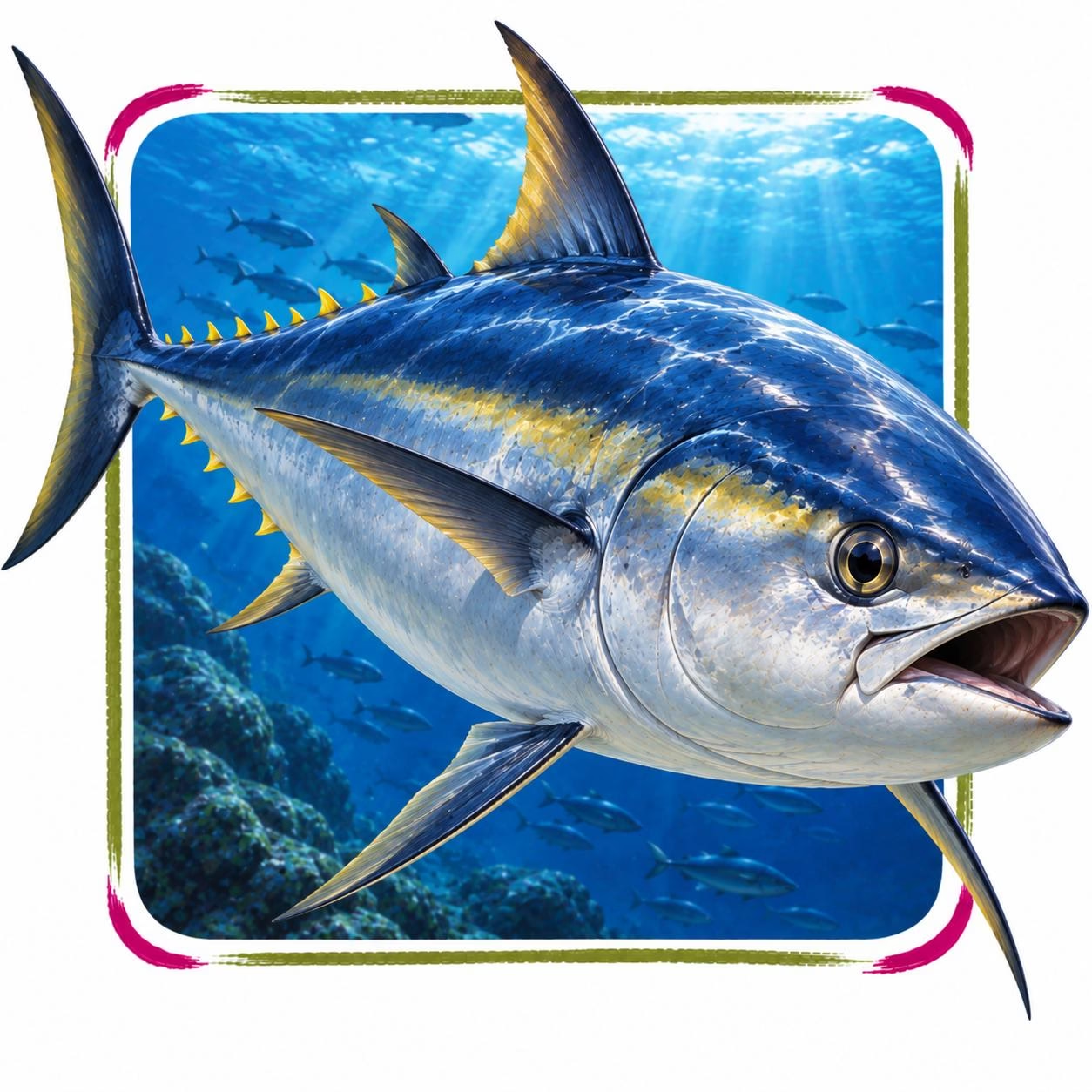
Bluefin Tuna in its natural Oceans habitat