
Bristletail Facts for Kids
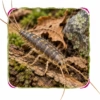
This page focuses on jumping bristletails, the small wingless insects in the order Archaeognatha. They are not silverfish, even though both groups have tapered bodies and three rear filaments. Bristletails hide beneath bark, stones, leaf litter, or in rock crevices and can spring away when disturbed by snapping the abdomen against the ground.
Quick Bristletail Facts
- Animal Type: Insect
- Group: Order Archaeognatha
- Known For: Three rear filaments, arched body, large touching eyes, reflective scales, and jumping escapes
- Habitat: Leaf litter, bark, rocks, cliffs, caves, grasslands, forests, and shorelines
- Diet: Algae, lichens, mosses, fungi, pollen, and decaying plant material
What You’ll Learn
Explore 10 tiny bristletail facts for kids about wingless bodies, long tail bristles, hiding places, ancient insect relatives, and nighttime life, with a quiz, glossary, and activity
These easy facts are made for kids, parents, teachers, and curious young learners.
10 Fun Bristletail Facts for Kids
1. They Are Not Silverfish
Jumping bristletails belong to Archaeognatha, while silverfish belong to Zygentoma. Bristletails usually have a more arched body, enormous eyes that meet near the top of the head, and a much longer central tail filament.
Kid Decode: Two silvery wingless insects may look alike until the eyes, back, and tail tell the real story.
2. They Have Never Had Wings
Bristletails are primitively wingless insects, meaning their lineage separated before insect wings evolved rather than losing wings from flying ancestors.
Kid Decode: The family blueprint was written before insects added aviation.
3. Three Filaments Trail Behind
The abdomen ends in two side appendages called cerci and one longer central filament. These structures help with sensing, balance, and movement, although their exact roles differ among species.
Kid Decode: The rear end carries a three-pronged set of feelers and steering gear.
4. They Can Jump Without Jumping Legs
When startled, a bristletail bends and snaps its abdomen against the surface, launching the body through the air. Some can leap several centimetres, many times their own body length.
Kid Decode: The emergency catapult is built into the insect’s bendy abdomen.
5. The Back Forms a Hump
Jumping bristletails have an arched thorax and tapered abdomen, creating a hump-backed profile. The body is usually covered with mottled scales that can reflect light.
Kid Decode: The tiny insect resembles a curved, glitter-dusted seed with antennae.
6. Their Compound Eyes Are Enormous
Two large compound eyes often meet along the top of the head, giving a broad field of view. Three simple light-sensing eyes called ocelli are also present.
Kid Decode: The face carries a wraparound window plus three tiny brightness detectors.
7. They Feed on Tiny Surface Growths
Most bristletails scrape algae, lichens, mosses, fungi, pollen, and decaying plant material from rocks, bark, and soil. They are generally harmless recyclers rather than household pests.
Kid Decode: The dinner plate may be a thin green film painted across one stone.
8. Young Look Like Small Adults
Bristletails do not have a larva or pupa. Juveniles hatch with the general adult body plan and grow through repeated molts, a development pattern called ametaboly.
Kid Decode: The baby skips the grub costume and begins as a miniature bristletail.
9. Adults Continue Molting
Unlike most winged insects, adult bristletails can shed their exoskeleton repeatedly after reaching maturity. Molting may be needed before some reproductive events.
Kid Decode: Even a grown-up bristletail keeps ordering a larger suit of armor.
10. The Lineage Is Extremely Ancient
Archaeognatha belongs near the base of the living insect family tree, and bristletail-like insects have a fossil history extending hundreds of millions of years. Modern species are still highly specialised for their own habitats.
Kid Decode: The body plan is ancient, but today’s bristletails are modern survivors rather than frozen fossils.
The Weirdest Bristletail Fact
A wingless bristletail can escape by slamming its abdomen against the ground, turning its whole body into a spring-powered projectile.
Try This Bristletail Activity
Jumping Bristletail Close-Up Activity
Draw a bristletail beneath a mossy rock. Add an arched scaled body, two long antennae, six legs, giant compound eyes meeting above the head, two short side cerci, one longer central filament, algae and lichens, and a curved arrow showing its abdomen-powered escape jump.
Quick Bristletail Quiz
- Which insect order contains jumping bristletails? Answer: Archaeognatha.
- Are they the same as silverfish? Answer: No.
- How many rear filaments do they have? Answer: Three.
- How do they jump? Answer: By snapping the abdomen against the surface.
- Do they pass through a pupal stage? Answer: No.
Mini Glossary
- Archaeognatha: The insect order containing jumping bristletails.
- Cercus: One of a pair of sensory appendages at the rear of an insect.
- Ocellus: A simple eye that mainly detects light intensity.
- Ametaboly: Development in which young resemble small adults and there is no pupal stage.
- Molt: To shed an old exoskeleton so the body can grow or renew its covering.
 Bat Facts for Kids
 Serow Facts for Kids
 Condor Facts for Kids
 Cave Hyena Facts for Kids
More Animal Facts for Kids
Visit the full animal facts library or explore a focused animal group.
More Extinct Animal Facts for Kids
Discover dinosaurs, Ice Age giants, prehistoric sea creatures, recently extinct species, and other animals from the past.
Fact check note: Fact checked with the Australian Museum’s taxonomic review of Archaeognatha, University of Wisconsin-Milwaukee Field Station bristletail resources, entomological references on archaeognathan anatomy and development, and fossil research on early wingless insects.

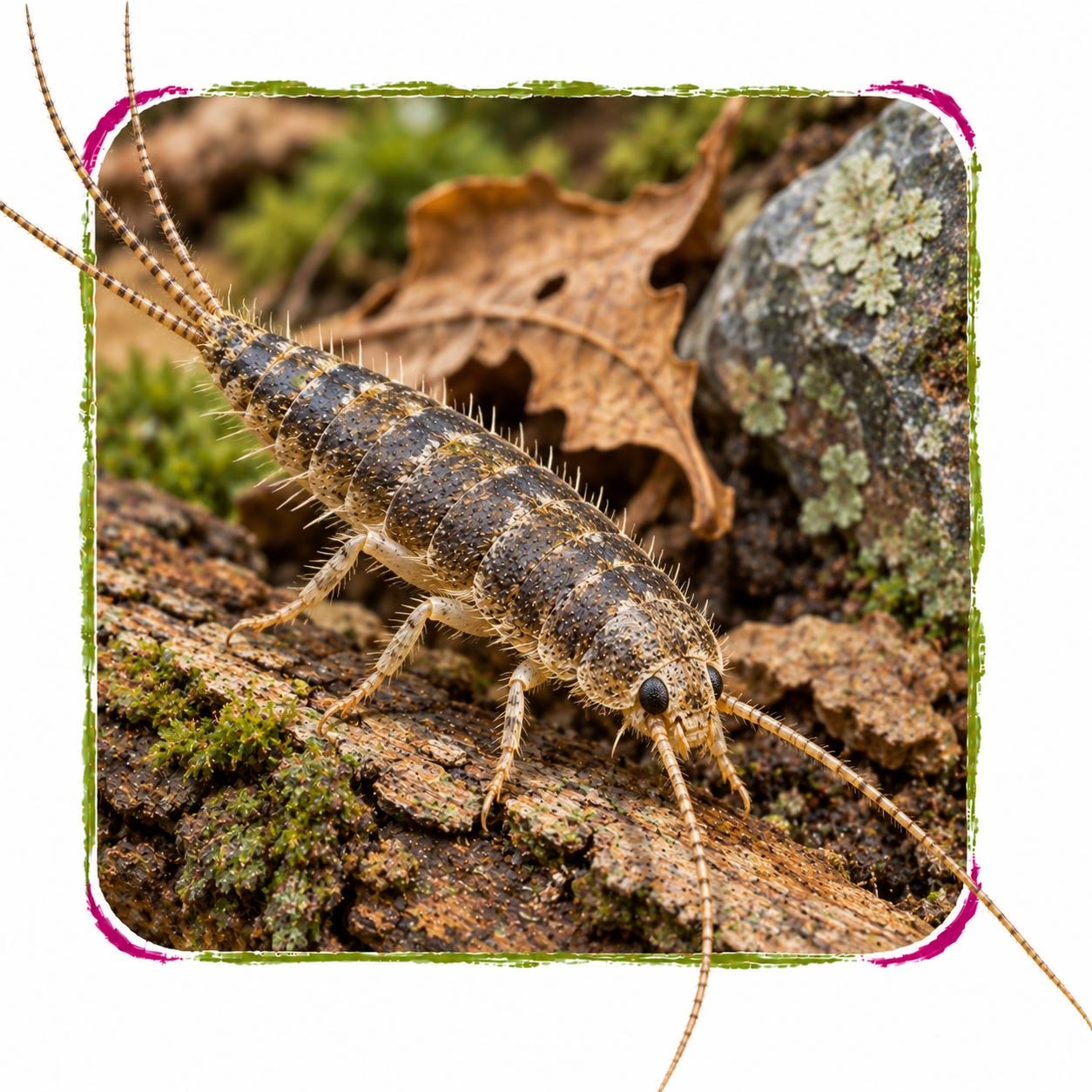
Bristletail in its natural Leaf litter, moss, bark, soil surfaces, rock crevices, cliffs, caves, grasslands, forests, deserts, alpine areas, and rocky shorelines worldwide habitat