
Bull Facts for Kids
A bull is an adult male domestic bovine that has not been castrated. Bulls belong to the same species as cows and can come from dairy or beef breeds in many colours, sizes, and horn shapes. They are powerful ruminants with muscular necks and shoulders, broad fields of vision, complex stomachs for digesting plants, and behaviour that should always be respected from a safe distance.
Quick Bull Facts
- Animal Type: Mammal
- Group: Domestic cattle
- Known For: Muscular build, powerful neck, breeding role, horns in some breeds, and strong senses
- Habitat: Farms, ranches, grasslands, pastures, and managed cattle ranges
- Diet: Grasses, hay, silage, and other plant-based cattle feed
What You’ll Learn
Explore 10 strong bull facts for kids about horns, powerful bodies, grazing, cattle behavior, and farm life, plus a quiz, glossary, and activity
Easy explanations make them great for children, families, teachers, and young animal fans.

10 Fun Bull Facts for Kids
1. A Bull Is an Adult Male Bovine
In domestic cattle, a bull is a mature male that has not been castrated. An adult female is called a cow, a young female is a heifer, and a castrated male is usually called a steer.
Kid Decode: Not every cow-shaped animal is technically a cow.
2. Bulls Are Usually Very Muscular
Compared with cows of the same breed, mature bulls often develop thicker necks, heavier shoulders, larger bones, and more overall muscle.
Kid Decode: The front half can look as though the cattle blueprint added an extra strength setting.
3. Horns Depend on the Breed
Some bulls naturally grow horns, while others come from polled breeds that are born without them. Females can also have horns in horned breeds.
Kid Decode: Horns are a breed feature, not proof that the animal is male.
4. Bulls Do Not Hate the Colour Red
Cattle do not see colour exactly as humans do and are especially sensitive to movement. In a moving-cape display, the motion matters far more than the cape’s red colour.
Kid Decode: The waving cloth gets attention; the colour is mostly theatrical decoration.
5. They Have a Very Wide Field of Vision
Eyes placed on the sides of the head let cattle see much of the area around them, although they have blind spots directly behind the body and close in front of the nose.
Kid Decode: A bull can watch a broad horizon but still has a few visual hiding places.
6. They Are Ruminants
Bulls swallow plant food, later bring part of it back up as cud, and chew it again. Their stomach has four compartments that help microbes break down tough plant material.
Kid Decode: Breakfast may return for a second round of chewing.
7. They Communicate With Body Language
Head position, posture, pawing, vocal sounds, scent, and the distance kept from other cattle can all communicate excitement, warning, curiosity, or social rank.
Kid Decode: A bull can say plenty before making a single moo.
8. Bulls May Compete With One Another
Adult males may push, shove, or spar to establish social position, especially when unfamiliar bulls meet or breeding females are nearby.
Kid Decode: The contest often begins as a muscular argument conducted forehead first.
9. Young Cattle Are Called Calves
Both male and female newborn cattle are calves. A young male may be called a bull calf before he reaches adulthood.
Kid Decode: Every enormous bull begins as a wobbly calf with oversized feet.
10. Bulls Must Be Treated Cautiously
Even a calm bull can injure a person because of its size, speed, horns, or sudden reactions. Children should only view bulls behind secure barriers with responsible adults.
Kid Decode: The safest bull fact is also the most useful: admire the power without entering its space.
The Weirdest Bull Fact
Bulls do not charge because they are angry at red. Movement, stress, close approach, and the situation around the animal matter much more than the colour of an object.
Try This Bull Activity
Bull Farm Drawing Activity
Draw a powerful bull standing safely inside a fenced pasture. Add a muscular neck and shoulders, cloven hooves, a long tail, horns or a naturally polled head, grass and hay, a four-compartment stomach diagram, and labels comparing bull, cow, calf, heifer, and steer.
Quick Bull Quiz
- What is a bull? Answer: An adult male domestic bovine that has not been castrated.
- Do only bulls grow horns? Answer: No, horn growth depends on breed and females may also have horns.
- What makes a bull react to a waving cape? Answer: Mainly the movement, not the red colour.
- What is cud? Answer: Partly digested plant food brought back up and chewed again.
- Why should people keep a safe distance? Answer: Bulls are extremely large, strong, and capable of sudden movement.
Mini Glossary
- Bovine: An animal from the cattle group.
- Ruminant: A hoofed mammal that regurgitates and rechews partly digested plant food.
- Polled: Naturally born without horns.
- Steer: A castrated male bovine.
- Cud: Partly digested food returned to the mouth for more chewing.

 Goat Facts for Kids
 Silverfish Facts for Kids
 Sturgeon Facts for Kids
 Tropeognathus Facts for Kids
More Animal Facts for Kids
Visit the full animal facts library or explore a focused animal group.
More Extinct Animal Facts for Kids
Discover dinosaurs, Ice Age giants, prehistoric sea creatures, recently extinct species, and other animals from the past.
Fact check note: Fact checked with University of Minnesota Extension bull-handling guidance, University of Wisconsin Extension cattle-senses resources, Oklahoma State University cattle-breed and management materials, and veterinary and livestock-production references.

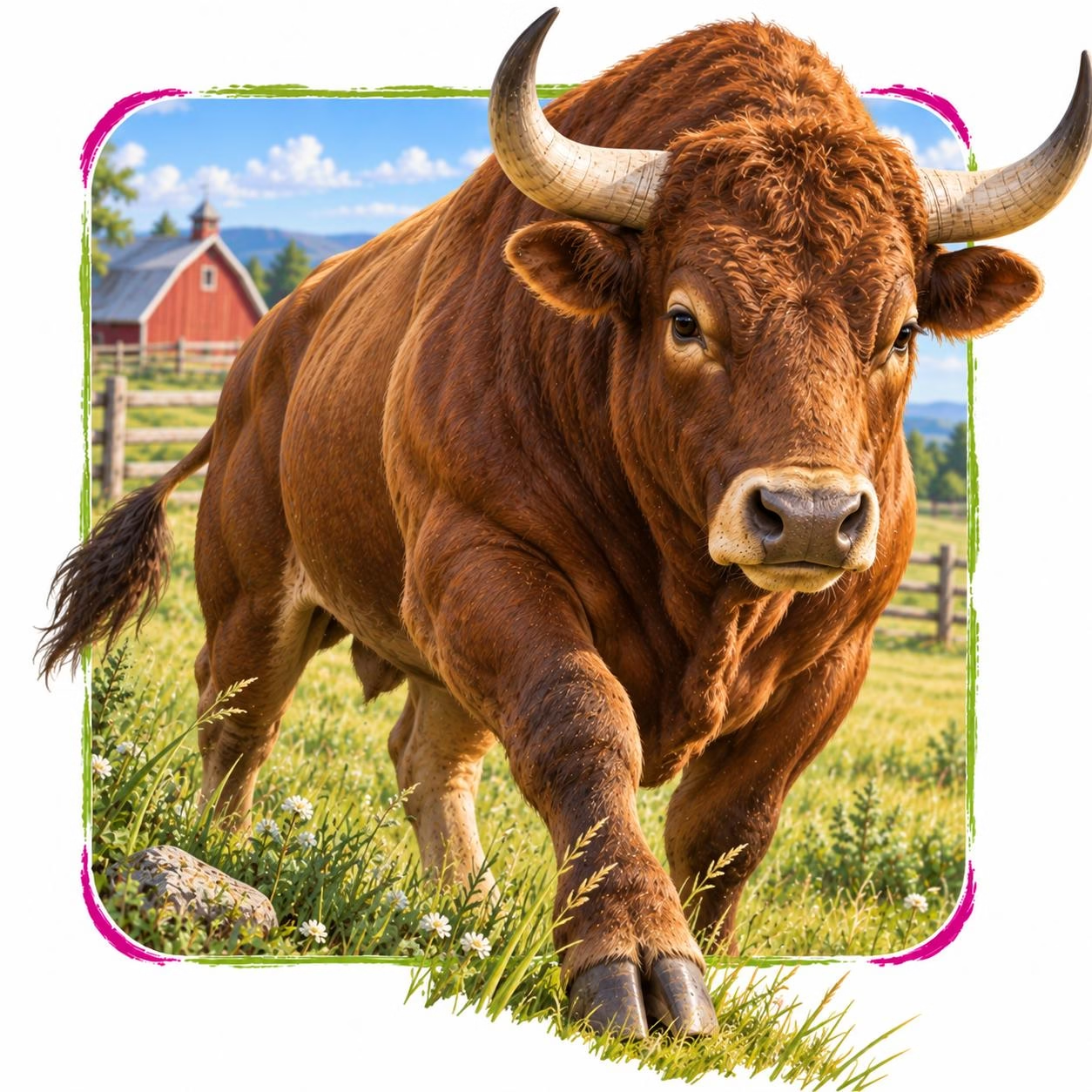
Bull in its natural Farms, ranches, fenced pastures, grasslands, barns, feedlots, and managed cattle ranges around the world habitat