
Burmese Python Facts for Kids
The Burmese python is a very large nonvenomous constrictor native to South and Southeast Asia. Its scientific name is Python bivittatus. Dark brown saddle-shaped blotches camouflage it among leaves, reeds, and swamp shadows. In its native range the species is Vulnerable because of habitat loss and heavy exploitation, yet escaped and released pets created a damaging invasive population in southern Florida.
Quick Burmese Python Facts
- Animal Type: Reptile
- Group: Python
- Known For: Giant size, dark saddle-shaped blotches, heat-sensing pits, constriction, and egg guarding
- Habitat: Forests, wetlands, grasslands, river valleys, farms, and tropical swamps
- Diet: Birds, mammals, and occasional reptiles
What You’ll Learn
Learn 10 giant burmese python facts for kids about powerful coils, patterned scales, heat sensing, swimming, and tropical habitats, plus a quiz, glossary, and activity
Simple explanations make them great for children, families, teachers, and young reptile fans.

10 Fun Burmese Python Facts for Kids
1. It Is One of the Largest Snakes
Adult Burmese pythons commonly reach around 3 to 5 metres, and exceptional females can grow longer. Females are generally much heavier and longer than males.
Kid Decode: The biggest females can stretch across an entire room with snake left over.
2. It Is Nonvenomous
Burmese pythons do not inject venom. They seize prey with backward-curving teeth, wrap muscular coils around it, and constrict until blood can no longer circulate effectively.
Kid Decode: The snake uses a living muscular seat belt rather than venom.
3. Its Face Detects Warm Animals
Small heat-sensing pits along the upper lip detect infrared radiation from warm bodies. These organs help the python locate birds and mammals in darkness or dense vegetation.
Kid Decode: A hidden mouse can still glow on the python’s heat map.
4. Patterned Scales Provide Camouflage
The pale tan body carries large dark brown blotches outlined in black or cream. This pattern breaks up the snake’s shape among leaves, tree roots, reeds, and dappled light.
Kid Decode: A giant snake can disappear surprisingly well when its pattern matches a messy forest floor.
5. It Is a Strong Swimmer
Burmese pythons use rivers, marshes, swamps, and flooded forests and can remain submerged for long periods. Young snakes also climb well, while the heaviest adults spend more time on the ground.
Kid Decode: The same predator can glide through water, climb a branch, and vanish into grass.
6. Its Jaws Do Not Unhinge
Flexible ligaments connect the two halves of the lower jaw, and several skull joints can move independently. This lets the mouth spread around large prey without the jaw becoming detached.
Kid Decode: The skull opens like a flexible folding frame, not a door falling off its hinges.
7. Females Coil Around Their Eggs
A female lays a clutch in a sheltered site and wraps her body around the eggs. She remains with them through incubation and may defend the nest.
Kid Decode: The giant snake becomes a living wall around a pile of leathery eggs.
8. Muscle Shivering Warms the Clutch
An incubating female can contract her muscles repeatedly to produce heat, raising the temperature around the eggs above the surrounding air when conditions are cool.
Kid Decode: The mother performs weeks of tiny muscle workouts without moving away from the nest.
9. Native Populations Are Vulnerable
Habitat destruction, capture for skins, meat, traditional uses, and the pet trade have reduced native populations. The IUCN lists Python bivittatus as Vulnerable.
Kid Decode: A snake can be abundant in one invaded swamp while disappearing from forests where it belongs.
10. It Is Invasive in Southern Florida
Released or escaped captive pythons established a breeding population in the Greater Everglades. They consume many native mammals, birds, and reptiles and have contributed to severe ecological disruption.
Kid Decode: Florida holds the conservation puzzle backwards: too many pythons there, too few in parts of Asia.
The Weirdest Burmese Python Fact
A female Burmese python can warm her eggs by rhythmically contracting her muscles, producing heat while remaining tightly coiled around the clutch.
Try This Burmese Python Activity
Burmese Python Heat-Sensing Drawing Activity
Draw a Burmese python in a Southeast Asian wetland. Add dark saddle-shaped blotches, heat-sensing pits along the lips, a forked tongue, muscular coils, water and reeds, and a female curled around eggs with heat-wave lines. Include a separate Florida map inset labelled invasive range.
Quick Burmese Python Quiz
- Is a Burmese python venomous? Answer: No.
- How does it subdue prey? Answer: By constriction.
- What do the pits along its lips detect? Answer: Infrared heat from warm-bodied animals.
- How can a female warm her eggs? Answer: By repeated muscle contractions.
- Why is the Florida population a problem? Answer: It is invasive and consumes native wildlife.
Mini Glossary
- Constrictor: A snake that subdues prey by wrapping it in muscular coils.
- Infrared: Invisible radiation experienced as heat.
- Incubation: The period during which eggs develop before hatching.
- Invasive Species: A non-native organism that spreads and causes ecological harm.
- Sexual Dimorphism: A consistent physical difference between males and females.


 Leatherback Sea Turtle Facts for Kids
 Koi Facts for Kids
 Giant Squid Facts for Kids
 Concavenator Facts for Kids
More Animal Facts for Kids
Visit the full animal facts library or explore a focused animal group.
More Extinct Animal Facts for Kids
Discover dinosaurs, Ice Age giants, prehistoric sea creatures, recently extinct species, and other animals from the past.
Fact check note: Fact checked with U.S. Geological Survey Burmese python research and species profiles, Smith and colleagues’ 2021 native-range telemetry study, peer-reviewed work on python constriction and reproductive thermogenesis, and the IUCN Red List assessment listing Python bivittatus as Vulnerable.

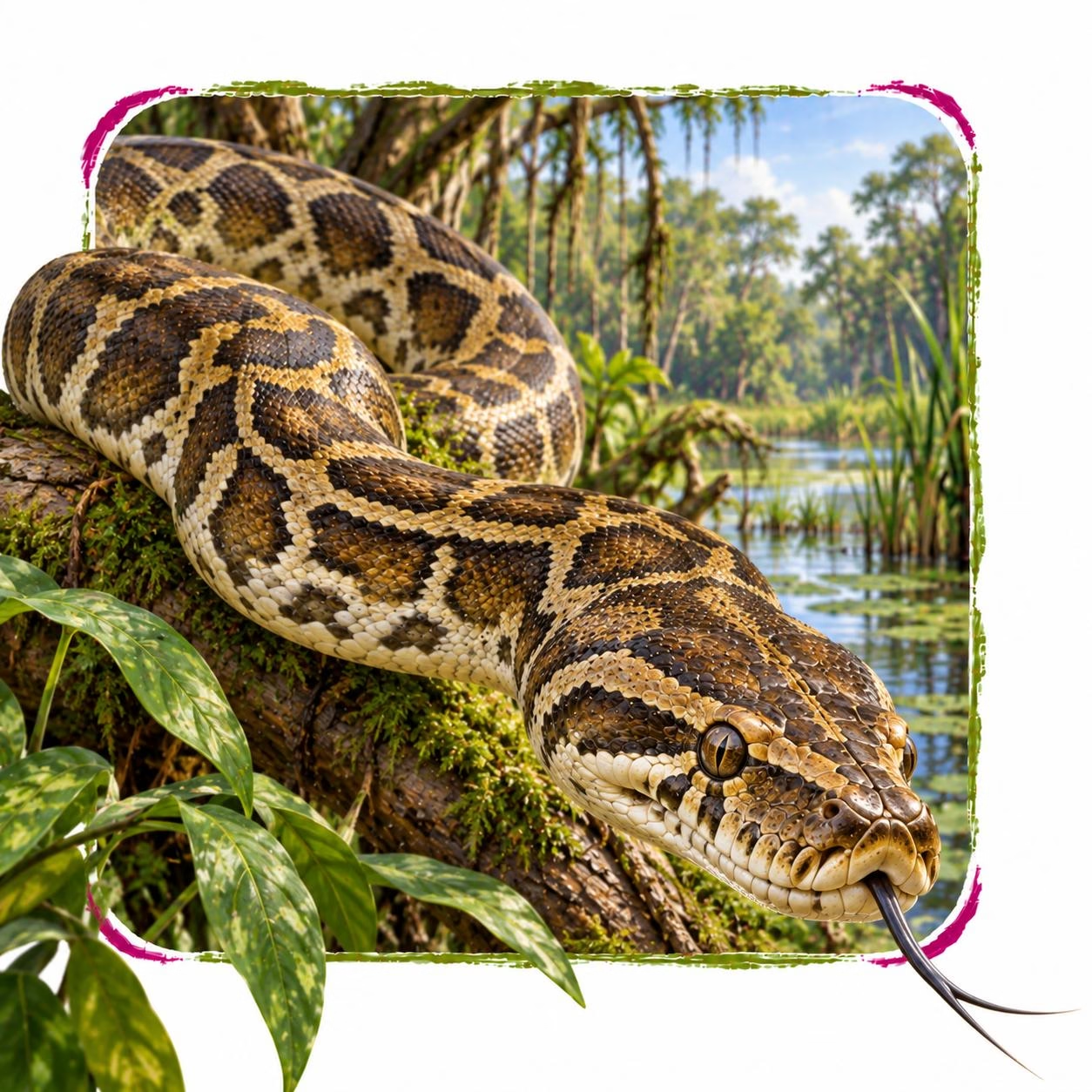
Burmese Python in its natural Tropical and subtropical forests, wetlands, marshes, swamps, river valleys, grasslands, farms, and wooded waterways across South and Southeast Asia, with an invasive population in southern Florida habitat