
Bushbuck Facts for Kids
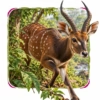
The bushbuck is a medium-sized spiral-horned antelope found across much of sub-Saharan Africa. It belongs to the bovid family and depends heavily on dense vegetation for food and hiding cover. Bushbuck coats range from reddish brown to very dark brown, with white spots and stripes that vary between regions and individuals. Scientists have debated whether northern and southern forms should be split, but recent integrative research supports treating them as one widespread species, Tragelaphus scriptus.
Quick Bushbuck Facts
- Animal Type: Mammal
- Group: Spiral-horned bovid antelope
- Known For: White markings, male spiral horns, dense-cover camouflage, and a barking alarm call
- Habitat: Forest edges, riverine thickets, woodland, savanna scrub, and other places with thick cover
- Diet: Leaves, shoots, herbs, flowers, fruit, fungi, and occasional grass
What You’ll Learn
Discover 10 fascinating bushbuck facts for kids about striped coats, forest hiding, horns, feeding, and African habitats, plus a quiz, glossary, and activity
These simple facts are made for kids, parents, teachers, and curious little fact-hunters.
10 Fun Bushbuck Facts for Kids
1. It Is a Spiral-Horned Antelope
Bushbuck belong to the same broad spiral-horned antelope branch as kudus, bongos, nyalas, and sitatungas. They have compact bodies suited to slipping through tangled vegetation rather than racing for long distances across open plains.
Kid Decode: The bushbuck is built more like a leafy-maze explorer than an open-grassland sprinter.
2. Only Males Grow Horns
Adult males carry fairly straight horns that twist in a loose spiral and point upward. Females do not normally grow horns, and males are usually larger and darker than females.
Kid Decode: The ram brings the spiral headgear, while the female keeps a smooth forehead.
3. Their White Markings Are Highly Variable
Bushbuck may have many bright white stripes and spots, only a few marks, or a much plainer coat. Colour and pattern differ with sex, age, region, and individual variation.
Kid Decode: One bushbuck may wear bold white paint strokes while another chooses the quiet camouflage edition.
4. Dense Cover Is Their Safety Blanket
Bushbuck stay close to thickets, forest edges, river vegetation, and other hiding places. When disturbed, they can freeze, crouch, or dash into cover where their broken coat pattern blends with light and shadow.
Kid Decode: A few steps into the bushes can make an entire antelope seem to switch itself off.
5. They Can Bark Like a Dog
Both males and females can give a loud resonant bark when alarmed. They also snort, grunt, and use scent and body posture to communicate.
Kid Decode: The forest may sound as if it contains a dog, but the caller can be a nervous antelope.
6. They Browse More Than They Graze
Bushbuck mainly select leaves, shoots, herbs, flowers, and fruit. They may also eat fungi and some grass, but they are primarily browsers rather than lawn-like grazers.
Kid Decode: Their meal is usually picked from the leafy shelves instead of clipped from the grassy floor.
7. They Are Often Active Near Dusk and at Night
Activity changes with habitat, weather, disturbance, and region. Many bushbuck feed most actively from dusk through the night, although they can also move and feed during daylight.
Kid Decode: The bushbuck timetable bends around heat, danger, darkness, and good places to hide.
8. Calves Begin Life Hidden
A mother usually gives birth to one calf and leaves it concealed in dense vegetation while she feeds nearby. She returns to nurse it until the youngster is strong enough to accompany her more regularly.
Kid Decode: The newborn’s first superpower is becoming a tiny spotted bundle beneath the leaves.
9. They Are Usually Seen Alone
Adult bushbuck are commonly solitary, although females and young may gather loosely and several animals can use the same good habitat. Calling them completely antisocial would oversimplify their flexible lives.
Kid Decode: Most bushbuck travel solo, but the forest neighbourhood can still contain several quiet residents.
10. They Can Swim and Cross Water
Bushbuck often live near rivers and wetlands and are capable swimmers. Their survival still depends more on nearby vegetation cover than on living permanently in water.
Kid Decode: A river is not a wall when the hidden antelope decides the opposite bank looks safer.
The Weirdest Bushbuck Fact
A bushbuck can bark loudly like a dog and then disappear into vegetation so quickly that the sound seems to have come from an invisible forest animal.
Try This Bushbuck Activity
Bushbuck Hidden-Thicket Drawing Activity
Draw a bushbuck stepping from dense African vegetation. Add a dark male with spiral horns, a lighter female without horns, variable white spots and stripes, large rounded ears, a white tail underside, leafy browse, a riverbank, and one hidden calf whose markings break up its outline.
Quick Bushbuck Quiz
- Which animal family contains the bushbuck? Answer: Bovidae, the cattle and antelope family.
- Which sex normally grows horns? Answer: Males.
- What kind of food does a bushbuck mainly choose? Answer: Leaves, shoots, herbs, flowers, and fruit.
- How does a young calf stay safe? Answer: It hides in dense vegetation.
- What surprising alarm sound can a bushbuck make? Answer: A loud bark.
Mini Glossary
- Bovid: A hoofed mammal in the family containing cattle, goats, sheep, and antelopes.
- Browser: An animal that feeds mainly on leaves, shoots, and other raised plant parts.
- Riverine: Growing, living, or occurring beside a river.
- Camouflage: Colours or patterns that help an animal blend into its surroundings.
- Integrative Taxonomy: Classifying organisms by combining evidence such as anatomy, genetics, geography, and historical specimens.
 Cicada Facts for Kids
 Aye-Aye Facts for Kids
 Blue-Ringed Octopus Facts for Kids
 Embolotherium Facts for Kids
More Animal Facts for Kids
Visit the full animal facts library or explore a focused animal group.
More Extinct Animal Facts for Kids
Discover dinosaurs, Ice Age giants, prehistoric sea creatures, recently extinct species, and other animals from the past.
Fact check note: Fact checked with SANBI’s Bushbuck Animal of the Week account, Animal Diversity Web’s Tragelaphus scriptus account, the Mammal Diversity Database, Baird and colleagues’ 2024 integrative-taxonomy study of bushbuck, and current IUCN-linked conservation information.

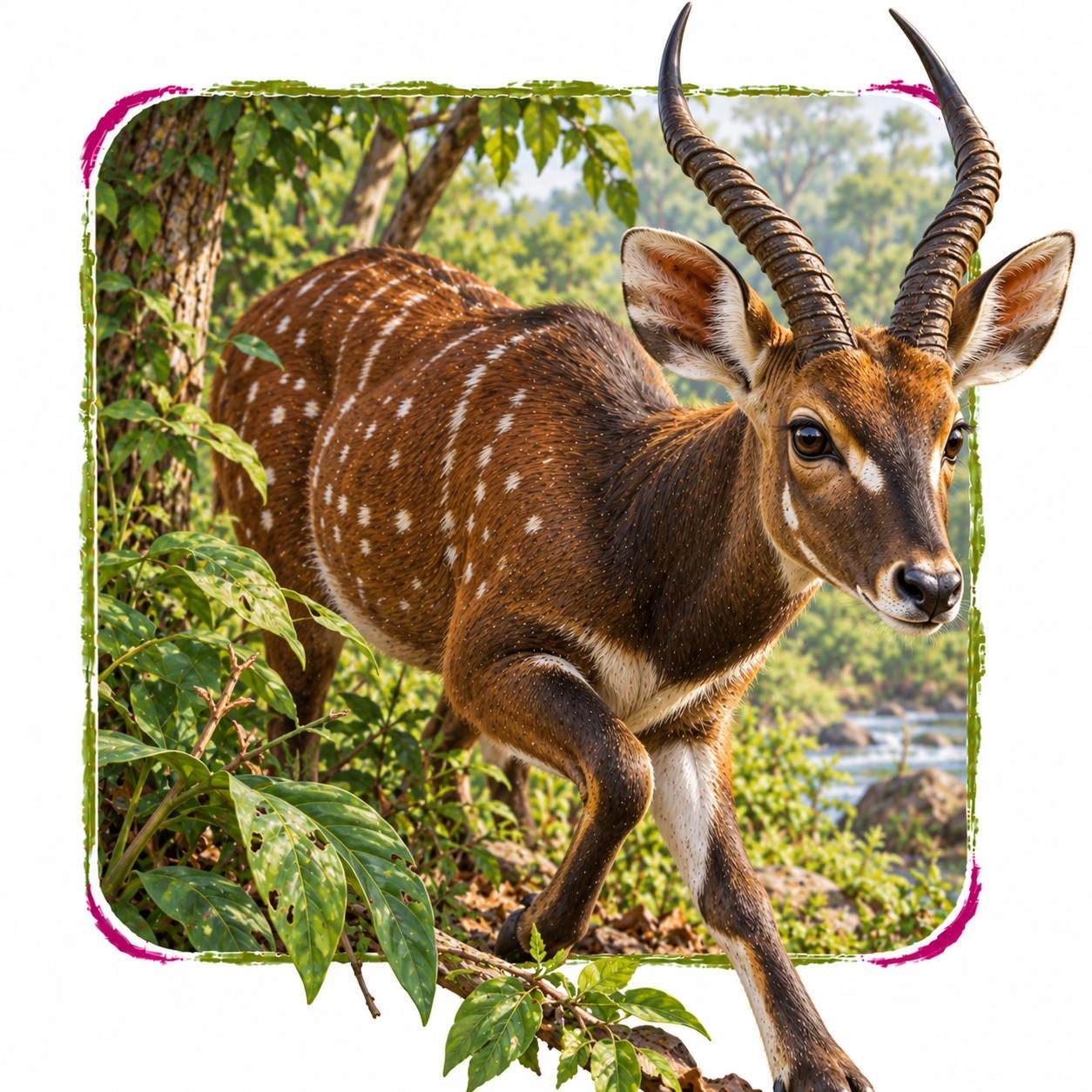
Bushbuck in its natural Forest edges, riverine thickets, woodland, rainforest margins, savanna scrub, plantations, and other dense-cover habitats across sub-Saharan Africa habitat