
Buzzard Facts for Kids
This page focuses on the Common Buzzard, also called the Eurasian Buzzard, Buteo buteo. It is a broad-winged bird of prey found across Europe and much of Asia, with some populations travelling south for winter. Common buzzards hunt from perches or soar over open land beside woodland. Their feathers vary so much that a very pale bird and a very dark bird can appear to belong to different species.
Quick Buzzard Facts
- Animal Type: Bird
- Group: Hawk, eagle, and kite family
- Known For: Broad rounded wings, soaring in a shallow V, variable plumage, and a mewing call
- Habitat: Woodland edges, farmland, grassland, moorland, mountains, and other open country with nesting trees
- Diet: Small mammals, rabbits, birds, amphibians, reptiles, insects, earthworms, and carrion
What You’ll Learn
Learn 10 soaring buzzard facts for kids about broad wings, sharp eyesight, hunting, nests, and bird-of-prey behavior, plus a quiz, glossary, and activity
Everything is explained simply for kids, parents, teachers, and young bird explorers.

10 Fun Buzzard Facts for Kids
1. This Page Means the Common Buzzard
The word buzzard has different meanings. In Britain and much of Europe, it usually means Buteo buteo, while in North American everyday speech people sometimes call vultures buzzards. This page is about the Common or Eurasian Buzzard, not a turkey vulture.
Kid Decode: One bird name crosses the Atlantic and returns wearing completely different feathers.
2. It Has Broad Wings and a Short Tail
Common buzzards have long broad rounded wings with finger-like tips and a relatively short, often fanned tail. Their sturdy shape helps them circle on rising air and glide while searching below.
Kid Decode: The flight outline resembles a wide flying shield with feathered fingertips.
3. They Often Soar in a Shallow V
While circling or gliding, a buzzard commonly holds its wings slightly raised. Warm rising air called thermals can lift the bird, reducing the need for constant flapping.
Kid Decode: A column of warm air becomes an invisible lift with no buttons and no cables.
4. The Plumage Varies Dramatically
Some common buzzards are mostly dark brown, others are pale below, and many fall between those extremes. Age, region, and individual genetics all contribute to the variation.
Kid Decode: Two buzzards can look as if one ordered extra chocolate and the other skipped it.
5. Its Call Can Sound Like a Cat
The familiar call is a long descending mew, often heard while a bird circles overhead. Calls also help pairs stay in contact and warn intruders around nesting territories.
Kid Decode: Look up when the sky begins making the sound of a distant cat.
6. It Hunts From Perches and the Air
A buzzard may wait on a post, branch, or pole before dropping onto prey. It also circles over fields, walks on the ground, and scans roadsides and open slopes for feeding opportunities.
Kid Decode: The hunting station might be a tree branch, fence post, thermal, or patch of earth.
7. It Is an Opportunistic Eater
Small mammals are important prey, but buzzards also take rabbits, birds, amphibians, reptiles, large insects, earthworms, and carrion. The exact diet changes with season and whatever food is locally abundant.
Kid Decode: The buzzard menu rewrites itself whenever the landscape changes its specials.
8. Pairs Build Large Stick Nests
Buzzards usually nest in trees, although cliffs and other sites may be used in some regions. A pair can repair and reuse a bulky stick nest, lining it with fresh green leaves and other softer material.
Kid Decode: The nest is a branch-built bowl that may receive a leafy spring renovation.
9. Chicks Need Weeks of Care
Females usually lay a small clutch of eggs, and both parents contribute to raising the young. Adults guard the nest and deliver prey until the growing chicks can fly and hunt more independently.
Kid Decode: A fluffy nestling must become a broad-winged hunter one carefully delivered meal at a time.
10. Some Stay While Others Migrate
Many western and southern birds remain near their territories all year. Buzzards breeding in colder or more eastern regions are more likely to travel south for winter, sometimes reaching Africa.
Kid Decode: The species contains homebodies, short-distance travellers, and serious seasonal commuters.
The Weirdest Buzzard Fact
Common buzzards vary so greatly in feather colour that a pale individual and a dark individual standing together can look less alike than two separate bird species.
Try This Buzzard Activity
Buzzard Soaring-and-Perching Drawing Activity
Draw a Common Buzzard circling above patchwork farmland beside woodland. Add broad rounded wings held in a shallow V, fingered wingtips, a short fanned barred tail, one pale bird and one dark bird, a cat-like call bubble, a fence-post hunting perch, a thermal spiral, small mammals below, and a large stick nest with chicks in a tree.
Quick Buzzard Quiz
- Which buzzard does this page describe? Answer: The Common or Eurasian Buzzard, Buteo buteo.
- What shape are its wings? Answer: Broad and rounded with finger-like tips.
- What can its call resemble? Answer: A cat-like mew.
- What helps a buzzard soar without much flapping? Answer: Rising warm air called a thermal.
- Does every common buzzard migrate? Answer: No, many stay in the same region all year.
Mini Glossary
- Raptor: A bird of prey with strong feet, sharp talons, and a hooked bill.
- Thermal: A column of warm rising air that soaring birds can ride.
- Plumage: All the feathers covering a bird.
- Carrion: The body of a dead animal eaten by scavengers or predators.
- Territory: An area defended by an animal or pair from others of the same species.



 Mallard Facts for Kids
 Possum Facts for Kids
 Vicuña Facts for Kids
 Anchiornis Facts for Kids
More Animal Facts for Kids
Visit the full animal facts library or explore a focused animal group.
More Extinct Animal Facts for Kids
Discover dinosaurs, Ice Age giants, prehistoric sea creatures, recently extinct species, and other animals from the past.
Fact check note: Fact checked with the British Trust for Ornithology’s Buzzard BirdFacts account, the RSPB’s Buteo buteo identification and conservation resources, BirdLife International’s current Eurasian Buzzard species factsheet, EUNIS species information, and research on common-buzzard diet, breeding, migration, and plumage variation.

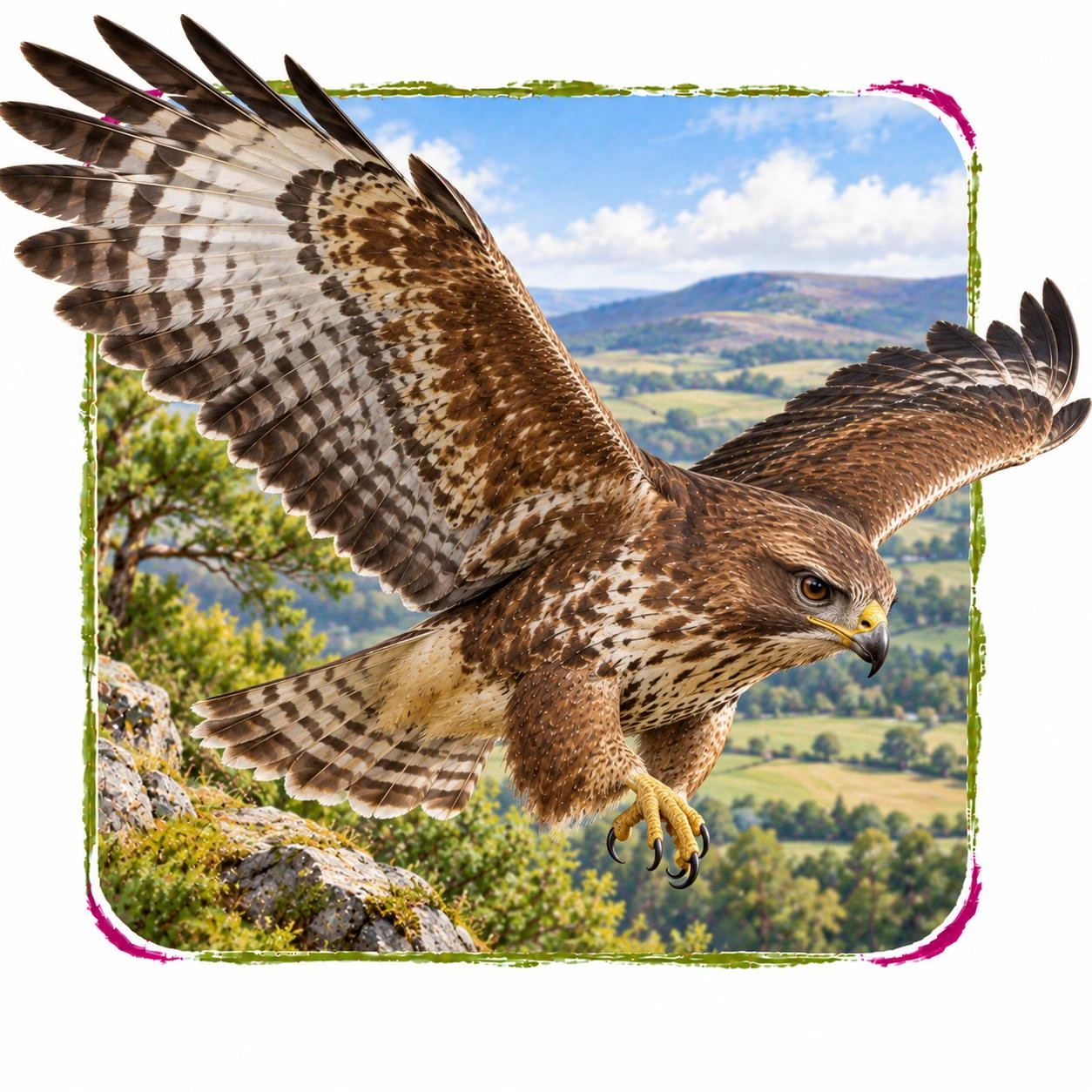
Buzzard in its natural Woodland edges, farmland, grassland, moorland, mountains, valleys, and other open country with trees or cliffs across Europe and parts of Asia, with some populations wintering farther south habitat