
Caiman Facts for Kids
Caimans are crocodilian reptiles from Central and South America. They belong to the alligator family, Alligatoridae, but they are not the same animals as the two living alligator species. The caiman group contains six living species, from the small Cuvier’s dwarf caiman to the enormous black caiman. Different caimans inhabit rivers, lakes, swamps, flooded forests, marshes, and mangroves, so size, snout shape, diet, and conservation needs vary across the group.
Quick Caiman Facts
- Animal Type: Reptile
- Group: Six living crocodilian species in the alligator family
- Known For: Armored skin, powerful jaws, wetland hunting, mound nests, and parental care
- Habitat: Rivers, lakes, swamps, marshes, flooded forests, ponds, and mangroves
- Diet: Insects, crustaceans, snails, fish, amphibians, reptiles, birds, and mammals depending on species and size
What You’ll Learn
Discover 10 amazing caiman facts for kids about armored skin, strong jaws, swimming, hunting, and tropical wetlands, with a quiz, glossary, and activity
These easy facts are written for children, parents, teachers, and curious little fact-finders.
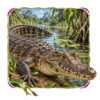
10 Fun Caiman Facts for Kids
1. There Are Six Living Caiman Species
The living caiman group includes the spectacled, yacare, broad-snouted, black, Cuvier’s dwarf, and Schneider’s smooth-fronted caimans. They are divided among the genera Caiman, Melanosuchus, and Paleosuchus.
Kid Decode: The caiman team has six living members wearing three different scientific surnames.
2. They Belong to the Alligator Family
Caimans and alligators are alligatorids, while true crocodiles belong to a different family. Caimans often have relatively broad snouts and an overbite, but exact skull shape differs greatly among species.
Kid Decode: A caiman is an alligator cousin, not a small costume-wearing crocodile.
3. They Live in the American Tropics
Wild caimans are native to Central and South America. Their ranges stretch through tropical and subtropical wetlands from southern Mexico and Central America into the Amazon, Pantanal, and farther south.
Kid Decode: The caiman map follows warm rivers and wetlands through the tropical Americas.
4. Their Skin Contains Bony Armor
Hard scales cover the body, and many scales contain small bony plates called osteoderms. Dwarf caimans are especially heavily armored, which helps protect them in rocky streams, forest pools, and burrows.
Kid Decode: Under the scales sits a built-in layer of pebble-sized body armor.
5. Eyes and Nostrils Sit High on the Head
A caiman can float with most of its body hidden while keeping its eyes and nostrils above the surface. This position helps it watch, breathe, and approach prey with little movement.
Kid Decode: Only the lookout windows and breathing vents need to peek above the water.
6. Caiman Sizes Range From Dwarf to Giant
Cuvier’s dwarf caiman is the smallest living crocodilian, while the black caiman is the largest living member of the alligator family. Most other caiman species fall between those two extremes.
Kid Decode: One caiman fits the compact model while another grows into an Amazon heavyweight.
7. Their Diet Changes as They Grow
Young caimans commonly eat insects, crustaceans, snails, tadpoles, and small fish. Larger animals can tackle bigger fish, reptiles, birds, and mammals, although diet differs by species, habitat, season, and body size.
Kid Decode: The menu expands from tiny water snacks to much larger meals as the hunter grows.
8. Females Build Mound Nests
Many caiman females pile vegetation and soil into a nest and lay eggs inside it. Heat produced by rotting plants helps warm the clutch, while nest temperature also influences the sex of developing hatchlings.
Kid Decode: A heap of warm compost can become a carefully guarded reptile nursery.
9. Mothers Help the Hatchlings
A female may remain near the nest, respond to calls from hatching young, open the mound, and escort babies to water. In some species, adults guard groups of hatchlings for weeks or longer.
Kid Decode: Tiny squeaks from inside the nest can summon a mother armed with enormous jaws.
10. Conservation Differs by Species
Some caiman populations are widespread and resilient, while others have smaller ranges or face heavier pressure from wetland loss, pollution, hunting, egg collection, fishing gear, and changing water systems. A group-wide conservation label would hide these important differences.
Kid Decode: The six species share a family tree, but they do not share one conservation report card.
The Weirdest Caiman Fact
The caiman group includes both the smallest living crocodilian, Cuvier’s dwarf caiman, and the largest living alligator-family member, the black caiman.
Try This Caiman Activity
Six-Species Caiman Drawing Activity
Draw a tropical wetland showing several different caimans. Add a tiny heavily armored dwarf caiman, a spectacled caiman with a ridge between its eyes, a broad-snouted caiman, a yacare caiman, and a much larger black caiman. Include high-set eyes and nostrils, osteoderms, fish and snails, a warm mound nest, eggs, chirping hatchlings, and a guarding mother.
Quick Caiman Quiz
- How many living caiman species are recognised? Answer: Six.
- Which animal family contains caimans? Answer: Alligatoridae, the alligator family.
- Where are wild caimans native? Answer: Central and South America.
- What are osteoderms? Answer: Bony plates inside the skin.
- How can a mother help newly hatched caimans? Answer: She may open the nest, carry or guide them to water, and guard them.
Mini Glossary
- Crocodilian: A reptile from the group containing crocodiles, alligators, caimans, and gharials.
- Alligatorid: A member of the alligator family, including alligators and caimans.
- Osteoderm: A small bony plate embedded in the skin.
- Mound Nest: A nest built by piling plant material and soil over eggs.
- Temperature-Dependent Sex Determination: A system in which incubation temperature helps determine whether hatchlings develop as males or females.
 Emperor Scorpion Facts for Kids
 Blobfish Facts for Kids
 Boa Facts for Kids
 Western Black Rhinoceros Facts for Kids
More Animal Facts for Kids
Visit the full animal facts library or explore a focused animal group.
More Extinct Animal Facts for Kids
Discover dinosaurs, Ice Age giants, prehistoric sea creatures, recently extinct species, and other animals from the past.
Fact check note: Fact checked with the IUCN-SSC Crocodile Specialist Group’s Classification of Living Crocodilians and Caimans species accounts, current crocodilian taxonomy, and comparative research on caiman nesting, parental care, osteoderms, feeding ecology, and temperature-dependent sex determination.

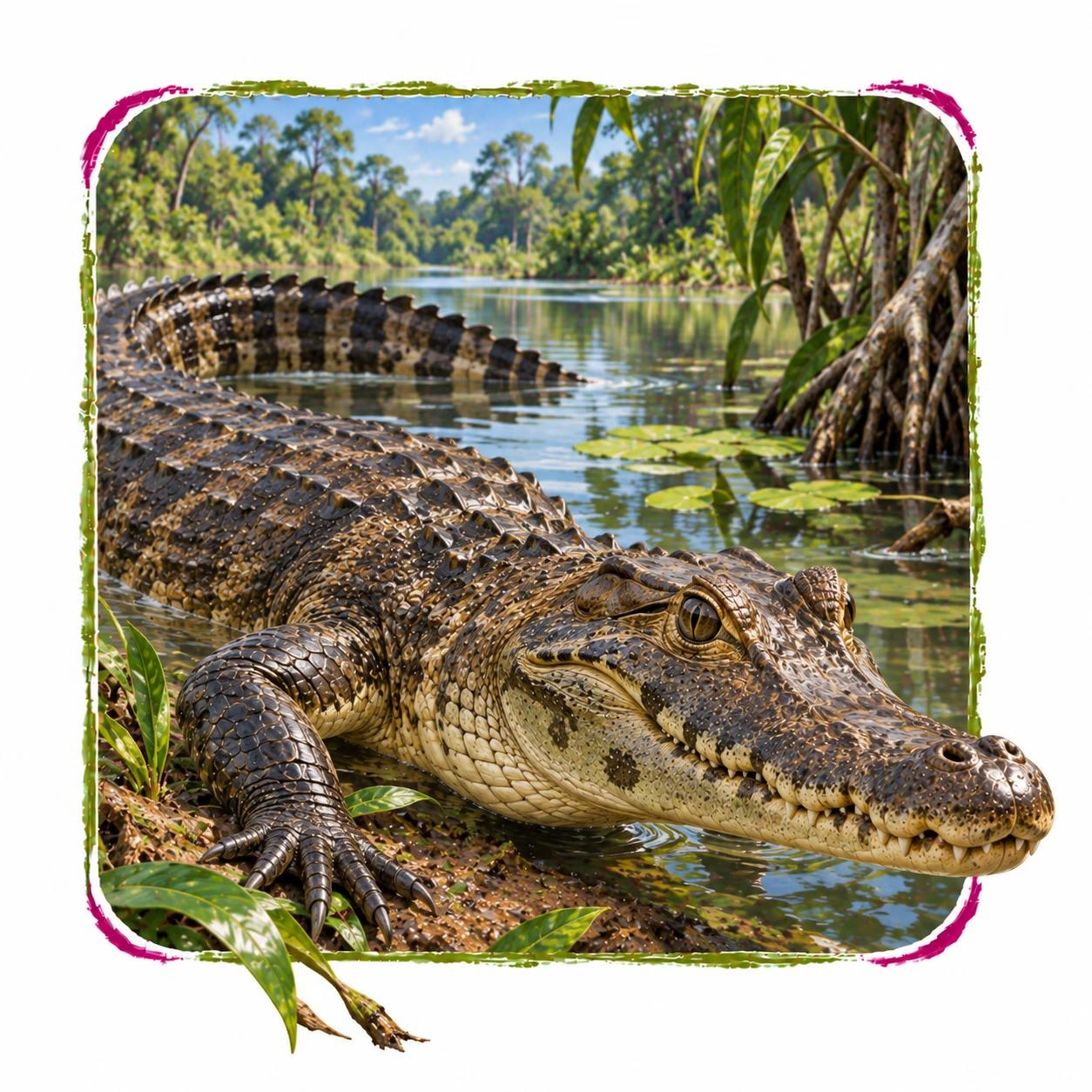
Caiman in its natural Tropical and subtropical rivers, lakes, lagoons, ponds, swamps, marshes, mangroves, flooded forests, forest streams, and seasonally flooded grasslands across Central and South America habitat