
Canada Goose Facts for Kids
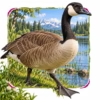
The Canada goose, Branta canadensis, is a large North American waterbird recognised by its black head and neck, white chinstrap, and brown body. Some populations make long seasonal migrations, while others remain in the same region throughout the year. Canada geese graze on grasses and crops, nest near water, raise mobile yellow goslings, and have adapted remarkably well to parks, reservoirs, golf courses, farms, and city wetlands.
Quick Canada Goose Facts
- Animal Type: Bird
- Group: Goose in the duck, goose, and swan family
- Known For: Black neck, white chinstrap, loud honking, V-shaped flocks, and family groups
- Habitat: Lakes, rivers, marshes, ponds, fields, parks, reservoirs, tundra, and coastal wetlands
- Diet: Grasses, leaves, shoots, seeds, grains, berries, and aquatic plants
What You’ll Learn
Explore 10 fascinating canada goose facts for kids about migration, honking, family groups, flying formations, and wetland life, plus a quiz, glossary, and activity
Simple explanations make them great for kids, families, teachers, and young nature fans.
10 Fun Canada Goose Facts for Kids
1. Its Official Name Is Canada Goose
The standard English name is Canada goose, not Canadian goose, although people often use both phrases in everyday speech. Its scientific name is Branta canadensis.
Kid Decode: The passport says Canada Goose, even when casual conversation adds an extra syllable.
2. A White Chinstrap Marks the Face
Adults have a black head and long black neck with a white patch beneath the cheeks and chin. The brown body, pale chest, black bill, and black legs complete the familiar pattern.
Kid Decode: The white chinstrap looks painted across a head-and-neck suit of glossy black.
3. Canada Geese Come in Different Sizes
Several subspecies vary in size, colour, and proportions. The smallest former Canada-goose forms are now classified as a separate species called the cackling goose, which can be difficult to distinguish from small Canada geese.
Kid Decode: The goose family album includes giants, smaller cousins, and one look-alike species with its own name.
4. Not Every Canada Goose Migrates
Many northern populations travel south for winter and return north to breed. Other populations nest in temperate towns and countryside and remain nearby all year, often because local breeding groups became established rather than because migrants simply forgot to leave.
Kid Decode: Some geese are sky commuters while others keep the same neighbourhood address.
5. V Formations Help the Flock Travel
A goose flying behind and slightly to the side of another can use upward-moving air produced near the leader’s wingtip. Birds also gain a clear view of flockmates, and individuals can take turns in tiring front positions.
Kid Decode: The flock arranges itself into a moving teamwork arrow across the sky.
6. Honks Keep Geese Connected
Canada geese use a variety of honks, calls, hisses, and body movements. Calling helps pairs and family members maintain contact in flight and on the ground, while hissing can warn an approaching animal to stay away.
Kid Decode: A flying flock carries its own loud family group chat.
7. They Are Mostly Plant Eaters
Canada geese graze on grass and young shoots, eat seeds and grains, and reach aquatic plants by dipping their heads underwater. Small amounts of insects or other animal food may be swallowed, especially by growing young.
Kid Decode: Most meals come from lawns, fields, seed heads, and underwater salad bars.
8. Pairs Often Stay Together for Years
Canada geese commonly form long-lasting pair bonds and remain together throughout the year. A surviving goose can find a new mate if its partner dies, so “mate for life” does not mean it can never pair again.
Kid Decode: The partnership is built for the long haul, with room for a new chapter after loss.
9. Goslings Leave the Nest Quickly
Females usually lay two to eight eggs in a ground nest lined with down. Yellowish goslings hatch with open eyes and can walk, swim, feed, and even dive soon after leaving the nest, usually within one or two days.
Kid Decode: The babies skip weeks of nest lounging and head straight into swimming lessons.
10. Adults Become Temporarily Flightless
Canada geese replace their main wing feathers all at once during the annual molt. Adults cannot fly for several weeks and often remain close to water while their goslings are also too young to fly.
Kid Decode: For a few summer weeks, the famous flying goose becomes a walking-and-swimming specialist.
The Weirdest Canada Goose Fact
Adult Canada geese lose all their main flight feathers during one molt and become temporarily unable to fly, often regaining flight at about the same time as their goslings.
Try This Canada Goose Activity
Canada Goose Family-and-Flight Drawing Activity
Draw two connected scenes. In the sky, add a V-shaped flock with broad wings, long black necks, white chinstraps, and arrows showing upward-moving air near the wingtips. Beside a pond, draw a pair guarding yellow goslings, a down-lined ground nest with eggs, grazing grass, aquatic plants, and one molting adult whose growing wing feathers are not ready for flight.
Quick Canada Goose Quiz
- What white marking does a Canada goose have? Answer: A white chinstrap or cheek patch.
- Do all Canada geese migrate? Answer: No, some populations remain in the same region year-round.
- What do Canada geese mainly eat? Answer: Grasses, shoots, seeds, grains, and aquatic plants.
- What are baby geese called? Answer: Goslings.
- Why can adults not fly during part of the summer? Answer: They molt their main wing feathers at the same time.
Mini Glossary
- Waterfowl: A bird from the duck, goose, and swan family.
- Subspecies: A recognisable population within a species that differs from other populations.
- Migration: Regular seasonal travel between regions.
- Precocial: Hatched in a well-developed state and able to move soon afterward.
- Molt: The replacement of old feathers with new ones.
 Wallaby Facts for Kids
 Arapaima Facts for Kids
 Hyena Facts for Kids
 Edestus Facts for Kids
More Animal Facts for Kids
Visit the full animal facts library or explore a focused animal group.
More Extinct Animal Facts for Kids
Discover dinosaurs, Ice Age giants, prehistoric sea creatures, recently extinct species, and other animals from the past.
Fact check note: Fact checked with Cornell Lab of Ornithology’s All About Birds Canada Goose overview, identification, life-history, and Cackling Goose comparison resources, Environment and Climate Change Canada’s Canada-goose biology and management handbook, and research on waterfowl formation flight, pair bonds, migration, and simultaneous wing molt.

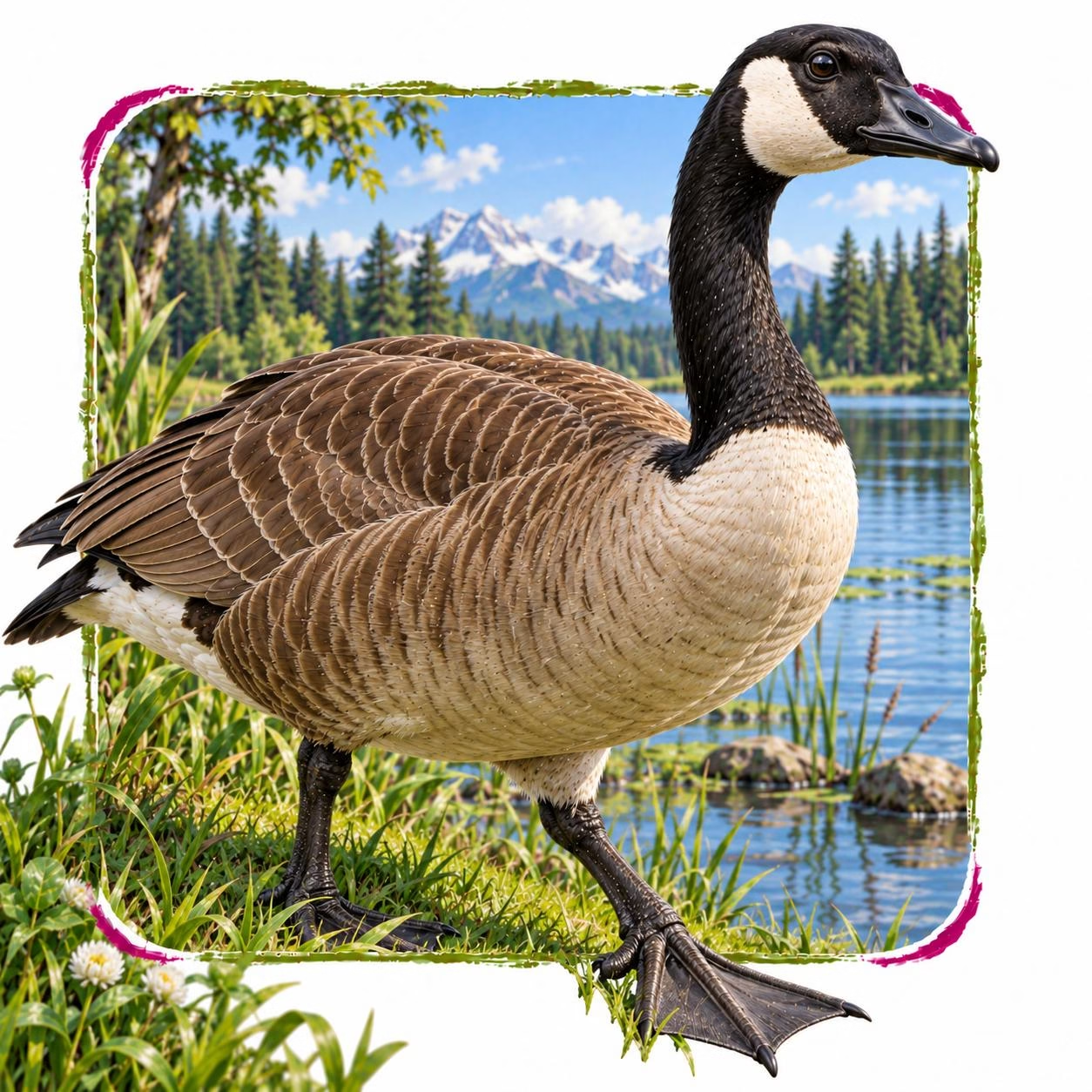
Canada Goose in its natural Lakes, ponds, rivers, marshes, reservoirs, coastal wetlands, tundra, grasslands, farm fields, parks, golf courses, and urban lawns across North America, with introduced populations elsewhere habitat