
Cape Buffalo Facts for Kids
The Cape buffalo, Syncerus caffer caffer, is the largest and darkest form of African buffalo. It lives mainly in eastern and southern African savannas, woodlands, floodplains, and grasslands where dependable water and grazing are available. Cape buffalo are wild bovids rather than domestic cattle or Asian water buffalo. Their massive bodies, curved horns, social herds, mud wallows, and ability to defend calves make them one of Africa’s most formidable grazing mammals.
Quick Cape Buffalo Facts
- Animal Type: Mammal
- Group: Cape or savanna form of African buffalo
- Known For: Heavy bodies, broad horn bosses, large herds, grass eating, and group defence
- Habitat: Savannas, grasslands, floodplains, woodland, river valleys, and bushland near water
- Diet: Grasses, sedges, herbs, and occasional leaves or shoots
What You’ll Learn
Learn 10 powerful cape buffalo facts for kids about massive horns, herd life, grazing, predators, and African grasslands, with a quiz, glossary, and activity
These facts are kept simple for kids, parents, teachers, and curious young minds.

10 Fun Cape Buffalo Facts for Kids
1. It Is a Wild African Bovid
Cape buffalo belong to the cattle family, Bovidae, but they have never been domesticated like ordinary cattle. They are also different from the wild water buffalo of Asia.
Kid Decode: This buffalo carries wild African paperwork, not farm-cow or Asian-water-buffalo documents.
2. Cape Buffalo Are the Largest African Buffalo Form
The Cape or savanna buffalo is larger and generally darker than the red-brown forest buffalo. Large males can exceed 800 kilograms, although body size varies with sex, age, habitat, nutrition, and region.
Kid Decode: The Cape form is the heavyweight branch of the African buffalo family.
3. Both Sexes Grow Horns
Males and females have horns that sweep outward and curve upward. Adult bulls develop much thicker horn bases that expand across the forehead into a shield-like boss, while cow horns are usually slimmer and lack a complete heavy boss.
Kid Decode: The bull’s horn bases meet above the eyes like a broad armored helmet.
4. Herds Can Contain Hundreds
Females, calves, and many males form mixed herds that may range from small groups to gatherings of hundreds when food and water are concentrated. Older bulls may live in bachelor groups or spend periods alone.
Kid Decode: The buffalo crowd can grow from a family gathering into a moving black-brown landscape.
5. They Are Powerful Grazers
Cape buffalo crop grasses with their broad mouths and may also eat sedges, herbs, leaves, and shoots. By removing tall coarse growth, they can change plant structure and influence food available to other grazing animals.
Kid Decode: A herd works across tall grass like hundreds of living lawn trimmers.
6. They Chew Their Cud
Like cattle, Cape buffalo are ruminants with a multi-compartment stomach. They swallow grass, later bring partly digested food back to the mouth, and chew it again so microbes can help break down tough plant fibres.
Kid Decode: Breakfast can return for a second chewing before the stomach crew finishes the job.
7. Water Shapes Their Daily Life
Cape buffalo need regular access to drinking water and favour habitats where grass and dependable water occur reasonably close together. Herds often travel between feeding grounds, shade, waterholes, and resting areas.
Kid Decode: The herd’s map is drawn with grass routes leading toward reliable water.
8. Mud Helps With Heat and Insects
Buffalo wallow in mud and rest in shade, especially during hot conditions. Mud can cool the skin and may help reduce biting insects, while birds such as oxpeckers sometimes pick ticks and other food from the body.
Kid Decode: A mud bath becomes sunscreen, cooler, and bug shield rolled into one messy treatment.
9. The Herd Can Defend Calves
Lions are major predators of Cape buffalo, particularly calves, weakened animals, and isolated adults. Herd members may bunch around calves, confront predators, or return when another buffalo gives distress calls, although defence does not always succeed.
Kid Decode: A threatened calf can disappear behind a wall of horns, hooves, and determined relatives.
10. The Species Is Near Threatened
The African buffalo species is listed as Near Threatened globally, with declines linked to habitat loss, hunting, disease, drought, livestock competition, fencing, and fragmentation. Some protected Cape-buffalo populations remain large or have recovered, so conditions differ by region.
Kid Decode: A strong buffalo still needs connected grasslands, water, protection, and room for the herd.
The Weirdest Cape Buffalo Fact
The expanded bases of an adult bull’s horns can grow together into a massive forehead shield called a boss, leaving the pointed horn tips curving away on both sides.
Try This Cape Buffalo Activity
Cape Buffalo Herd-Defence Drawing Activity
Draw a Cape buffalo herd beside an African waterhole. Add a huge dark bull with thick horns and a complete forehead boss, cows with slimmer horns, calves protected in the middle, broad muzzles grazing grass, muddy wallows, oxpeckers, woodland shade, and distant lions watching from beyond the herd.
Quick Cape Buffalo Quiz
- What animal family contains the Cape buffalo? Answer: Bovidae, the cattle family.
- What is the thick shield across an adult bull’s forehead called? Answer: A horn boss.
- What does a Cape buffalo mainly eat? Answer: Grass.
- Why does it chew cud? Answer: To help digest tough plant material.
- Which large predator commonly hunts Cape buffalo? Answer: Lions.
Mini Glossary
- Bovid: A hoofed mammal in the family containing cattle, buffalo, antelopes, goats, and sheep.
- Boss: The thick expanded base of a buffalo horn across the forehead.
- Ruminant: A plant eater that regurgitates and rechews partly digested food.
- Wallow: A muddy or wet place where an animal rolls or rests.
- Fragmentation: The breaking of one large habitat into smaller disconnected pieces.



 House Mouse Facts for Kids
 Bandicoot Facts for Kids
 Flamingo Facts for Kids
 Parapropalaehoplophorus Facts for Kids
More Animal Facts for Kids
Visit the full animal facts library or explore a focused animal group.
More Extinct Animal Facts for Kids
Discover dinosaurs, Ice Age giants, prehistoric sea creatures, recently extinct species, and other animals from the past.
Fact check note: Fact checked with the IUCN SSC Antelope Specialist Group’s African Buffalo Red List assessment, SANBI’s conservation assessment of Syncerus caffer caffer, Animal Diversity Web’s African buffalo account, Mammals of Africa, and research on buffalo social ecology, grazing, horn development, predator defence, disease, and habitat use.

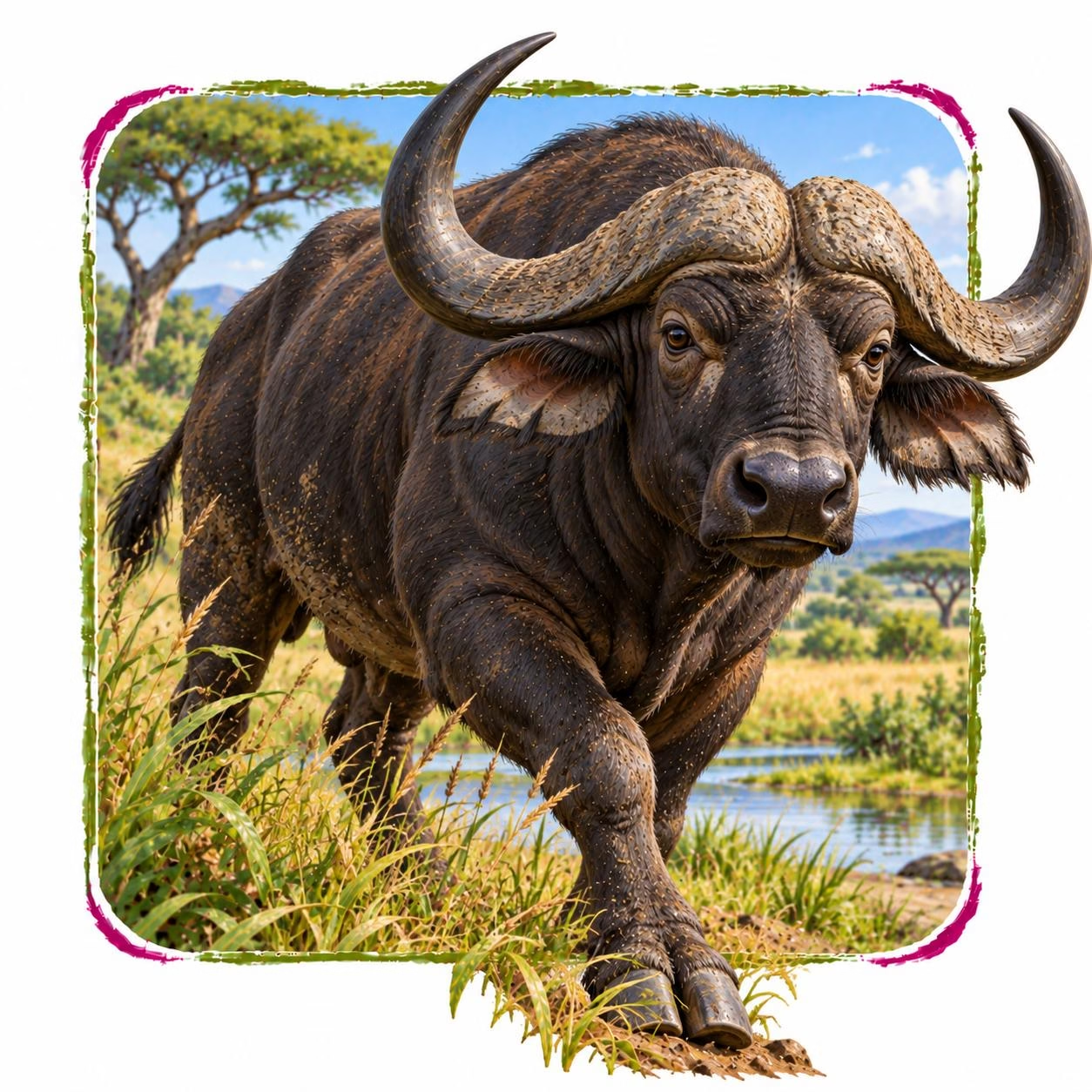
Cape Buffalo in its natural Savannas, grasslands, floodplains, river valleys, open woodland, bushland, marsh edges, and montane grasslands with dependable grazing and access to water across eastern and southern Africa habitat