
Capuchin Monkey Facts for Kids
Capuchin monkeys are clever New World monkeys from Central and South America. They live in forests, move through trees with agile bodies and helpful tails, and are famous for curiosity, problem solving, and even tool use in some species.
Quick Capuchin Monkey Facts
- Animal Type: Mammal
- Group: Primate and New World monkey
- Known For: Intelligence, curiosity, tool use, social groups, forest life, and agile movement
- Habitat: Tropical rainforests, dry forests, mangroves, woodlands, river forests, and tree-filled habitats in Central and South America depending on species
- Diet: Fruit, nuts, seeds, insects, eggs, small animals, flowers, leaves, and other forest foods depending on species and season
What You’ll Learn
Learn 10 clever capuchin monkey facts for kids about tools, grasping hands, social groups, problem-solving, and rainforest life, plus a quiz, glossary, and activity
Clear explanations make them great for children, families, teachers, and young fact-finders.
10 Fun Capuchin Monkey Facts for Kids
1. Capuchins Are Mammals
Capuchin monkeys are mammals, which means mothers feed milk to their young.
Kid Decode: A capuchin is a clever forest monkey with busy hands.
2. Capuchins Are New World Monkeys
Capuchins are New World monkeys, meaning they come from the Americas.
Kid Decode: They are part of the monkey crowd from Central and South America.
3. Baby Capuchins Are Infants
Baby capuchin monkeys are called infants and cling to their mothers when young.
Kid Decode: A capuchin infant gets a leafy piggyback adventure.
4. Capuchins Are Very Curious
Capuchins explore objects, food, branches, and problems with lots of curiosity.
Kid Decode: Their brains love a good forest puzzle.
5. Some Capuchins Use Tools
Some capuchins use objects as tools, such as stones to crack nuts.
Kid Decode: That is monkey problem-solving with a rock hammer.
6. Capuchins Live in Groups
Capuchin monkeys usually live in social groups with many members.
Kid Decode: A capuchin troop is a noisy, clever forest neighborhood.
7. Capuchins Eat Many Foods
Capuchins are omnivores, eating fruit, insects, seeds, eggs, and small animals.
Kid Decode: Their menu is part fruit bowl, part bug hunt.
8. Capuchins Use Their Tails
Capuchins use their tails for balance while climbing and moving through trees.
Kid Decode: The tail is a furry balance helper.
9. Capuchins Have Handy Fingers
Capuchins use nimble hands and fingers to pick up food and explore objects.
Kid Decode: Their fingers are tiny forest tools.
10. Capuchins Need Healthy Forests
Capuchins depend on forests with food, shelter, trees, and safe travel routes.
Kid Decode: Protecting forests keeps clever monkeys climbing.
The Weirdest Capuchin Monkey Fact
Some capuchins can use stones like tools to crack open tough foods, almost like tiny forest engineers.
Try This Capuchin Monkey Activity
Capuchin Monkey Drawing Activity
Draw a capuchin monkey sitting on a rainforest branch. Add a curious face, long tail, infant, fruit, nuts, insects, a stone tool, leaves, vines, and a forest puzzle symbol.
Quick Capuchin Monkey Quiz
- What animal group are capuchin monkeys in? Answer: Mammals.
- Are capuchins New World monkeys? Answer: Yes.
- What are baby capuchins called? Answer: Infants.
- What can some capuchins use to crack nuts? Answer: Stones.
- What do capuchins eat? Answer: Fruit, insects, seeds, eggs, small animals, and other foods.
Mini Glossary
- Mammal: An animal that feeds milk to its young.
- Primate: A mammal group that includes lemurs, monkeys, apes, and humans.
- New World Monkey: A monkey from Central or South America.
- Infant: A baby primate.
- Omnivore: An animal that eats both plant and animal foods.
 Barracuda Facts for Kids
 Burmese Python Facts for Kids
 Howler Monkey Facts for Kids
 Suchomimus Facts for Kids
More Animal Facts for Kids
Visit the full animal facts library or explore a focused animal group.
More Extinct Animal Facts for Kids
Discover dinosaurs, Ice Age giants, prehistoric sea creatures, recently extinct species, and other animals from the past.
Fact check note: Fact checked with Britannica capuchin monkey resources, Britannica New World monkey resources, and trusted primate education references.

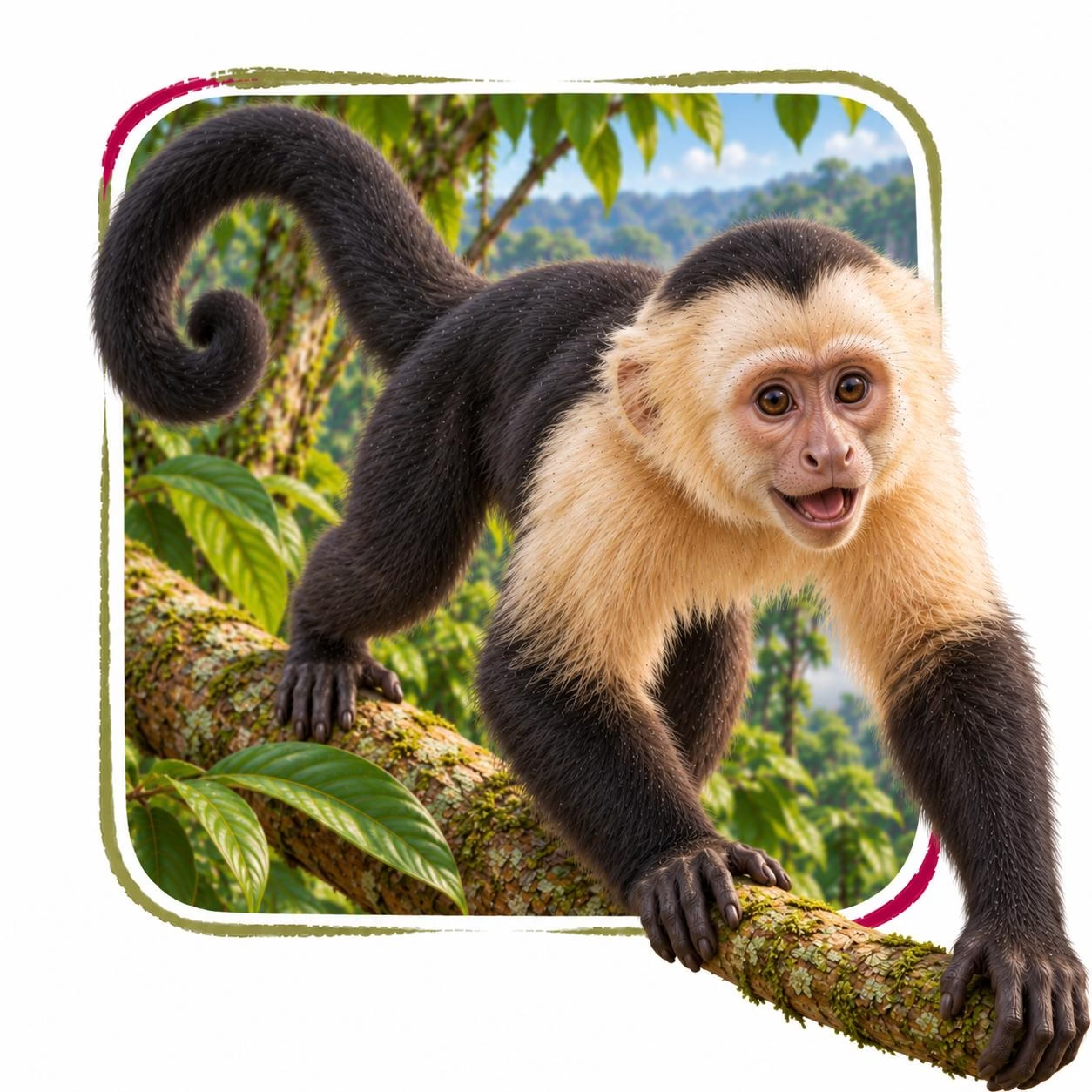
Capuchin Monkey in its natural Rainforests habitat