
Caracal Facts for Kids
Caracals are sleek wild cats with reddish-brown fur, short tails, long legs, and dramatic black ear tufts. They live in dry places, grasslands, hills, and scrub areas across Africa and parts of Asia.
Quick Caracal Facts
- Animal Type: Mammal
- Group: Wild cat
- Known For: Black ear tufts and powerful jumps
- Habitat: Deserts, savannas, scrublands, hills, plains, dry forests, and rocky areas
- Diet: Birds, rodents, hares, small antelope, reptiles, and other small animals
What You’ll Learn
Discover 10 amazing caracal facts for kids about long ear tufts, jumping, hunting, speed, and dry habitats, with a quiz, glossary, and caracal activity
These facts are explained simply for kids, parents, teachers, and curious little fact-hunters.

10 Fun Caracal Facts for Kids
1. Caracals Are Wild Cats
Caracals belong to the cat family. They are medium-sized wild cats built for speed, stealth, and quick pounces.
Kid Decode: A caracal is a desert cat with spring-loaded legs.
2. Caracals Have Black Ear Tufts
Caracals are famous for long black tufts of hair on their pointed ears. These tufts make them easy to recognize.
Kid Decode: Caracal ears wear fancy black feather brushes.
3. Caracals Can Jump High
Caracals can leap powerfully into the air, sometimes catching birds as they take off.
Kid Decode: This cat has pogo-stick paws.
4. Caracals Have Reddish Fur
Most caracals have short reddish-brown or sandy fur that helps them blend into dry habitats.
Kid Decode: Caracals dress in desert sunset colors.
5. Caracals Have Short Tails
Unlike many cats, caracals have fairly short tails. Their bodies are still balanced and athletic.
Kid Decode: Short tail, huge jumping energy.
6. Baby Caracals Are Kittens
Baby caracals are called kittens. They stay hidden and depend on their mother while they grow stronger.
Kid Decode: A caracal kitten is a tiny tuft-eared secret.
7. Caracals Hunt Birds and Small Mammals
Caracals eat birds, rodents, hares, small antelope, reptiles, and other small animals.
Kid Decode: The caracal menu has wings, whiskers, and quick feet.
8. Caracals Are Mostly Solitary
Caracals usually live alone except when mothers are raising young or during mating season.
Kid Decode: Caracals prefer quiet solo adventures.
9. Caracals Have Sharp Senses
Good hearing, eyesight, and quick reflexes help caracals find prey in grass, scrub, and rocky places.
Kid Decode: Their ears are like tall little listening towers.
10. Caracals Need Open Wild Spaces
Caracals need safe habitats with prey and cover. They can face danger from habitat loss and conflict with people.
Kid Decode: Wild spaces keep the ear-tuft cats leaping.
The Weirdest Caracal Fact
A caracal can jump high enough to snatch birds from the air with its front paws.
Try This Caracal Activity
Caracal Drawing Activity
Draw a caracal leaping in a dry savanna. Add long black ear tufts, reddish fur, short tail, strong legs, birds in the air, rocks, grass, and a golden sunset.
Quick Caracal Quiz
- What kind of animal is a caracal? Answer: A wild cat.
- What are caracals famous for on their ears? Answer: Black ear tufts.
- What can caracals leap to catch? Answer: Birds.
- What are baby caracals called? Answer: Kittens.
- What color is most caracal fur? Answer: Reddish-brown or sandy.
Mini Glossary
- Kitten: A baby wild cat or domestic cat.
- Ear Tuft: A longer patch of hair at the tip of an ear.
- Solitary: Living mostly alone.
- Prey: An animal hunted for food.
- Scrubland: A dry habitat with shrubs and low plants.



 Turtle Facts for Kids
 Red Deer Facts for Kids
 Wolverine Facts for Kids
 Hyaenodon Facts for Kids
More Animal Facts for Kids
Visit the full animal facts library or explore a focused animal group.
More Extinct Animal Facts for Kids
Discover dinosaurs, Ice Age giants, prehistoric sea creatures, recently extinct species, and other animals from the past.
Fact check note: Fact checked with Britannica caracal resources, National Geographic Kids caracal resources, and trusted wild cat education references.

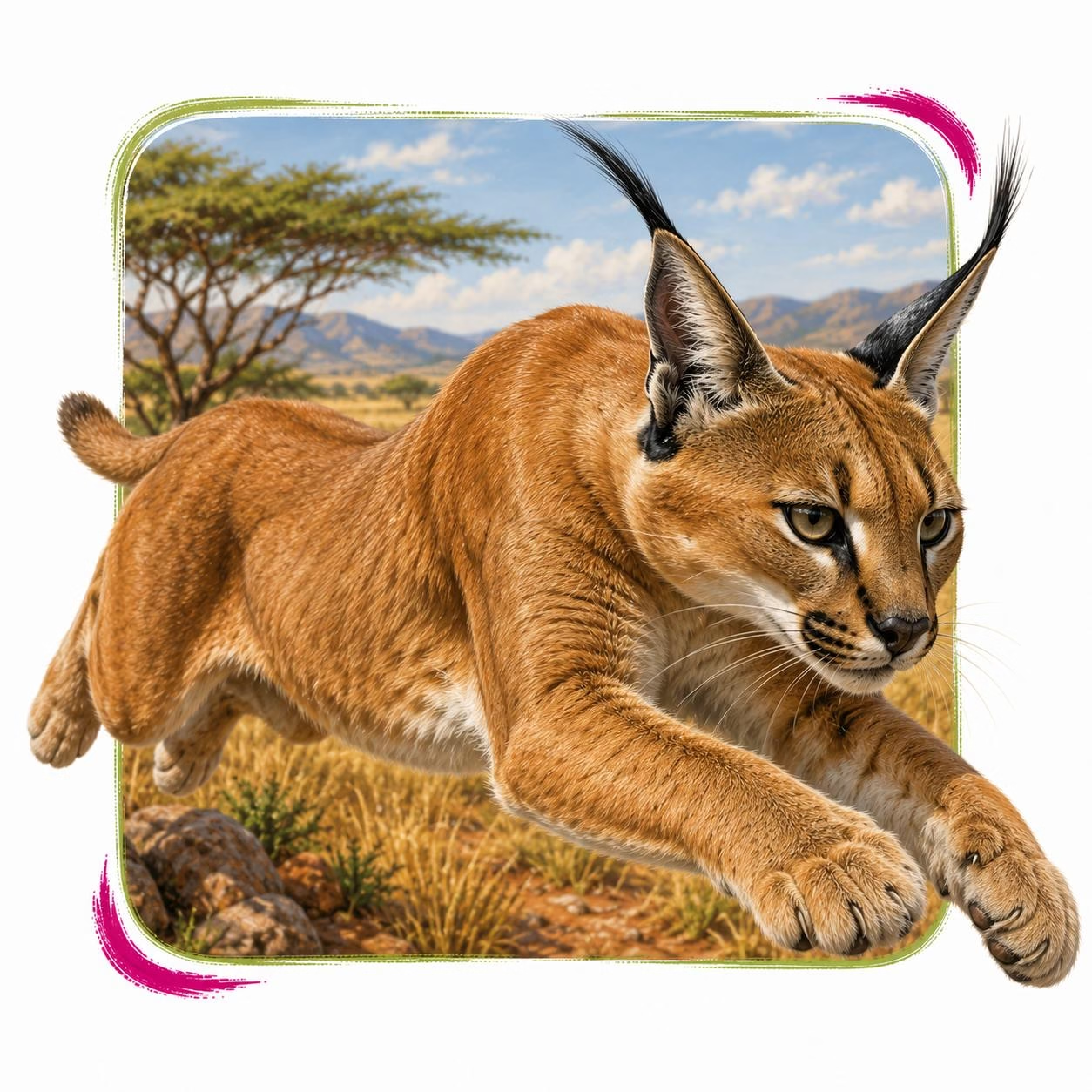
Caracal in its natural Savannas habitat