
Carolina Chickadee Facts for Kids
The Carolina chickadee, Poecile carolinensis, is a tiny black-capped songbird of the southeastern United States. It lives year-round in deciduous and mixed forests, wooded neighbourhoods, swamps, parks, and gardens. Carolina chickadees search bark and leaves for insects, visit feeders for seeds, hide food for later, nest inside tree cavities, and join mixed winter flocks. Along the northern edge of their range, they can hybridize with black-capped chickadees.
Quick Carolina Chickadee Facts
- Animal Type: Bird
- Group: Chickadee in the tit family, Paridae
- Known For: Black cap and bib, white cheeks, four-note song, acrobatic feeding, and food caching
- Habitat: Deciduous and mixed woodland, swamps, parks, gardens, and wooded suburbs
- Diet: Insects, spiders, caterpillars, seeds, berries, and feeder foods
What You’ll Learn
Explore 10 cheerful carolina chickadee facts for kids about calls, tiny bodies, food caching, nests, and southeastern woodlands, with a quiz, glossary, and activity
These simple facts are made for kids, parents, teachers, and curious young learners.
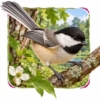
10 Fun Carolina Chickadee Facts for Kids
1. It Is a Tiny Southeastern Chickadee
Carolina chickadees live mainly in the southeastern and south-central United States. They are usually permanent residents, so the same wooded neighbourhood may hold them through summer heat and winter cold.
Kid Decode: This pocket-sized bird keeps a year-round address instead of packing for a long migration.
2. A Black Cap Frames White Cheeks
Adults have a black cap and throat bib, broad white cheeks, a gray back, pale underparts, and buffy sides. Males and females look so similar that plumage alone usually cannot separate them.
Kid Decode: The face wears a neat black-and-white mask no matter which adult is singing.
3. Its Song Often Has Four Notes
A common Carolina chickadee song is written as fee-bee fee-bay or similar four-note phrases. Songs vary by individual and place, and the bird also produces chick-a-dee calls, gargles, alarms, and contact notes.
Kid Decode: The tiny singer can fit a bright four-note whistle inside one breath-sized performance.
4. The Chick-a-dee Call Carries Information
Carolina chickadee calls contain different note types arranged in flexible sequences. Flockmates use these calls to maintain contact, coordinate movement, and react to possible danger.
Kid Decode: The flock’s name is also part of its portable information system.
5. They Can Hang Upside Down
Strong feet and agile bodies let Carolina chickadees cling sideways or upside down while inspecting twigs, leaves, cones, and bark. This acrobatics helps them reach insects and seeds hidden from less flexible birds.
Kid Decode: A twig becomes a ceiling, dining table, and gymnastics bar at the same time.
6. They Hide Food for Later
Carolina chickadees cache seeds and other small food items in bark cracks, leaf clusters, and similar hiding places. Spatial memory helps them return to at least some of these scattered stores.
Kid Decode: The bird turns the forest into thousands of tiny cupboards without drawing a map.
7. Insects Feed Growing Chicks
Adults eat both animal and plant foods, but insects, spiders, and especially caterpillars are vital during the breeding season. Parents carry many small prey items to nestlings developing inside the cavity.
Kid Decode: A chickadee chick grows on a rapid delivery service of caterpillars and other mini meals.
8. They Nest Inside Cavities
A pair uses a natural hole, old woodpecker cavity, nest box, or sometimes a chamber enlarged in soft rotten wood. The female builds a cup using moss, bark fibres, plant material, hair, and other soft lining.
Kid Decode: The nursery is a mossy cup hidden behind one small round doorway.
9. Winter Flocks Mix Several Species
Outside the breeding season, Carolina chickadees often travel with titmice, nuthatches, kinglets, woodpeckers, and other small birds. Mixed flocks can improve food finding and provide more eyes for spotting predators.
Kid Decode: The winter search party combines several bird species into one busy woodland crew.
10. They Hybridize With Black-capped Chickadees
Where Carolina and black-capped chickadee ranges meet, the two species can pair and produce hybrids. Identification becomes difficult in this contact zone because songs, calls, appearance, and ancestry may all be mixed.
Kid Decode: At the northern border, two chickadee family trees sometimes braid their branches together.
The Weirdest Carolina Chickadee Fact
A Carolina chickadee may look almost identical to a black-capped chickadee, imitate or mix parts of its sounds, and even carry ancestry from both species inside the moving hybrid zone.
Try This Carolina Chickadee Activity
Carolina Chickadee Woodland Activity
Draw a Carolina chickadee moving through a southeastern woodland. Add a black cap and bib, white cheeks, gray back, buff sides, one bird hanging upside down, a four-note song bubble, seeds tucked into bark, caterpillars, a mixed winter flock, and a tree cavity containing a moss-and-hair nest with chicks.
Quick Carolina Chickadee Quiz
- Where does the Carolina chickadee mainly live? Answer: The southeastern and south-central United States.
- What colours mark its head? Answer: A black cap and bib with white cheeks.
- What does it hide for later? Answer: Seeds and other small food items.
- Where does it build its nest? Answer: Inside a tree cavity or nest box.
- Which similar species can it hybridize with? Answer: The black-capped chickadee.
Mini Glossary
- Parid: A member of the tit and chickadee family, Paridae.
- Cache: To hide food for later use.
- Cavity Nester: A bird that raises its young inside a hole or enclosed chamber.
- Mixed-Species Flock: A travelling group containing more than one bird species.
- Hybrid: An offspring whose parents belong to two different species or distinct populations.
 Spotted Hyena Facts for Kids
 Flounder Facts for Kids
 Hornbill Facts for Kids
 Christmas Island Pipistrelle Facts for Kids
More Animal Facts for Kids
Visit the full animal facts library or explore a focused animal group.
More Extinct Animal Facts for Kids
Discover dinosaurs, Ice Age giants, prehistoric sea creatures, recently extinct species, and other animals from the past.
Fact check note: Fact checked with Cornell Lab of Ornithology’s All About Birds Carolina Chickadee life-history, identification, and sound resources, Cornell NestWatch guidance, Audubon bird accounts, and peer-reviewed research on chickadee vocal communication, food caching, winter flocks, and hybridization with black-capped chickadees.

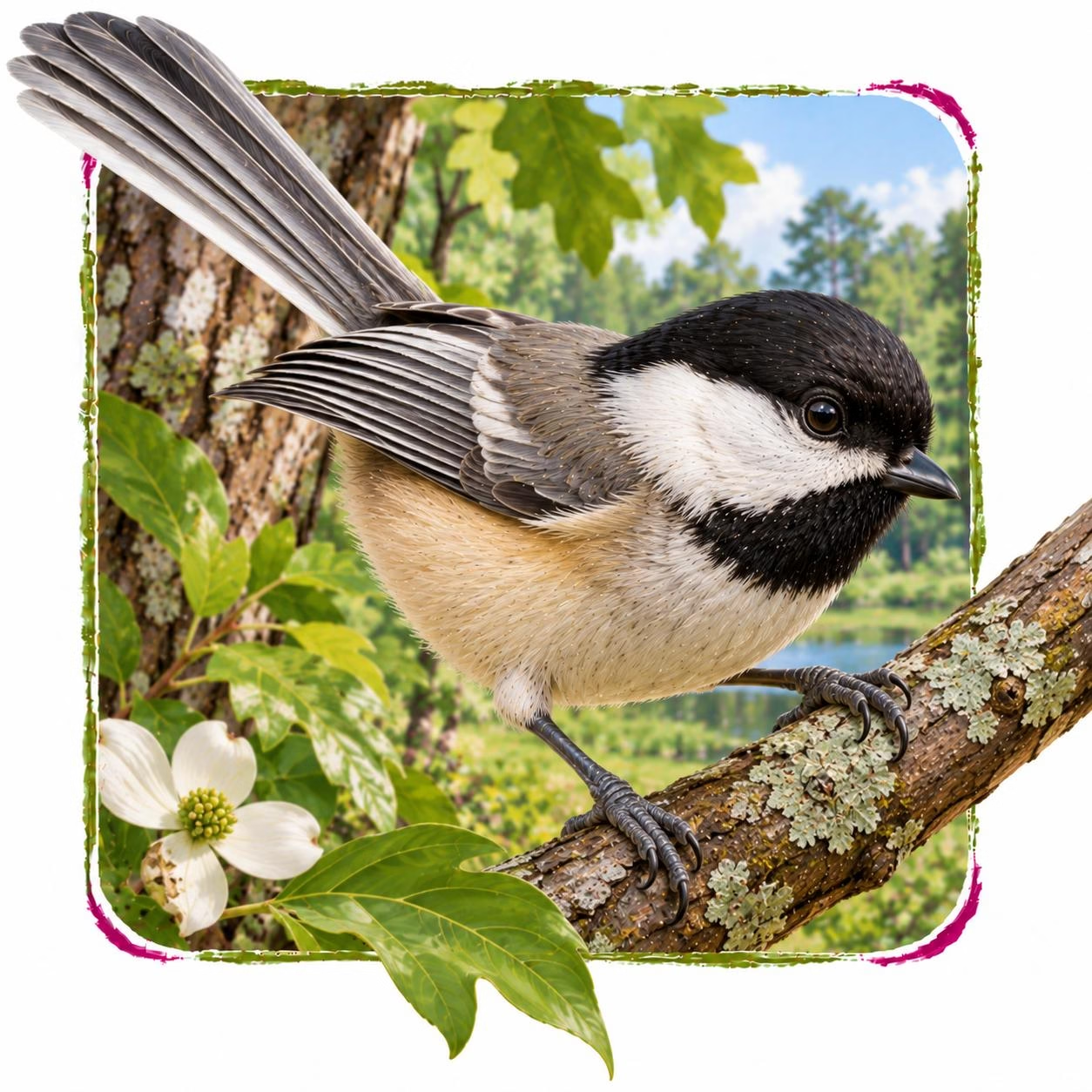
Carolina Chickadee in its natural Deciduous and mixed forests, wooded swamps, forest edges, parks, gardens, farms, and wooded suburbs across the southeastern and south-central United States habitat