
Carpenter Ant Facts for Kids
Carpenter ants are ants in the large genus Camponotus. They occur in many parts of the world and include species of different colours, sizes, habitats, and behaviours. They are famous for excavating smooth nest galleries inside dead, damp, or damaged wood, but they do not digest the wood like termites. Instead, workers carry the wood fragments away while the colony feeds on insects, sweet honeydew, plant liquids, and other available foods.
Quick Carpenter Ant Facts
- Animal Type: Insect
- Group: Ant genus Camponotus
- Known For: Excavating wood galleries, large queens, workers of different sizes, and nighttime foraging
- Habitat: Forests, woodlands, grasslands, deserts, trees, logs, stumps, soil, and buildings
- Diet: Insects, honeydew, nectar, plant juices, fruit, and human foods depending on species
What You’ll Learn
Learn 10 busy carpenter ant facts for kids about colonies, strong jaws, wood tunnels, workers, and communication, plus a quiz, glossary, and activity
Easy explanations make them fun for children, families, teachers, and budding insect experts.
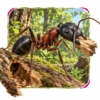
10 Fun Carpenter Ant Facts for Kids
1. They Do Not Eat Wood
Carpenter ants chew and remove wood to create nesting chambers and passageways. Their food comes from sugars and proteins rather than from the wood itself, unlike termites that depend on microbes to help digest cellulose.
Kid Decode: The ants are tunnel makers, not a miniature wood-eating dinner club.
2. They Prefer Wood That Is Easy to Excavate
Many species begin nests in damp, decaying, hollow, or previously damaged wood because it is easier to carve. Colonies may later extend galleries into sounder wood or use cavities that require little excavation.
Kid Decode: A soft rotten patch can become the first doorway into an expanding wooden city.
3. Their Galleries Are Smooth
Carpenter ants use their jaws to shave wood from the nest interior, producing relatively clean, smooth-walled tunnels that follow softer areas and grain. Termite galleries often contain soil or mud, which can help distinguish the damage.
Kid Decode: The colony sands its hallways with thousands of tiny jaw strokes.
4. Frass Can Spill From the Nest
Workers carry wood shavings, dead insects, empty pupal cases, and other debris out through openings. This mixed material is called frass and may collect in small piles beneath an active gallery.
Kid Decode: A little sawdust rubbish pile can reveal the hidden nest above it.
5. Colonies Have Queens and Workers
A fertilized queen starts or expands the reproductive heart of a colony, while wingless female workers forage, care for brood, defend the nest, and excavate galleries. Males mainly take part in mating flights.
Kid Decode: The queen runs the egg department while the workers operate nearly everything else.
6. Workers Can Come in Several Sizes
Within one carpenter ant species, workers may range from small minors to much larger majors. Their proportions and jobs can differ, although exact worker castes and behaviour vary among species.
Kid Decode: One colony can field pocket-sized workers and heavy-headed teammates under the same roof.
7. Winged Ants Start New Colonies
Mature colonies produce winged reproductive females and males called alates. During suitable weather they leave on mating flights, after which a fertilized female sheds her wings and searches for a protected place to begin a nest.
Kid Decode: The flying stage is the colony’s launch day for future queens and brand-new kingdoms.
8. They Follow Chemical Trails
Carpenter ants communicate with pheromones, touch, and vibrations. Workers can lay scent trails between the nest and food so nestmates can follow an invisible chemical road.
Kid Decode: A fragrant message turns bare ground into an ant motorway.
9. Honeydew Is a Favourite Sweet Food
Many carpenter ants collect honeydew, a sugary liquid produced by aphids and scale insects. They also hunt or scavenge insects, drink nectar and plant juices, and investigate sweet or protein-rich human foods.
Kid Decode: An aphid can become a tiny soft-drink dispenser for a visiting ant.
10. One Colony May Use Several Nests
A mature colony can occupy a main nest and one or more satellite nests connected by trails. Warm, dry satellite sites may hold older larvae, pupae, or workers, while the queen and eggs remain in a more humid core nest.
Kid Decode: The colony can spread across several wooden addresses while remaining one ant society.
The Weirdest Carpenter Ant Fact
A carpenter ant can hollow out a wooden nest large enough to damage a structure while gaining no nutrition from the wood it removes.
Try This Carpenter Ant Activity
Carpenter Ant Gallery Drawing Activity
Draw a cutaway log containing a carpenter ant colony. Add smooth galleries, a large queen with eggs, small and large workers, white larvae and pupae, winged alates near an exit, a trail leading to aphids and honeydew, and a frass pile containing wood shavings and insect remains beneath the nest.
Quick Carpenter Ant Quiz
- Do carpenter ants eat wood? Answer: No, they excavate it to make nests.
- What is the debris pushed from a nest called? Answer: Frass.
- What sweet liquid do many carpenter ants collect from aphids? Answer: Honeydew.
- What are winged reproductive ants called? Answer: Alates.
- How can workers guide nestmates to food? Answer: By laying pheromone scent trails.
Mini Glossary
- Gallery: A tunnel or chamber excavated inside a nesting material.
- Frass: Debris removed from an insect nest, which may include wood shavings and body remains.
- Alate: A winged reproductive ant or termite.
- Pheromone: A chemical signal used to communicate with other members of the same species.
- Satellite Nest: A secondary nest site connected to the main colony.
 Antelope Facts for Kids
 Sand Dollar Facts for Kids
 Deer Facts for Kids
 Seymouria Facts for Kids
More Animal Facts for Kids
Visit the full animal facts library or explore a focused animal group.
More Extinct Animal Facts for Kids
Discover dinosaurs, Ice Age giants, prehistoric sea creatures, recently extinct species, and other animals from the past.
Fact check note: Fact checked with University of Minnesota Extension’s carpenter-ant biology and identification resources, Penn State and other university extension guidance on Camponotus colonies and structural damage, AntWiki and taxonomic references for the genus, and entomological research on worker polymorphism, alates, pheromone trails, honeydew feeding, frass, and satellite nests.

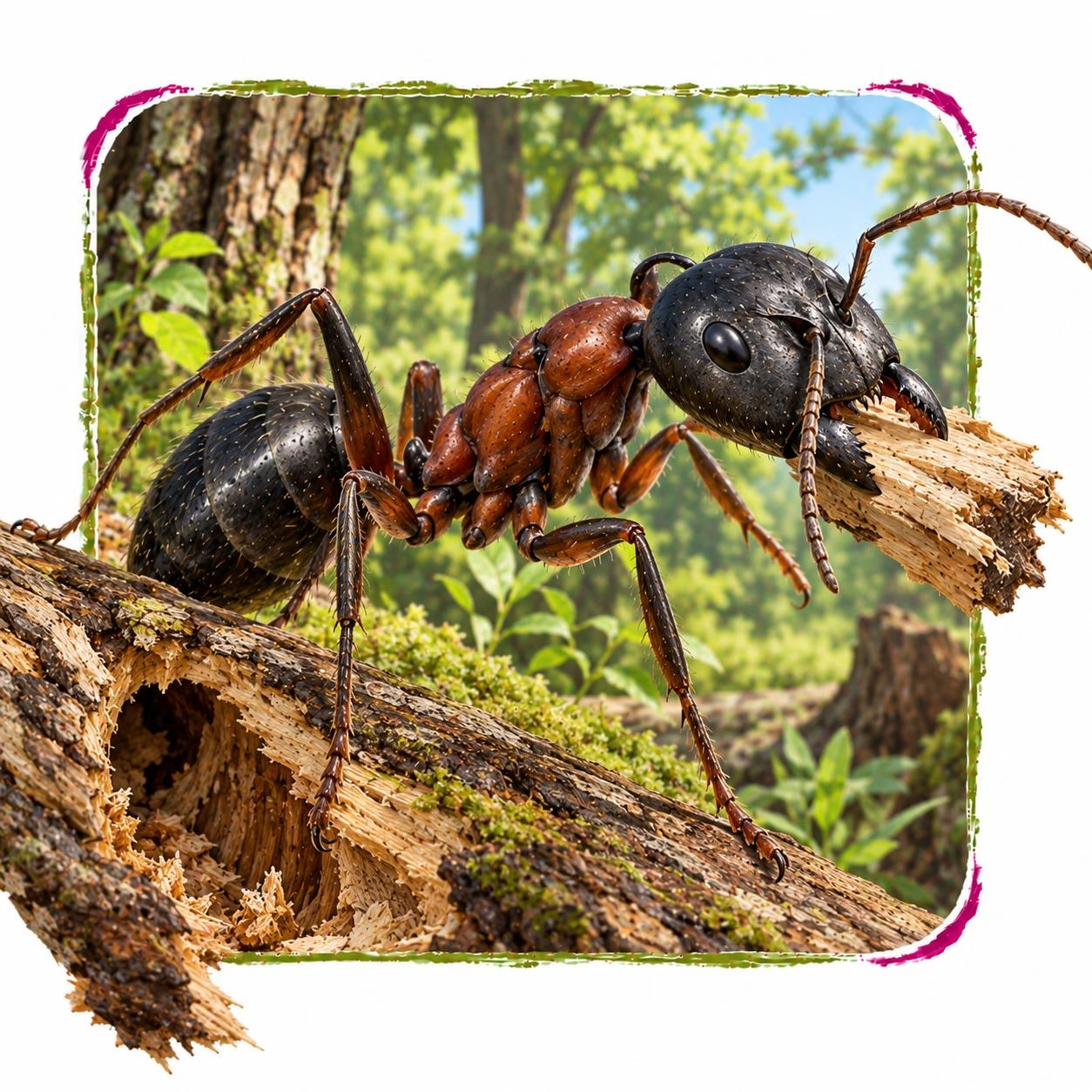
Carpenter Ant in its natural Forests, woodlands, grasslands, deserts, trees, logs, stumps, dead wood, soil cavities, and buildings across most warm and temperate regions of the world habitat