
Carrion Crow Facts for Kids
The carrion crow, Corvus corone, is an all-black member of the crow family found across much of western Europe and parts of Asia. Despite its name, it does not live only on carrion. It eats insects, worms, seeds, fruit, eggs, small animals, scraps, and dead animals. Carrion crows are adaptable problem solvers that use farmland, woodland edges, coasts, parks, and towns, usually living alone, in pairs, or in small family groups.
Quick Carrion Crow Facts
- Animal Type: Bird
- Group: Corvid in the crow and jay family
- Known For: Glossy black plumage, intelligence, flexible feeding, stick nests, and a harsh caw
- Habitat: Farmland, woodland edges, moorland, coasts, parks, villages, and towns
- Diet: Insects, worms, seeds, fruit, eggs, small animals, carrion, and scraps
What You’ll Learn
Discover 10 clever carrion crow facts for kids about intelligence, black feathers, calls, scavenging, and European habitats, with a quiz, glossary, and activity
These facts are explained simply for kids, parents, teachers, and curious little fact-finders.
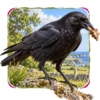
10 Fun Carrion Crow Facts for Kids
1. Its Feathers Are More Than Plain Black
Carrion crows appear entirely black from the bill to the feet, but fresh feathers can shine with purple, blue, green, or bronze tones in strong light. Worn feathers may look duller and browner.
Kid Decode: The crow wears a black coat with hidden oil-slick colours waiting for sunlight.
2. The Name Carrion Tells Only Part of the Menu
Carrion means dead animal flesh, and crows readily scavenge it, but they are broad omnivores. They also probe for worms, catch insects, eat grain and fruit, raid nests, and investigate human food.
Kid Decode: The name advertises one meal while the real menu fills an entire chalkboard.
3. They Learn From Changing Landscapes
Carrion crows quickly notice new food sources, safe feeding times, disturbed soil, rubbish, roadkill, and farming activity. Their flexible behaviour helps them live in both wild countryside and busy human landscapes.
Kid Decode: A clever crow reads a changing neighbourhood as if it were a daily puzzle sheet.
4. The Bill Is a Powerful Multipurpose Tool
The thick dark bill can probe soil, turn objects, tear food, carry sticks, and open softer shells or containers. Feet help pin items while the bill pulls pieces apart.
Kid Decode: One beak handles digging, gripping, tearing, carrying, and curious inspections.
5. They Are Usually Territorial Pairs
Breeding carrion crows commonly defend territories as pairs rather than nesting in the dense colonies built by rooks. Non-breeders and birds near rich food sources may still gather into flocks.
Kid Decode: The usual home is a guarded pair-sized kingdom, not a crowded rook apartment block.
6. They Build Large Stick Nests
A pair constructs a bulky cup of twigs, roots, mud, bark, wool, hair, and softer lining, usually high in a tree or sometimes on a cliff or structure. Nests may be repaired or rebuilt in later seasons.
Kid Decode: The nursery begins as a rough basket and ends with a softer hidden centre.
7. Both Parents Feed the Chicks
The female performs most or all incubation in many populations while the male brings food, and both parents feed the growing chicks after hatching. Young crows remain dependent for weeks after leaving the nest.
Kid Decode: Leaving the nest does not end the crow family meal-delivery service.
8. They Mob Dangerous Animals
Carrion crows may gather to scold and swoop at owls, hawks, foxes, cats, and other possible threats. Loud calls recruit neighbours and help reveal where a hidden predator is sitting.
Kid Decode: One alarmed crow can turn a secret predator into the centre of a noisy committee meeting.
9. They Hide Food for Later
Carrion crows cache surplus food in soil, vegetation, roof spaces, or other concealed places. Memory helps them return, while watching competitors may encourage them to choose a new hiding spot.
Kid Decode: The landscape becomes a cupboard whose doors are made from mud, grass, and memory.
10. They Hybridize With Hooded Crows
Where the ranges of black carrion crows and gray-and-black hooded crows meet, the two can pair and produce fertile hybrids with mixed plumage. Many authorities treat them as separate species, but classification has changed repeatedly.
Kid Decode: At the contact zone, two sharply dressed crow styles can blend into patchwork offspring.
The Weirdest Carrion Crow Fact
Carrion and hooded crows look dramatically different, yet much of their genomes is extremely similar; a small set of strongly selected genetic regions helps produce their contrasting plumage.
Try This Carrion Crow Activity
Carrion Crow Intelligence Drawing Activity
Draw a glossy black carrion crow beside farmland and woodland. Add purple-green feather shine, a strong bill turning a leaf for worms, hidden food caches, a large lined stick nest with chicks, several crows mobbing an owl, and a small hybrid-zone panel comparing an all-black carrion crow, a gray-and-black hooded crow, and a patchy hybrid.
Quick Carrion Crow Quiz
- What colour is a carrion crow? Answer: It is black, often with purple, blue, green, or bronze gloss.
- Does it eat only carrion? Answer: No, it is an omnivore with a very varied diet.
- What does a pair use to build its nest? Answer: Sticks with mud, roots, bark, hair, wool, and softer lining.
- Why do crows mob a predator? Answer: To warn others, reveal it, and sometimes drive it away.
- Which closely related crow can hybridize with it? Answer: The hooded crow.
Mini Glossary
- Corvid: A member of the intelligent bird family containing crows, ravens, jays, and magpies.
- Carrion: The body or flesh of a dead animal.
- Omnivore: An animal that eats both plant and animal food.
- Cache: To hide food for later use.
- Hybrid: An offspring produced by parents from two different species or distinct populations.
 Brown Bear Facts for Kids
 Halibut Facts for Kids
 Lobster Facts for Kids
 Megantereon Facts for Kids
More Animal Facts for Kids
Visit the full animal facts library or explore a focused animal group.
More Extinct Animal Facts for Kids
Discover dinosaurs, Ice Age giants, prehistoric sea creatures, recently extinct species, and other animals from the past.
Fact check note: Fact checked with the RSPB’s Carrion Crow account, BirdLife International’s Corvus corone species factsheet and European Red List, British Birds’ review of carrion-and-hooded-crow taxonomy, and genomic research on plumage divergence and hybrid zones.

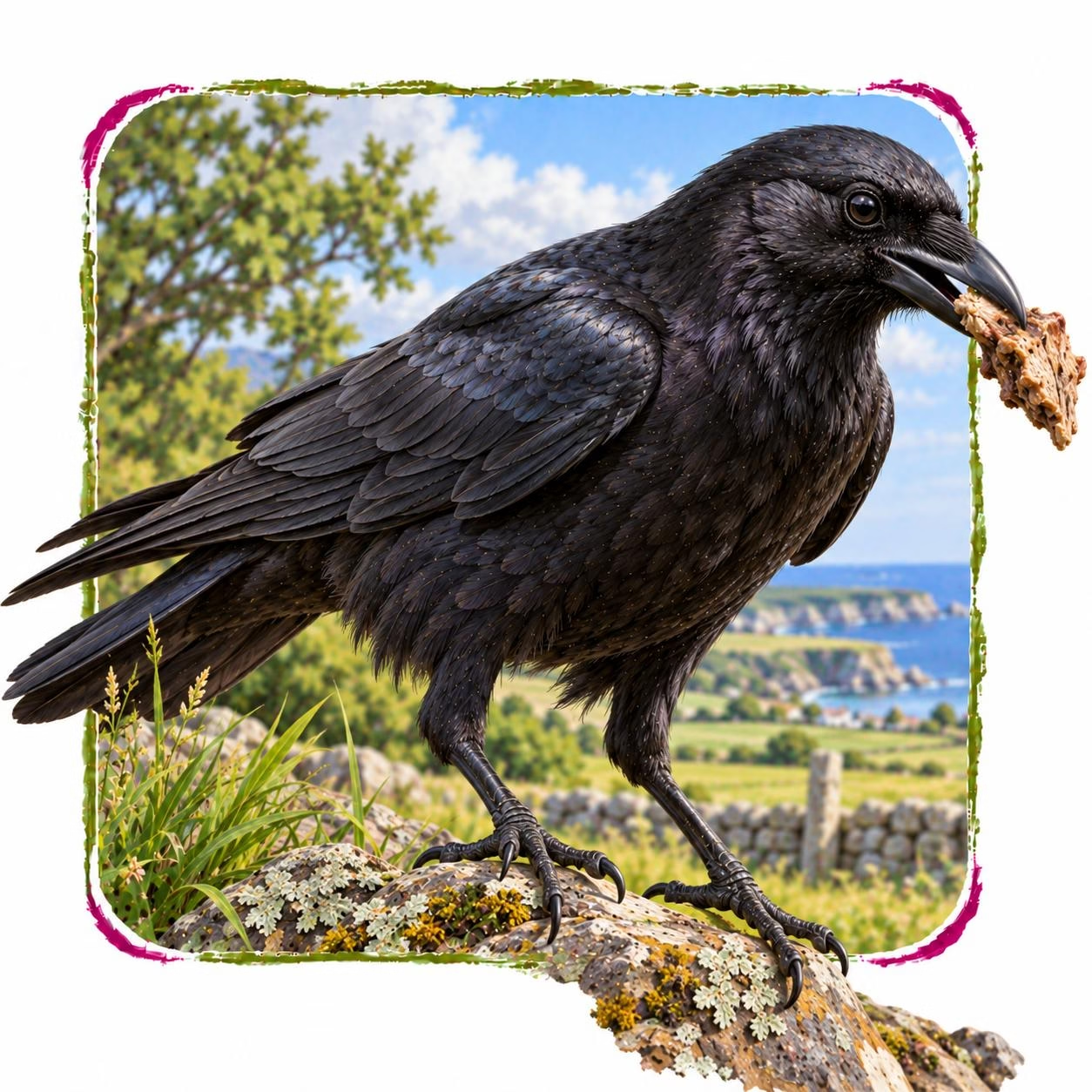
Carrion Crow in its natural Farmland, woodland edges, open forests, moorland, grassland, coasts, cliffs, parks, villages, and towns across western Europe and parts of Asia habitat