
Caterpillar Facts for Kids
A caterpillar is the larval stage of a butterfly or moth, an insect in the order Lepidoptera. Caterpillars hatch from eggs, spend much of their time eating and growing, shed their skins through a series of stages called instars, and eventually become pupae. Inside the pupal stage, the body is reorganised into an adult butterfly or moth. Caterpillars vary enormously in colour, size, diet, habitat, hairiness, camouflage, and defence, so this page describes the group without pretending every species follows one exact design.
Quick Caterpillar Facts
- Animal Type: Insect larva
- Group: Larval butterflies and moths in the order Lepidoptera
- Known For: Rapid growth, chewing mouthparts, prolegs, silk, moulting, and complete metamorphosis
- Habitat: Plants, soil, leaf litter, wood, stored materials, freshwater edges, and many other habitats worldwide
- Diet: Mostly leaves and other plant material, with specialised exceptions
What You’ll Learn
Explore 10 amazing caterpillar facts for kids about tiny eggs, growing bodies, molting, camouflage, and becoming butterflies or moths, plus a quiz, glossary, and activity
Clear explanations make these facts great for children, families, teachers, and young explorers.
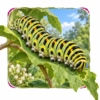
10 Fun Caterpillar Facts for Kids
1. A Caterpillar Is a Young Butterfly or Moth
True caterpillars are the larval stage of insects in Lepidoptera. Sawfly larvae and several other insects can look caterpillar-like, but they belong to different groups and have different leg arrangements.
Kid Decode: The wiggly leaf eater is not a separate animal; it is an unfinished butterfly or moth.
2. It Has Six True Legs
Three pairs of jointed true legs sit on the thorax just behind the head. These are the same basic legs that remain in the adult, although they become reshaped during metamorphosis.
Kid Decode: The future butterfly’s six adult legs begin as a tiny front-row set on the caterpillar.
3. Prolegs Are Temporary Gripping Feet
Most caterpillars also have fleshy abdominal prolegs, usually no more than five pairs. Many prolegs carry rings of microscopic hooks called crochets that grip leaves, bark, and silk.
Kid Decode: Soft belly feet wear invisible grappling hooks for climbing the salad.
4. They See With Simple Eyes
Most caterpillars have clusters of small simple eyes called stemmata on each side of the head. These detect light and nearby shapes but do not provide the detailed vision of an adult butterfly’s compound eyes.
Kid Decode: The caterpillar sees a simpler world before receiving its adult mosaic windows.
5. They Breathe Through Spiracles
Small openings called spiracles run along the sides of the thorax and abdomen. Air travels through branching tubes called tracheae directly toward body tissues rather than being carried by lungs.
Kid Decode: A row of tiny side doors delivers air through an internal tube network.
6. Growing Requires Several Molts
A caterpillar’s outer skeleton cannot stretch forever. It sheds the old covering, expands, and enters a new growth stage called an instar, repeating this process several times before pupation.
Kid Decode: Whenever the body outgrows its suit, the caterpillar wriggles into the next size.
7. Silk Comes From a Spinneret
Silk glands produce liquid proteins that emerge through a spinneret near the mouth and harden into threads. Caterpillars use silk for safety lines, shelters, resting mats, leaf rolls, or cocoons depending on species.
Kid Decode: The mouth area contains a thread nozzle capable of building ropes, tents, and sleeping bags.
8. Most Eat Plants but Not All
Leaves are the best-known caterpillar food, and many species specialise on particular host plants. Others feed on flowers, seeds, wood, fungi, wool, wax, scale insects, or even other caterpillars.
Kid Decode: The group is mostly vegetarian, but a few members throw the menu out of the window.
9. Their Defences Form a Costume Department
Caterpillars may hide as twigs, leaves, bird droppings, or snakes; display warning colours; store plant toxins; release smells; thrash; or carry irritating hairs and spines. A strange appearance should be observed without touching.
Kid Decode: Every disguise box seems available: twig, leaf, snake, warning flag, or prickly brush.
10. The Pupa Rebuilds the Body
After its final larval molt, a caterpillar forms a pupa, called a chrysalis in butterflies and often enclosed in a cocoon in many moths. Larval tissues are remodelled while adult wings, antennae, legs, eyes, and reproductive organs develop.
Kid Decode: The crawling eating machine enters one case and exits with wings, antennae, and a new job.
The Weirdest Caterpillar Fact
A caterpillar’s temporary prolegs disappear during metamorphosis, while the adult emerges with six reshaped true legs and wings that were never visible on the outside of the larva.
Try This Caterpillar Activity
Caterpillar Anatomy and Metamorphosis Activity
Draw a large caterpillar on its host plant. Label the head, three pairs of true legs, up to five pairs of prolegs, tiny crochets, spiracles, simple eyes, chewing jaws, and spinneret. Beside it, draw several growing instars, a shed skin, silk threads, a pupa, and the adult butterfly or moth that emerges.
Quick Caterpillar Quiz
- What adult insects begin life as caterpillars? Answer: Butterflies and moths.
- How many true legs does a caterpillar have? Answer: Six.
- What are the temporary fleshy gripping legs called? Answer: Prolegs.
- How does a caterpillar breathe? Answer: Through spiracles connected to air tubes.
- What stage comes after the caterpillar? Answer: The pupa.
Mini Glossary
- Larva: A young stage that looks and lives differently from the adult.
- Proleg: A temporary fleshy abdominal limb used for gripping.
- Crochet: A microscopic hook on a caterpillar’s proleg.
- Instar: One growth stage between two molts.
- Metamorphosis: A major change in body form during an animal’s life cycle.
 Badger Facts for Kids
 Toucan Facts for Kids
 Bongo Facts for Kids
 Tylosaurus Facts for Kids
More Animal Facts for Kids
Visit the full animal facts library or explore a focused animal group.
More Extinct Animal Facts for Kids
Discover dinosaurs, Ice Age giants, prehistoric sea creatures, recently extinct species, and other animals from the past.
Fact check note: Fact checked with the American Museum of Natural History’s butterfly life-cycle resource, Smithsonian entomological references, university extension descriptions of caterpillar anatomy, Monarch Joint Venture life-cycle resources, and entomological research on prolegs, crochets, silk, moulting, diet, defence, and complete metamorphosis.

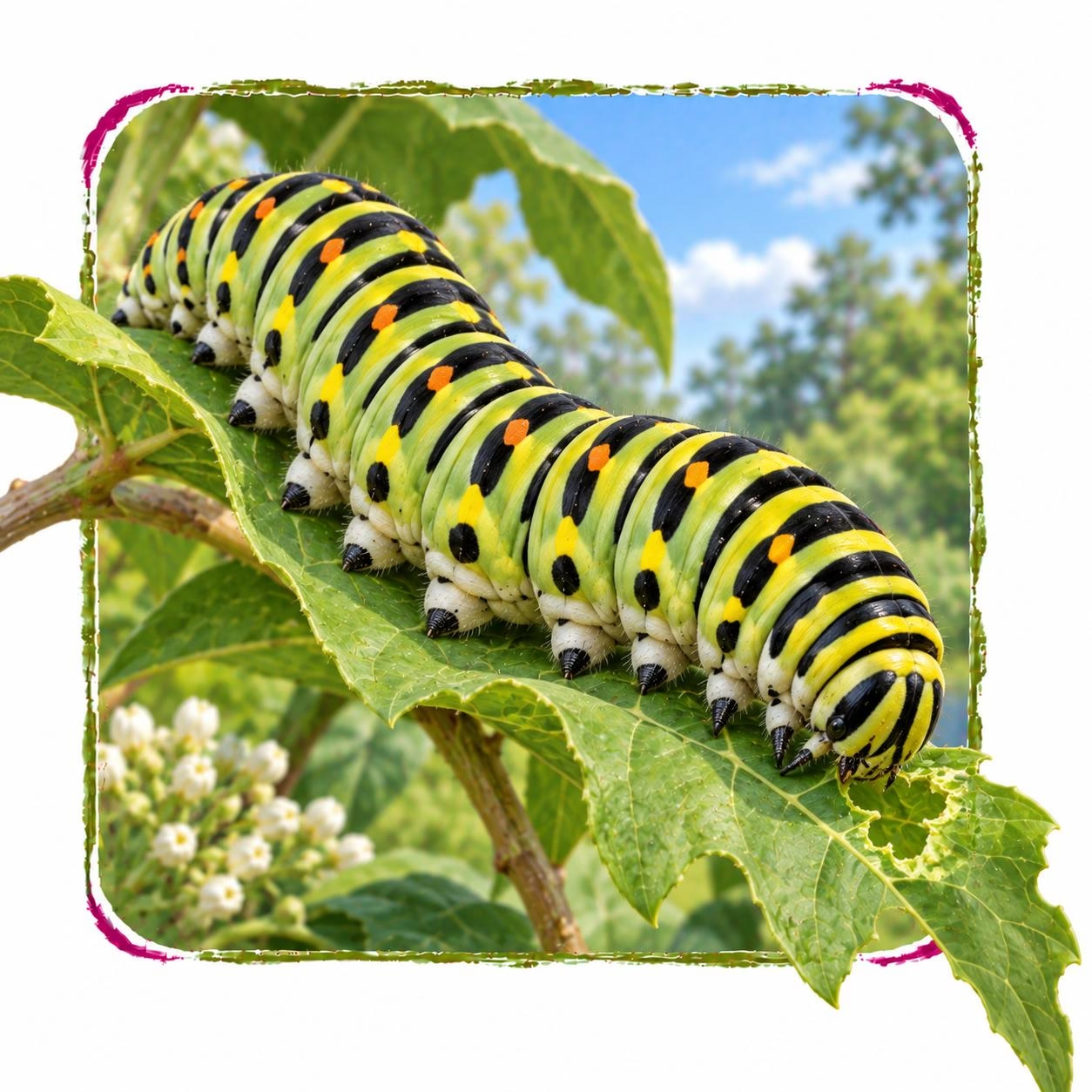
Caterpillar in its natural Leaves, stems, flowers, soil, leaf litter, wood, bark, freshwater vegetation, stored materials, and many other terrestrial habitats worldwide habitat