
Chevrotain Facts for Kids
Chevrotains are small hoofed mammals in the family Tragulidae. They are often called mouse-deer, but they are neither mice nor true deer. About ten living species occur in tropical forests of South and Southeast Asia, with one species, the water chevrotain, living in central and western Africa. Chevrotains belong to an early branch of the ruminant family tree and combine delicate legs, rounded bodies, large eyes, scent-marking glands, and surprisingly long canine teeth in males.
Quick Chevrotain Facts
- Animal Type: Mammal
- Group: Family Tragulidae, an early branch of living ruminants
- Known For: Tiny hoofed bodies, tusk-like canines, secretive forest life, and the nickname mouse-deer
- Habitat: Tropical forests, dense undergrowth, riverbanks, mangroves, and rocky woodland
- Diet: Leaves, shoots, fruit, seeds, flowers, fungi, and occasional small animal food depending on species
What You’ll Learn
Discover 10 tiny chevrotain facts for kids about small size, forest hiding, delicate legs, plant diets, and rainforest habitats, plus a quiz, glossary, and activity
Simple explanations make them useful for children, families, teachers, and little fact-hunters.
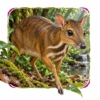
10 Fun Chevrotain Facts for Kids
1. They Are Not Mice or True Deer
The name mouse-deer describes their small size and deer-like shape, but chevrotains belong to their own family, Tragulidae. They are closer to other even-toed hoofed mammals than to rodents.
Kid Decode: The nickname is a zoological mash-up, while the family tree gives them a branch of their own.
2. There Are About Ten Living Species
Modern classifications generally recognise about ten species in three genera: Tragulus, Moschiola, and Hyemoschus. Most live in Asia, while the water chevrotain is the only living African member.
Kid Decode: The family reunion is mostly Asian, with one water-loving cousin representing Africa.
3. They Are Among the Smallest Hoofed Mammals
Several mouse-deer species weigh only a few kilograms, although the African water chevrotain is considerably larger. Their slim legs and compact bodies help them slip through dense vegetation.
Kid Decode: A chevrotain squeezes a full hoofed-mammal body plan into forest-floor proportions.
4. They Have No Antlers or Horns
Unlike true deer and many antelopes, chevrotains do not grow antlers or horns. Adult males instead develop elongated upper canine teeth that project downward like small tusks.
Kid Decode: The head skips the antlers and equips the mouth with two tiny ivory daggers.
5. Four Toes Touch Each Foot
Chevrotains have four toes on each foot, although the two central toes carry most of the weight. Their small hooves support careful movement over leaf litter, roots, mud, and rocks.
Kid Decode: Four little toe tips help the forest walker negotiate a floor full of natural obstacles.
6. They Are Early-Branching Ruminants
Chevrotains chew cud and use a multi-chambered stomach to process plant food. Their digestive anatomy differs from that of cattle and deer and preserves features associated with an early branch of ruminant evolution.
Kid Decode: Dinner returns for another chewing session inside one of the oldest living ruminant designs.
7. Most Are Secretive and Active After Dark
Many species hide in thick cover during daylight and forage from dusk through the night. Large eyes, sensitive hearing, scent marks, and quiet movement help them navigate shadowy habitats.
Kid Decode: The tiny hoofed mammal waits for the forest lights to dim before opening its evening route.
8. Some Escape Into Water
The African water chevrotain and several Asian species enter streams or ponds when threatened. Water can hide scent and movement, although not every chevrotain spends the same amount of time near or inside it.
Kid Decode: A sudden splash can turn a forest pursuit into an underwater disappearing act.
9. Young Begin Life Well Developed
Females usually give birth to one small young, though reproduction varies among species. Newborn chevrotains can stand and move soon after birth and often remain concealed while the mother feeds nearby.
Kid Decode: The calf arrives tiny but already equipped for its first careful forest steps.
10. People Rarely See Their Full Lives
Chevrotains are difficult to study because they are small, quiet, nocturnal, and hidden by dense vegetation. Camera traps, genetic studies, museum specimens, and patient fieldwork continue to improve knowledge of their ranges and species boundaries.
Kid Decode: The forest keeps much of the mouse-deer story folded beneath leaves and darkness.
The Weirdest Chevrotain Fact
Male chevrotains have no antlers, yet their elongated upper canine teeth can extend below the lip and be used during displays or fights.
Try This Chevrotain Activity
Chevrotain Forest-Floor Drawing Activity
Draw three different chevrotains in dense tropical forest: a tiny Asian mouse-deer, a spotted Moschiola chevrotain, and a larger African water chevrotain beside a stream. Add four-toed feet, large eyes, no antlers, tusk-like male canines, fruit and leaves, a hidden young, scent-marking clues, and a camera trap.
Quick Chevrotain Quiz
- Are chevrotains true deer? Answer: No, they belong to the separate family Tragulidae.
- Where do most living species occur? Answer: South and Southeast Asia.
- What replaces antlers as a male weapon? Answer: Long upper canine teeth.
- What does chewing cud mean? Answer: Bringing partly digested food back to the mouth and chewing it again.
- Why are chevrotains hard to study? Answer: They are small, secretive, mostly nocturnal, and live in dense cover.
Mini Glossary
- Tragulid: A member of the chevrotain family, Tragulidae.
- Ungulate: A hoofed mammal.
- Ruminant: A plant eater that regurgitates and rechews partly digested food.
- Canine: A pointed tooth that can become tusk-like in male chevrotains.
- Camera Trap: A motion-triggered camera used to record shy wildlife.

 Plover Facts for Kids
 Salmon Facts for Kids
 Scallop Facts for Kids
 Beelzebufo Facts for Kids
More Animal Facts for Kids
Visit the full animal facts library or explore a focused animal group.
More Extinct Animal Facts for Kids
Discover dinosaurs, Ice Age giants, prehistoric sea creatures, recently extinct species, and other animals from the past.
Fact check note: Fact checked with Animal Diversity Web’s Tragulidae family account, the Mammal Diversity Database’s current Tragulidae taxonomy, Groves and Meijaard’s chevrotain revisions, and comparative research on tragulid anatomy, rumination, diet, activity, reproduction, and water-escape behaviour.

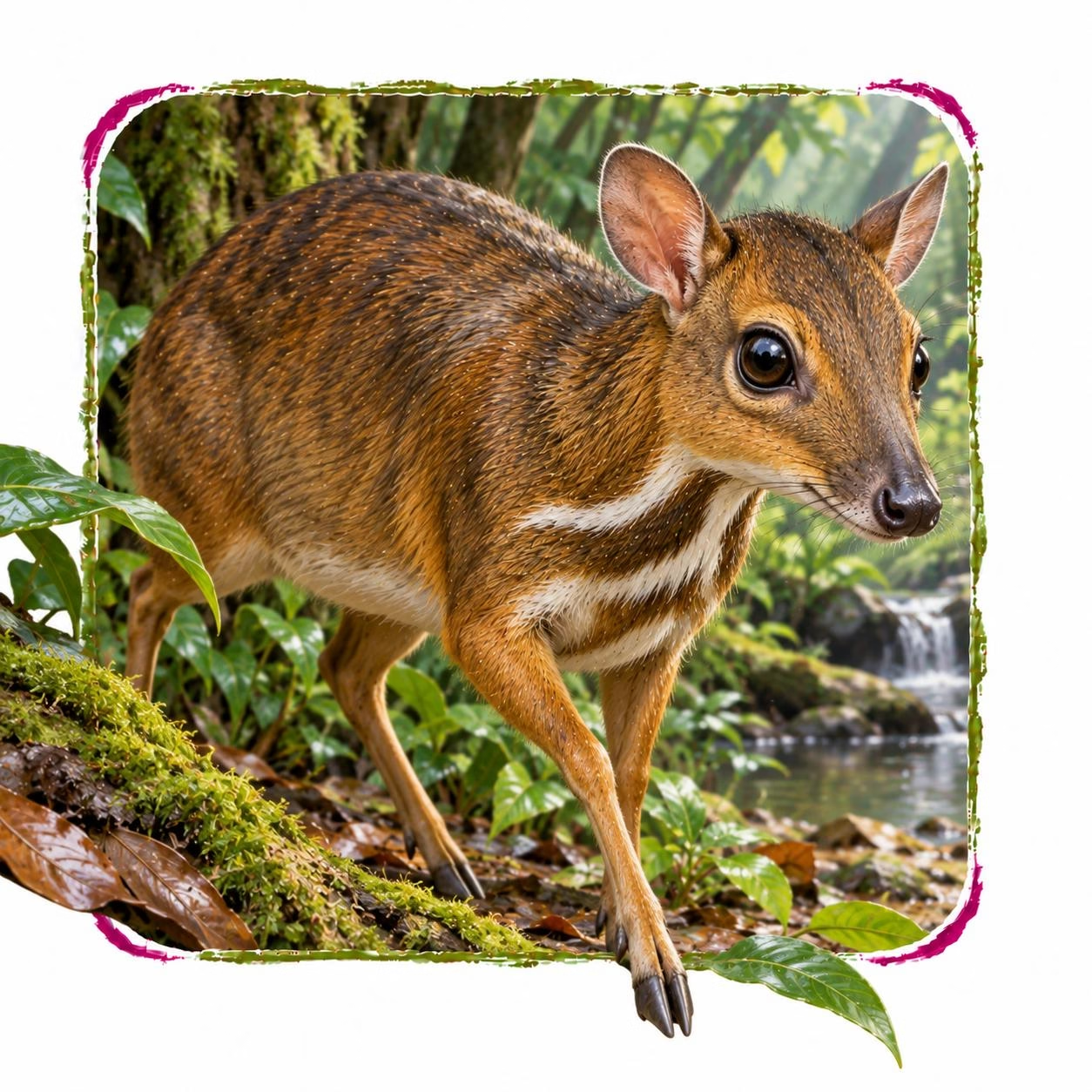
Chevrotain in its natural Tropical rainforests, monsoon forests, dense undergrowth, riverbanks, mangroves, rocky woodland, and forest-floor habitats across South and Southeast Asia and central and western Africa habitat