
Chinkara Facts for Kids
The chinkara, Gazella bennettii, is a small gazelle of dry landscapes from Iran and Afghanistan through Pakistan to India. It is also called the Indian gazelle. A sandy coat, dark-and-white facial stripes, slim legs, and ringed horns help identify it, while flexible feeding and an ability to obtain much of its moisture from plants allow it to survive deserts, scrub, rocky hills, and open dry woodland. Chinkara are often solitary or found in small groups rather than huge herds.
Quick Chinkara Facts
- Animal Type: Mammal
- Group: Gazelle in the bovid family
- Known For: Sandy camouflage, ringed horns, swift bounding, dry-country survival, and small social groups
- Habitat: Deserts, arid plains, scrub, rocky hills, grassland, and open dry woodland
- Diet: Grasses, leaves, shoots, herbs, pods, fruit, flowers, and crops
What You’ll Learn
Explore 10 speedy chinkara facts for kids about slender legs, horns, desert survival, grazing, and South Asian habitats, with a quiz, glossary, and activity
These facts use simple language for kids, parents, teachers, and curious young learners.
10 Fun Chinkara Facts for Kids
1. It Is Also Called the Indian Gazelle
Chinkara is the best-known local common name, while Indian gazelle is widely used in English. Its range extends beyond India into Pakistan, Afghanistan, and Iran.
Kid Decode: The Indian gazelle carries a regional nickname across a map larger than India itself.
2. Its Coat Matches Dry Ground
The upper body is sandy, buff, or reddish brown, while the belly is white. Dark facial stripes bordered by paler bands help distinguish the face, and coat shade can change with season and region.
Kid Decode: The desert gazelle wears the colours of sun-baked soil, pale grass, and sharp shadow.
3. Males Usually Carry Longer Horns
Male chinkara have long, nearly straight, ringed horns that angle slightly outward or backward. Female horns are usually shorter and slimmer and may be very small or absent in some populations.
Kid Decode: The buck brings the tall ridged spears, while the doe may wear a shorter, quieter version.
4. They Can Live Far From Permanent Water
Chinkara obtain much of their moisture from leaves, grasses, fruit, dew, and other plant food. They will drink when water is available, but many can survive long periods without visiting a permanent water source.
Kid Decode: The desert menu arrives with part of the water already packed inside it.
5. They Feed During Cooler Hours
Many chinkara are most active around dawn, dusk, and night, especially in hot or disturbed landscapes. They rest in shade or sheltered ground during the hottest parts of the day.
Kid Decode: The gazelle moves its breakfast and dinner away from the desert’s fiercest oven setting.
6. They Are Usually Alone or in Small Groups
Chinkara commonly occur alone, in pairs, or in small family groups, though larger temporary gatherings can form around good food. Social behaviour changes with season, habitat, and breeding activity.
Kid Decode: The usual gathering is a small desert meeting rather than a horizon-filling herd.
7. Swift Leaps Help Them Escape
Long slender legs support fast running, sharp turns, and high bounding jumps. Like other gazelles, chinkara may stiff-leg leap when alarmed, possibly signalling that they have detected a predator and are difficult to catch.
Kid Decode: One spring-loaded leap can announce that the chase has already become a bad bargain.
8. Males Mark and Defend Areas
Breeding males use dung, urine, scent glands, horn rubbing, and displays to advertise or defend territories. Boundaries and mating behaviour vary among populations and seasons.
Kid Decode: The desert noticeboard is written in scent marks, hoof scrapes, and carefully placed droppings.
9. Calves Hide Before Following
After a pregnancy of roughly five to six months, a female usually gives birth to one calf, though twins can occur. The newborn may lie concealed before becoming strong enough to follow its mother.
Kid Decode: The first desert lesson is stillness, camouflage, and waiting for mother to return.
10. Global Status Hides Local Declines
The chinkara is currently assessed globally as Least Concern, but hunting, habitat conversion, roads, fencing, livestock pressure, and disturbance have reduced or fragmented some regional populations, especially outside well-protected areas.
Kid Decode: A reassuring global label can still contain several local warning lights.
The Weirdest Chinkara Fact
A chinkara can live in landscapes with no nearby permanent water because leaves, fruit, dew, and other plant foods may provide much of the moisture it needs.
Try This Chinkara Activity
Chinkara Desert-Survival Drawing Activity
Draw a chinkara family in the Thar Desert or dry Pakistani scrub. Add a male with long ringed horns, a female with shorter horns, one hidden calf, sandy coats, dark-and-white face stripes, broad desert plants containing moisture, a dawn sky, a stotting leap, scent marks, rocky hills, and no permanent pool nearby.
Quick Chinkara Quiz
- What other name is used for the chinkara? Answer: Indian gazelle.
- Where does it live? Answer: Dry regions from Iran and Afghanistan through Pakistan to India.
- Which sex usually has longer horns? Answer: Males.
- How can it survive far from permanent water? Answer: It obtains much of its moisture from plants and dew.
- Does Least Concern mean every local population is safe? Answer: No, some regional populations have declined or become fragmented.
Mini Glossary
- Gazelle: A small, swift antelope from the genus Gazella or a closely related group.
- Crepuscular: Most active around dawn and dusk.
- Territory: An area defended against other animals of the same species.
- Stotting: A stiff-legged bounding leap performed by some hoofed mammals.
- Fragmentation: The division of one habitat into smaller disconnected pieces.

 Dolphin Facts for Kids
 Hooded Crow Facts for Kids
 Parrotfish Facts for Kids
 Concavenator Facts for Kids
More Animal Facts for Kids
Visit the full animal facts library or explore a focused animal group.
More Extinct Animal Facts for Kids
Discover dinosaurs, Ice Age giants, prehistoric sea creatures, recently extinct species, and other animals from the past.
Fact check note: Fact checked with the IUCN Red List assessment for Gazella bennettii, the CMS Central Asian Mammals Initiative species account, Punjab Wildlife and Parks Department material, Animal Diversity Web’s Indian gazelle account, and recent genetic research on the Gazella bennettii complex.

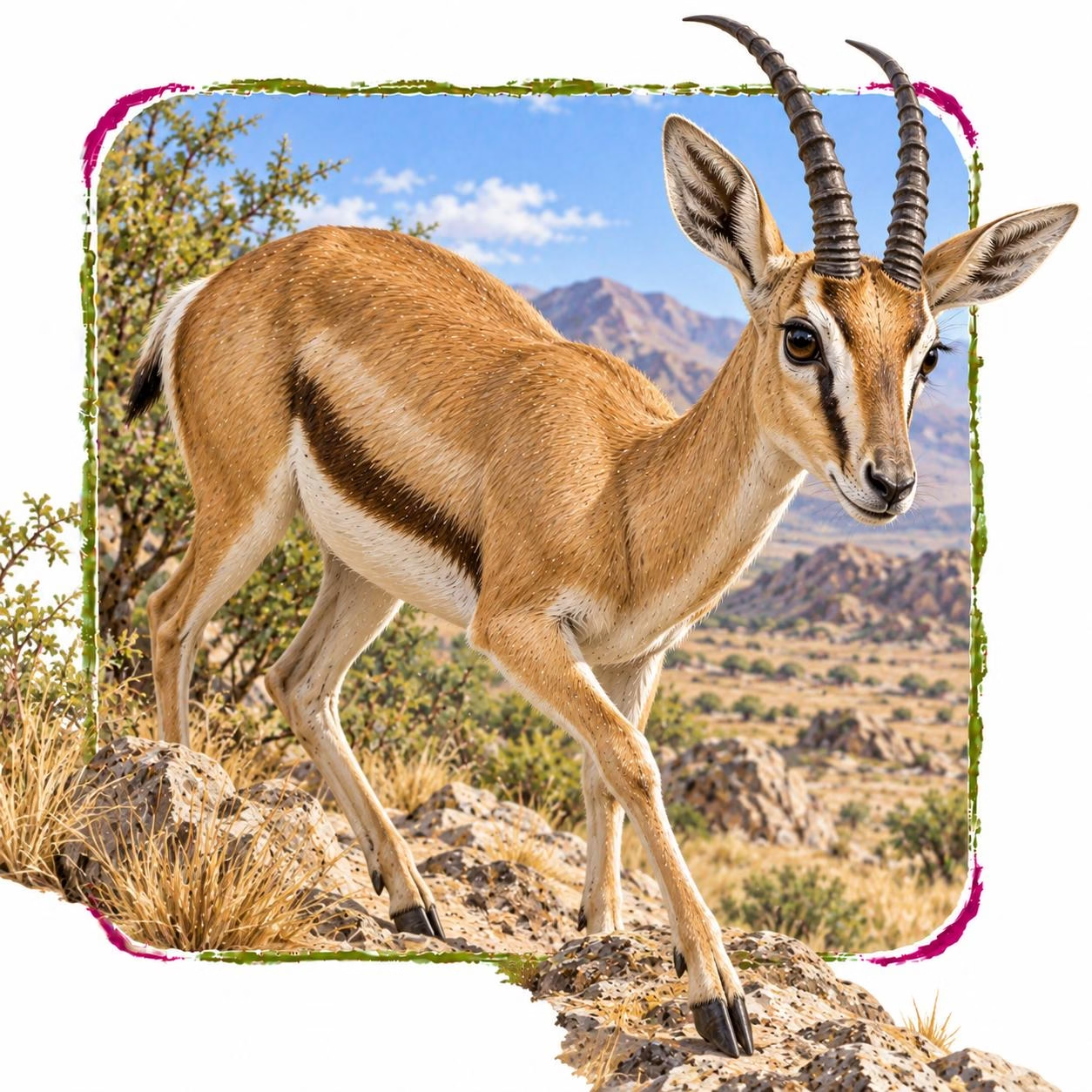
Chinkara in its natural Deserts, arid plains, semi-desert, dry scrub, rocky hills, grasslands, open dry forests, and cultivated edges from Iran and Afghanistan through Pakistan to India habitat