
Chipping Sparrow Facts for Kids
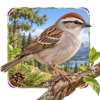
The Chipping Sparrow, Spizella passerina, is a small North American songbird of open woodland, forest edges, parks, gardens, and conifer groves. Breeding adults wear a bright rusty crown, white eyebrow, and sharp black eye line, but winter birds become browner and less boldly marked. Males sing a rapid dry trill from exposed branches, while flocks hop across the ground for seeds. Northern populations migrate south, and southern populations may remain closer to their breeding areas.
Quick Chipping Sparrow Facts
- Animal Type: Bird
- Group: New World sparrow in the family Passerellidae
- Known For: Rusty breeding cap, black eye line, rapid trill, ground feeding, and hair-lined nests
- Habitat: Open woodland, conifer groves, forest edges, parks, gardens, farms, and brushy clearings
- Diet: Grass and weed seeds, grains, insects, spiders, and other small invertebrates
What You’ll Learn
Learn 10 lively chipping sparrow facts for kids about songs, rusty caps, nests, seeds, and North American habitats, plus a quiz, glossary, and activity
Easy explanations make them perfect for children, families, teachers, and young bird fans.
10 Fun Chipping Sparrow Facts for Kids
1. Its Breeding Crown Is Bright Rusty Red
In spring and summer, adults show a reddish-brown crown, pale gray face, white eyebrow, and thin black line through the eye. The breast is mostly plain gray rather than heavily streaked.
Kid Decode: The breeding bird wears a rusty cap above one crisp black pencil line.
2. Winter Feathers Look Much Duller
After the breeding season, the crown becomes brown and streaked and the facial pattern softens. Juveniles are even more streaked, especially across the breast, so age and season can transform identification.
Kid Decode: The bright spring uniform fades into a brown winter disguise with extra pencil marks.
3. The Song Resembles a Tiny Machine
A male repeats one dry chip note so rapidly that the song becomes a long even trill, often compared with a sewing machine. Other sparrows can trill too, so speed, tone, habitat, and appearance all help identification.
Kid Decode: One tiny syllable spins into a feather-powered sewing machine above the trees.
4. They Usually Search for Food on the Ground
Chipping Sparrows hop or run beneath grasses, shrubs, and trees while picking up seeds. They also glean insects from plants, especially during the breeding season when protein-rich prey feeds growing chicks.
Kid Decode: The sparrow turns fallen seeds and tiny insects into a ground-level treasure hunt.
5. Insects Help Build Young Birds
Adults eat many seeds, but insects and spiders become especially important in spring and summer. Parents deliver caterpillars, beetles, and other small prey to nestlings.
Kid Decode: Growing chicks trade the winter seed menu for a rapid stream of six-legged snacks.
6. The Nest Can Be Almost See-Through
The female builds a small, loose cup from grasses, rootlets, and plant fibres, usually low in a conifer, shrub, or small tree. Light may pass through the thin walls of the finished nest.
Kid Decode: The nursery is such a delicate basket that sunshine can peek between its threads.
7. Hair Forms the Soft Inner Lining
Chipping Sparrows often line the nest with animal hair, which once earned them the nickname hair bird. Deer, livestock, pets, and other mammals can unknowingly supply building material.
Kid Decode: The bird shops for loose fur and turns it into a miniature mattress.
8. Chicks Leave the Nest Quickly
Females usually lay two to seven pale eggs marked with dark spots or streaks. The chicks hatch helpless and may leave the nest roughly nine to twelve days later, while parents continue feeding them outside.
Kid Decode: The tiny chick goes from closed-eyed hatchling to branch-gripping fledgling in less than two weeks.
9. Some Migrate at Night
Northern birds travel south toward the southern United States, Mexico, and Central America, while some southern populations move shorter distances or remain nearby. Flight calls can be heard overhead during nocturnal migration.
Kid Decode: The daytime garden bird becomes a small voice crossing the darkness above sleeping towns.
10. Winter Brings Social Flocks
Outside the breeding season, Chipping Sparrows gather in loose flocks and may mix with other sparrows. Some western birds also move away from nesting areas to places with better food while they molt.
Kid Decode: The territorial summer singer spends winter inside a seed-searching sparrow crowd.
The Weirdest Chipping Sparrow Fact
A Chipping Sparrow nest can be woven so loosely that light shines through it, yet the female softens the fragile cup with a carefully collected lining of animal hair.
Try This Chipping Sparrow Activity
Chipping Sparrow Seasons Drawing Activity
Draw a split-season scene. In spring, show a breeding adult with a rusty crown, white eyebrow, black eye line, plain gray chest, and sewing-machine trill above a hair-lined nest with spotted eggs. In winter, show a browner bird in a ground-feeding flock. Add seeds, insects for chicks, one fledgling, conifer branches, and stars marking nighttime migration.
Quick Chipping Sparrow Quiz
- What colour is the breeding adult’s crown? Answer: Rusty reddish brown.
- What does the male’s song resemble? Answer: A rapid sewing-machine-like trill.
- Where does the bird usually search for seeds? Answer: On the ground.
- What unusual material often lines the nest? Answer: Animal hair.
- Do all populations migrate the same distance? Answer: No, northern birds generally travel farther than many southern birds.
Mini Glossary
- Passerellid: A member of the New World sparrow family, Passerellidae.
- Trill: A rapid repetition of similar musical notes.
- Plumage: All the feathers covering a bird.
- Fledgling: A young bird that has recently left the nest.
- Nocturnal Migration: Seasonal travel carried out mainly at night.
 Giraffe Facts for Kids
 Red Kangaroo Facts for Kids
 Rattlesnake Facts for Kids
 Dinomischus Facts for Kids
More Animal Facts for Kids
Visit the full animal facts library or explore a focused animal group.
More Extinct Animal Facts for Kids
Discover dinosaurs, Ice Age giants, prehistoric sea creatures, recently extinct species, and other animals from the past.
Fact check note: Fact checked with Cornell Lab of Ornithology’s All About Birds Chipping Sparrow overview, identification, life-history, and sound resources, the Birds of the World species account, Audubon’s Bird Migration Explorer, and published research on diet, nesting, molt movements, migration, and brood parasitism.

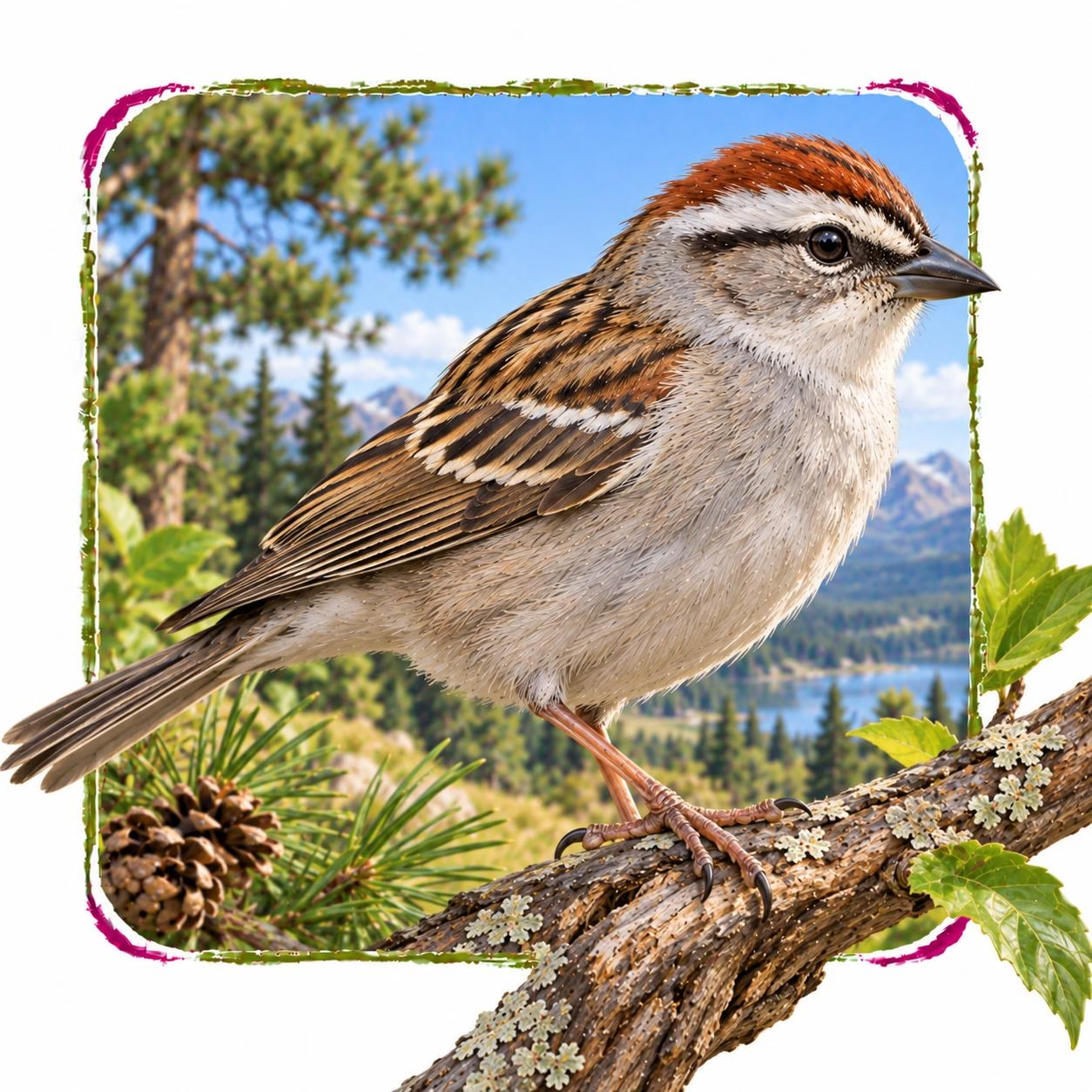
Chipping Sparrow in its natural Open coniferous and deciduous woodland, forest edges, parks, gardens, farms, orchards, brushy clearings, mountain groves, and winter grasslands across North America habitat