
Cockroach Facts for Kids
Cockroaches are flat-bodied insects with long antennae, fast legs, and a very old family history. Most cockroaches live outdoors in warm habitats, while only a few species are famous household pests.
Quick Cockroach Facts
- Animal Type: Insect
- Group: Cockroach and Blattodea
- Known For: Flat bodies, long antennae, and ancient fossil history
- Habitat: Forests, leaf litter, caves, warm dark places, tropical habitats, homes, gardens, and human buildings depending on species
- Diet: Decaying plants, fungi, crumbs, fruit, starches, dead insects, and other organic leftovers
What You’ll Learn
Explore 10 surprising cockroach facts for kids about fast running, tough bodies, antennae, food, and survival, with a quiz, glossary, and activity
Easy explanations make these facts fun for children, families, teachers, and curious young learners.
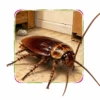
10 Fun Cockroach Facts for Kids
1. Cockroaches Are Insects
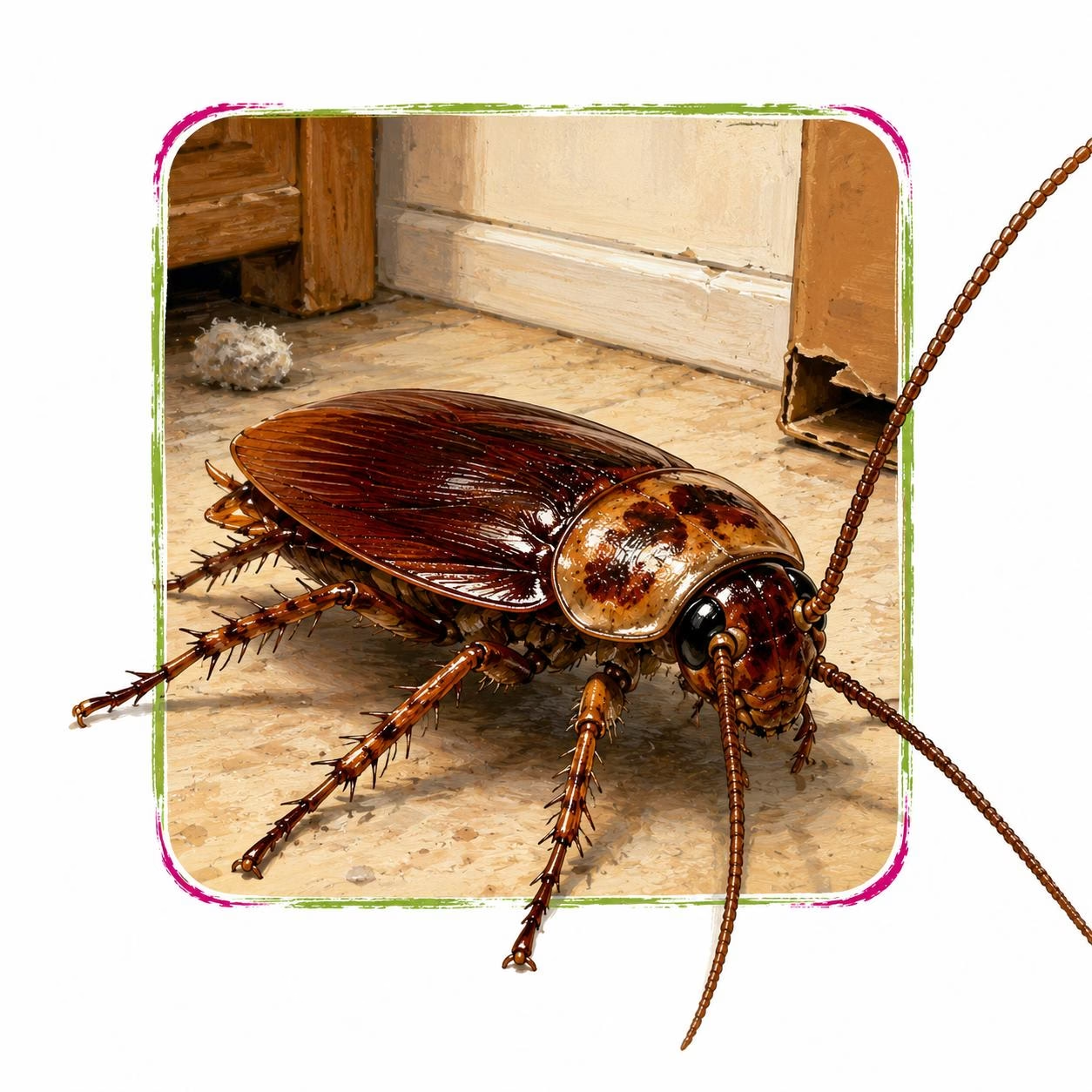
Cockroaches are insects, so they have six legs, antennae, three main body sections, and a hard outer covering.
Kid Decode: A cockroach is a six-legged cleanup crawler.
2. Cockroaches Are Very Ancient
Cockroaches have an ancient body plan, and fossil relatives go back hundreds of millions of years.
Kid Decode: They are tiny time travelers with antennae.
3. Most Cockroaches Live Outdoors
Most cockroach species live in wild places such as forests and leaf litter rather than in houses.
Kid Decode: Many roaches are forest recyclers, not kitchen invaders.
4. Cockroaches Have Flat Bodies
Their flat oval bodies help many cockroaches squeeze into cracks, leaf litter, and narrow hiding places.
Kid Decode: That flat shape is a sneaky crack-sliding costume.
5. Cockroaches Have Long Antennae
Long antennae help cockroaches feel, smell, and explore dark spaces.
Kid Decode: The antennae are wiggly hallway scanners.
6. Baby Cockroaches Are Nymphs
Young cockroaches are called nymphs. They look like smaller adults but usually lack full wings.
Kid Decode: A cockroach nymph is a mini roach in training.
7. Female Cockroaches Make Egg Cases
Many cockroaches lay eggs inside protective cases called oothecae.
Kid Decode: An ootheca is a tiny roach egg suitcase.
8. Cockroaches Are Scavengers
Cockroaches often eat decaying plant material, crumbs, fungi, and leftovers, helping recycle organic matter.
Kid Decode: They are nature’s tiny crumb inspectors.
9. Some Cockroaches Have Wings
Many adult cockroaches have wings, though not all are strong fliers.
Kid Decode: Some carry wings like a jacket they rarely use.
10. Cockroaches Need Careful Home Control
A few pest species can spread germs or trigger allergies indoors, so cleanliness and sealing food are important.
Kid Decode: Respect the wild ones, but keep kitchens crumb-free.
The Weirdest Cockroach Fact
Cockroaches are older than dinosaurs, with relatives that looked roach-like living over 300 million years ago.
Try This Cockroach Activity
Cockroach Drawing Activity
Draw a cockroach exploring leaf litter. Add six legs, long antennae, a flat oval body, shiny wings, a nymph, an egg case, leaves, crumbs, and a tiny magnifying glass.
Quick Cockroach Quiz
- What animal group are cockroaches in? Answer: Insects.
- What are baby cockroaches called? Answer: Nymphs.
- What are cockroach egg cases called? Answer: Oothecae.
- How many legs do cockroaches have? Answer: Six.
- Do most cockroach species live as household pests? Answer: No.
Mini Glossary
- Insect: An animal with six legs and three main body sections.
- Nymph: A young insect that looks like a smaller adult.
- Ootheca: A protective egg case made by some insects.
- Scavenger: An animal that eats leftovers or decaying material.
- Antennae: Feelers that help insects sense the world.
 Sunbittern Facts for Kids
 Hoopoe Facts for Kids
 Musk Ox Facts for Kids
 Diplocaulus Facts for Kids
More Animal Facts for Kids
Visit the full animal facts library or explore a focused animal group.
More Extinct Animal Facts for Kids
Discover dinosaurs, Ice Age giants, prehistoric sea creatures, recently extinct species, and other animals from the past.
Fact check note: Fact checked with Britannica cockroach resources, Britannica Kids cockroach resources, and trusted insect education references.
Cockroach in its natural Homes habitat