
Colossal Squid Facts for Kids
The colossal squid, Mesonychoteuthis hamiltoni, is a massive deep-sea cephalopod found only in the Southern Ocean around Antarctica. It is shorter than the longest giant squid but has a broader, heavier body and is the heaviest known invertebrate. Adults live in freezing water at depths of roughly 1,000 metres or more, where direct observation is extraordinarily difficult. Much of what scientists know comes from rare specimens and beaks recovered from sperm-whale stomachs.
Quick Colossal Squid Facts
- Animal Type: Invertebrate
- Group: Cephalopod in the glass-squid family, Cranchiidae
- Known For: Heavy body, enormous eyes, rotating tentacle hooks, arm hooks, and the largest known squid beak
- Habitat: Cold deep waters of the Southern Ocean surrounding Antarctica
- Diet: Fish and other deep-sea animals, with many details still unknown
What You’ll Learn
Explore 10 enormous colossal squid facts for kids about giant eyes, hooked tentacles, deep-sea life, hunting, and Antarctic waters, with a quiz, glossary, and activity
These simple facts are written for kids, parents, teachers, and curious young animal lovers.
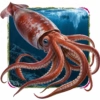
10 Fun Colossal Squid Facts for Kids
1. It Is Not the Same as the Giant Squid
Colossal and giant squid are distantly related species. Giant squid grow longer because of extremely stretched tentacles, while colossal squid have a shorter but much heavier and more muscular body.
Kid Decode: One squid wins the tape measure while the other wins the heavyweight contest.
2. It Is the Heaviest Known Invertebrate
Te Papa’s displayed female measures about 4.2 metres and weighs roughly 495 kilograms, and mature animals may exceed 500 kilograms. Exact maximum size remains unknown because so few adults have been studied.
Kid Decode: The record comes with an asterisk shaped like a dark ocean full of unseen adults.
3. Eight Arms and Two Tentacles Surround the Mouth
Like other squid, it has eight arms plus two longer feeding tentacles. The arms carry an unusual mixture of suckers and fixed hooks, while the expanded tentacle clubs carry suckers and swivelling hooks.
Kid Decode: Ten limbs form a circle of gripping equipment around one hidden beak.
4. Its Tentacle Hooks Can Rotate
Two rows of sharp hooks on each tentacle club can swivel through a complete circle. The hooks help seize slippery prey in darkness and near-freezing water.
Kid Decode: Each tentacle tip carries grappling hooks that can turn to meet a struggling fish.
5. The Eyes Are the Largest Ever Studied
Colossal-squid eyes can reach about 27 centimetres across, around the size of a football. Giant eyes gather faint light and may help detect prey or the glowing disturbance made by an approaching sperm whale.
Kid Decode: Each eye is a dinner-plate window opened onto the black Southern Ocean.
6. The Beak Is the Largest Known on Any Squid
A hard chitinous beak sits where the arms meet and cuts food into pieces before a toothed radula processes it further. Colossal-squid beaks are larger and more robust than those of giant squid.
Kid Decode: Behind the hooks waits a parrot-shaped pair of blades built for deep-sea meals.
7. Adults Live More Than a Kilometre Deep
Large adults are associated with cold Antarctic water deeper than about 1,000 metres. Juveniles occur higher in the water column, showing that depth use changes as the squid grows.
Kid Decode: The youngsters patrol upstairs while the heavyweight adults disappear into the basement ocean.
8. Sperm Whales Are Major Predators
Colossal-squid beaks occur frequently in Antarctic sperm-whale stomachs, and hook or sucker scars can mark whale skin. Whale diet records provide far more evidence than direct squid sightings.
Kid Decode: A whale’s stomach becomes a strange field notebook filled with indigestible squid beaks.
9. The First Confirmed Wild Video Came in 2025
In March 2025, researchers recorded a living juvenile colossal squid in its natural habitat for the first confirmed time. The animal was only about 30 centimetres long, not a giant adult.
Kid Decode: Science first met the species alive in the wild through a transparent baby, not a sea monster.
10. Most of Its Life Remains Unknown
Scientists still lack firm answers about adult behaviour, lifespan, mating, growth, hunting technique, and full diet. A species can be enormous and globally famous while remaining almost invisible to science.
Kid Decode: The biggest mystery is not its size but how much of its ordinary life has never been seen.
The Weirdest Colossal Squid Fact
The colossal squid’s two feeding tentacles end in clubs armed with hooks that can swivel a full 360 degrees in either direction.
Try This Colossal Squid Activity
Colossal Squid Deep-Sea Drawing Activity
Draw a colossal squid in dark Antarctic water. Add a broad heavy mantle, two fins, eight shorter arms with suckers and fixed hooks, two longer tentacles with rotating-hook clubs, huge eyes, a beak cutaway, an Antarctic toothfish, a distant sperm whale, a depth marker below 1,000 metres, and a small 2025 juvenile-video panel.
Quick Colossal Squid Quiz
- Where does the colossal squid live? Answer: In the Southern Ocean around Antarctica.
- Is it longer than every giant squid? Answer: No, it is generally shorter but much heavier.
- How many arms and tentacles does it have? Answer: Eight arms and two tentacles.
- Which predator supplies many colossal-squid beaks to scientists? Answer: The sperm whale.
- When was the first confirmed live footage in the wild recorded? Answer: In 2025.
Mini Glossary
- Cephalopod: A mollusk with a prominent head and arms or tentacles, such as a squid or octopus.
- Mantle: The muscular main body chamber containing many internal organs.
- Tentacle Club: The widened gripping end of a squid’s feeding tentacle.
- Chitin: A tough biological material found in squid beaks and many invertebrate structures.
- Bioluminescence: Light produced by living organisms through chemical reactions.
 Cockroach Facts for Kids
 Marine Iguana Facts for Kids
 Beluga Whale Facts for Kids
 Eryops Facts for Kids
More Animal Facts for Kids
Visit the full animal facts library or explore a focused animal group.
More Extinct Animal Facts for Kids
Discover dinosaurs, Ice Age giants, prehistoric sea creatures, recently extinct species, and other animals from the past.
Fact check note: Fact checked with the Museum of New Zealand Te Papa Tongarewa’s colossal-squid anatomy, collections, and 2025 centenary resources, including specimen measurements and the first confirmed wild-video report, plus scientific literature on Southern Ocean cephalopods and sperm-whale diets.

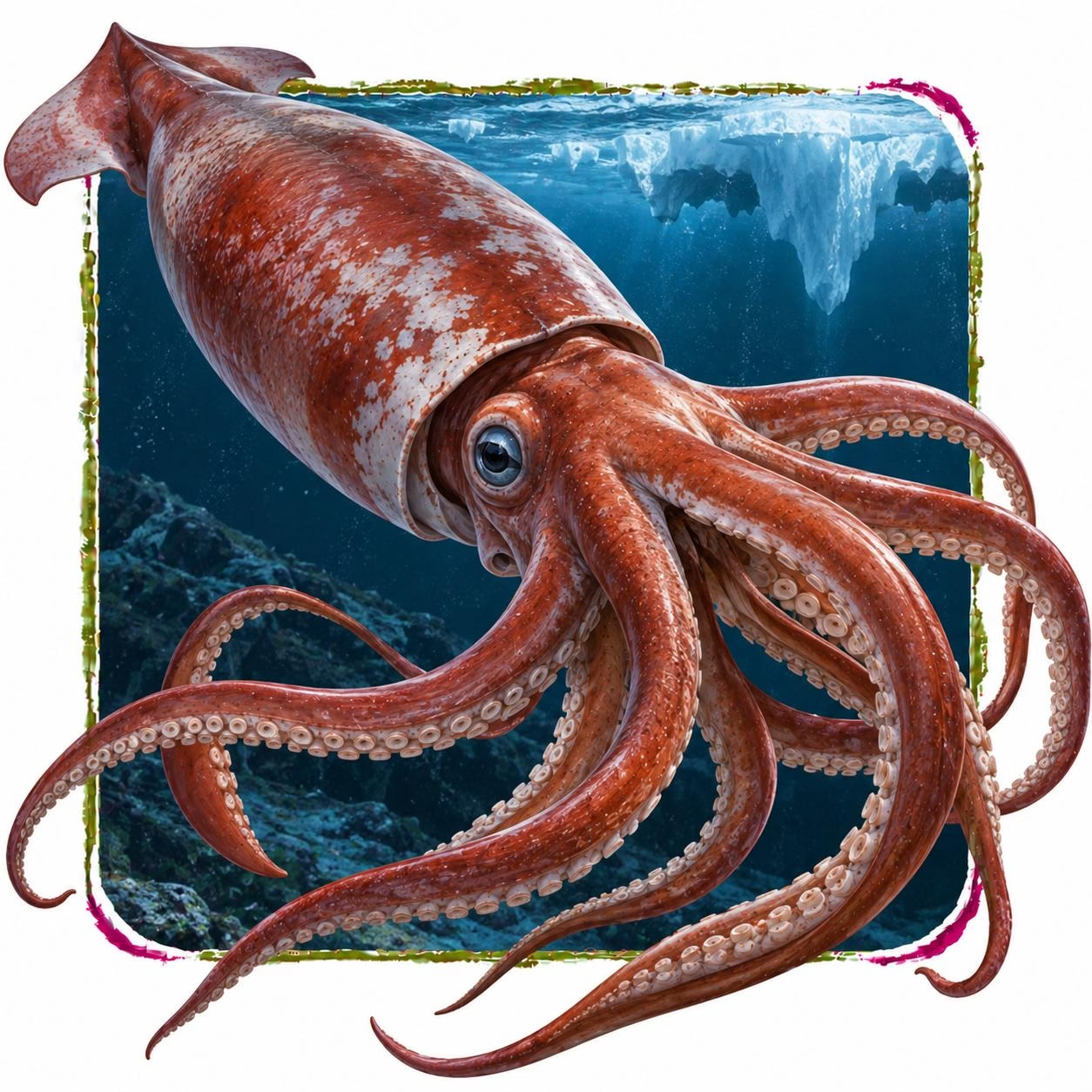
Colossal Squid in its natural Cold pelagic and deep-sea waters of the Southern Ocean surrounding Antarctica, with large adults commonly associated with depths of about 1,000 metres or more habitat