
Comb Jelly Facts for Kids
Comb jellies are soft, transparent ocean animals in the phylum Ctenophora. They are not jellyfish, even though both groups have watery bodies and drift through the sea. Most comb jellies swim by beating eight rows of fused cilia called comb plates. These moving rows scatter light into rainbow colors, while many species can also produce a separate blue-green glow through bioluminescence. Body shape, tentacles, depth, diet, and reproduction vary widely across the group.
Quick Comb Jelly Facts
- Animal Type: Invertebrate
- Group: Phylum Ctenophora
- Known For: Eight comb rows, rainbow shimmer, sticky prey-catching cells, transparency, and bioluminescence in many species
- Habitat: Coastal waters, open ocean, polar seas, tropical seas, and the deep ocean
- Diet: Zooplankton, crustaceans, fish eggs, larvae, and other gelatinous animals depending on species
What You’ll Learn
Discover 10 glowing comb jelly facts for kids about shimmering rows, sticky tentacles, transparent bodies, ocean drifting, and bioluminescence, with a quiz, glossary, and activity
These easy facts are made for kids, parents, teachers, and curious little learners.
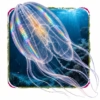
10 Fun Comb Jelly Facts for Kids
1. They Are Not Jellyfish
Comb jellies belong to Ctenophora, while true jellyfish belong to Cnidaria. The two groups evolved different body plans, prey-catching cells, movement systems, and life cycles despite their similar watery appearance.
Kid Decode: The transparent ocean drifter resembles a jellyfish but carries entirely different family paperwork.
2. Eight Comb Rows Power Their Swimming
Most species have eight bands of comb plates running along the body. Each plate contains thousands of fused cilia that beat in coordinated waves and push the animal through water.
Kid Decode: Eight shimmering zipper tracks row the animal through the sea without a single fin.
3. They Are the Largest Animals to Swim With Cilia
Many microscopic organisms use cilia, but comb jellies are the largest known animals whose main swimming power comes from these tiny hair-like structures. Larger species may still look delicate and nearly weightless.
Kid Decode: A creature large enough to see easily travels using countless hairs too small to see one by one.
4. The Rainbow Is Reflected Light
Moving comb plates bend and scatter white light into changing rainbow colors. This optical effect is not bioluminescence and appears strongest when sunlight or a submersible lamp strikes the cilia.
Kid Decode: The traveling rainbow comes from moving light prisms, not tiny lamps switched on inside the body.
5. Many Can Make Their Own Light Too
Many oceanic comb jellies produce blue or green bioluminescence through chemical reactions. The glow may start after touch or disturbance, but its functions and strength differ among species.
Kid Decode: One animal can wear a borrowed rainbow and create a separate living glow.
6. Sticky Colloblasts Catch Prey
Most tentacled comb jellies capture prey with specialized adhesive cells called colloblasts. These cells stick rather than sting, unlike the nematocysts used by jellyfish and sea anemones.
Kid Decode: The tentacle works like microscopic reusable tape instead of a bundle of venomous needles.
7. Not Every Species Has Long Tentacles
Some comb jellies trail two long branching tentacles, lobate forms use broad oral lobes, and several species lack adult tentacles. A few flattened forms creep over the seafloor instead of drifting like transparent balloons.
Kid Decode: The phylum contains fishing lines, flapping lobes, tentacle-free hunters, and living ocean carpets.
8. They Are Active Predators
Comb jellies consume copepods, krill, fish eggs, larvae, and other gelatinous animals. Prey travels toward a mouth and through a branching digestive canal system that distributes nutrients around the body.
Kid Decode: The crystal-clear body hides a predator with a mouth, a gut network, and a busy plankton menu.
9. Many Release Eggs and Sperm Into Water
Many species are simultaneous hermaphrodites that produce both eggs and sperm, often releasing them into seawater for external fertilization. Reproductive timing, larval development, self-fertilization, and brooding vary across the phylum.
Kid Decode: One drifting animal may carry both parts of the recipe for the next transparent generation.
10. Some Can Reshape Whole Ecosystems
The introduced sea walnut Mnemiopsis leidyi multiplied dramatically in the Black Sea, consuming zooplankton, fish eggs, and larvae and helping disrupt food webs. Predators, fisheries, nutrients, and environmental changes also influenced the crisis.
Kid Decode: A fragile-looking handful of jelly can become an ecological bulldozer when it enters the wrong sea.
The Weirdest Comb Jelly Fact
The sparkling rainbow racing along a comb jelly is usually not light made by the animal; it is ordinary light split into colors by waves of beating cilia.
Try This Comb Jelly Activity
Comb Jelly Rainbow Anatomy Activity
Draw a transparent comb jelly in dark ocean water. Add eight labeled comb rows, magnified beating cilia, a rainbow-light arrow, a separate blue bioluminescent glow, two branching tentacles covered with colloblasts, captured copepods, a mouth and digestive canals, and small comparison panels showing a lobate form and a seafloor-dwelling form.
Quick Comb Jelly Quiz
- Are comb jellies true jellyfish? Answer: No, they belong to the phylum Ctenophora.
- How many comb rows do most species have? Answer: Eight.
- What creates the rainbow shimmer? Answer: Light scattered by moving cilia.
- What sticky cells catch prey? Answer: Colloblasts.
- What do comb jellies mainly eat? Answer: Small animals such as zooplankton, crustaceans, eggs, and larvae.
Mini Glossary
- Ctenophore: A member of the comb-jelly phylum Ctenophora.
- Cilium: A microscopic hair-like structure that can beat to move an organism or fluid.
- Colloblast: A sticky prey-catching cell found on many comb-jelly tentacles.
- Bioluminescence: Light produced by a chemical reaction inside a living organism.
- Hermaphrodite: An animal that produces both eggs and sperm.
 Lorikeet Facts for Kids
 Musk Deer Facts for Kids
 Lapwing Facts for Kids
 Kosmoceratops Facts for Kids
More Animal Facts for Kids
Visit the full animal facts library or explore a focused animal group.
More Extinct Animal Facts for Kids
Discover dinosaurs, Ice Age giants, prehistoric sea creatures, recently extinct species, and other animals from the past.
Fact check note: Fact checked with Smithsonian Ocean’s Jellyfish and Comb Jellies overview, NOAA Ocean Exploration’s ctenophore resources, and comparative zoological research on Ctenophora anatomy, colloblasts, bioluminescence, reproduction, regeneration, and invasive Mnemiopsis ecology.

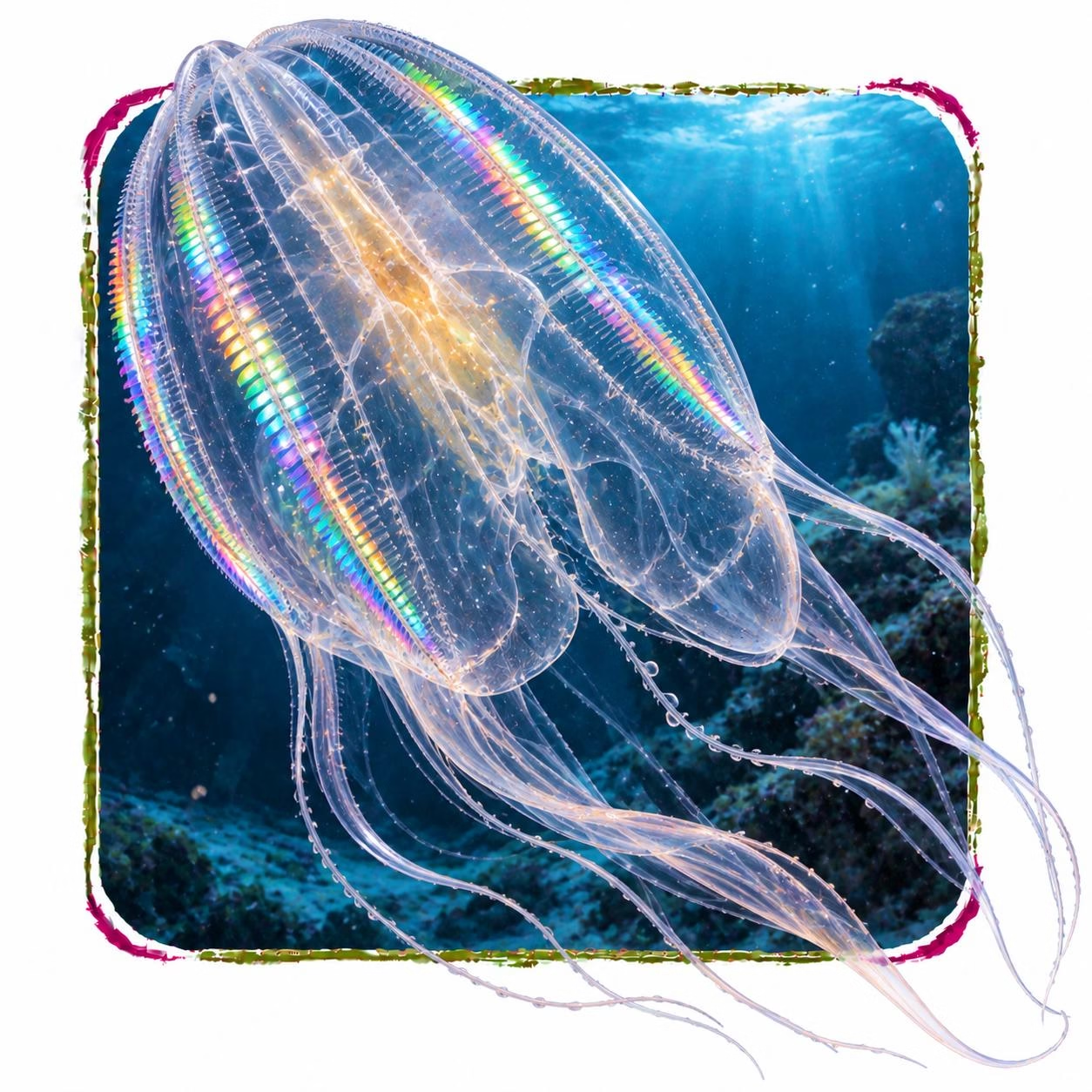
Comb Jelly in its natural Coastal waters, estuaries, open ocean, polar seas, tropical seas, surface waters, midwater zones, deep ocean, and occasional seafloor habitats worldwide habitat